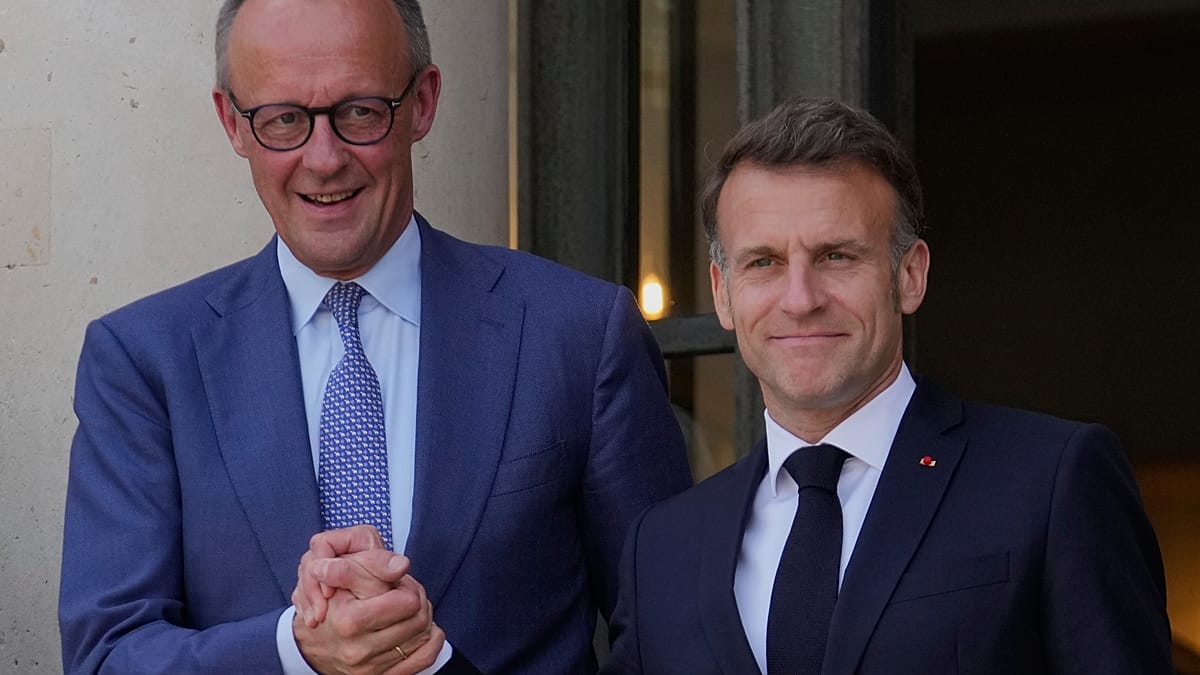
France and Germany are jointly advocating for a revamped EU enlargement strategy, proposing a system of "structured gradual integration" for candidate countries. The initiative, outlined in a joint paper seen by European Pulse, aims to inject new momentum into the accession process ahead of the EU–Western Balkans summit in Tivat, Montenegro, on Friday, and the EU–Moldova summit on 22 June.
The proposal, championed by Chancellor Olaf Scholz and President Emmanuel Macron, seeks to offer candidate countries tangible benefits earlier in the process, such as privileged access to the EU single market and observer status in EU decision-making bodies, without replacing the ultimate goal of full membership. The paper argues that "enlargement remains one of the most attractive offers and most influential policy instruments the Union has," but acknowledges that "the enlargement policy needs a new momentum."
Building Blocks for Integration
The Franco-German plan introduces a "building blocks" approach, tailored to each candidate country's progress. These blocks would allow for gradual integration into EU structures, with progress tied to substantive reforms in areas like rule of law, economic governance, and fundamental rights. The paper emphasizes that these blocks "should build on the progress made in the accession process and be reversible in case of backsliding of the relevant candidate country in its reform process and with regard to the EU core values and principles."
Under the proposed framework, candidate countries could advance across negotiating chapters whenever the European Commission recommends and member states unanimously approve. This would shift the focus from procedural milestones to the substance of reforms, giving political guidance at intergovernmental conferences a more prominent role. The paper calls for "a new, process-oriented approach which cuts overformalised hurdles for intermediate steps and simplifies the current methodology."
Paris and Berlin have asked the European Commission to turn the concept into a concrete proposal. Potential measures include joint meetings with Commission officials and MEPs, joint parliamentary committees, and participation in informal Council meetings without voting rights. The aim is to create stronger incentives for reform by rewarding progress along the way, while maintaining the credibility of the accession process.
The initiative comes as the EU seeks to reinvigorate its relationship with the Western Balkans, a region that has seen slow progress in accession talks for countries like Serbia, Montenegro, Albania, North Macedonia, Bosnia and Herzegovina, and Kosovo. The upcoming summit in Tivat is seen as a key moment to demonstrate the EU's commitment to the region, especially amid growing geopolitical competition from China, Russia, and Turkey. The EU's €87 billion trade surplus with the region underscores the economic stakes involved.
The Franco-German proposal also reflects a broader debate within the EU about the future of enlargement. Some member states, particularly in the Balkans, have expressed frustration with the slow pace of negotiations and the perceived lack of political will in Brussels. Others, like France, have historically been cautious about rapid expansion, favoring a more rigorous approach to ensure candidate countries meet all criteria before joining.
By proposing a gradual integration model, Paris and Berlin aim to bridge these differing perspectives. The plan offers a middle ground: it provides candidate countries with early rewards for reform, while preserving the integrity of the accession process and the EU's core values. The paper notes that the building blocks approach "should not replace full membership but would accelerate integration by rewarding progress along the way."
The success of the initiative will depend on the willingness of both EU member states and candidate countries to embrace a more flexible, phased approach. For the Western Balkans, the prospect of earlier access to EU markets and institutions could provide a much-needed boost to reform efforts. For the EU, a successful enlargement strategy could enhance its geopolitical influence and stability on the continent's periphery.
As the EU prepares for the Tivat summit, the Franco-German paper sets the stage for a potentially transformative shift in enlargement policy. Whether it gains traction among the 27 member states remains to be seen, but the proposal signals a renewed commitment to making EU integration a tangible reality for aspiring members.