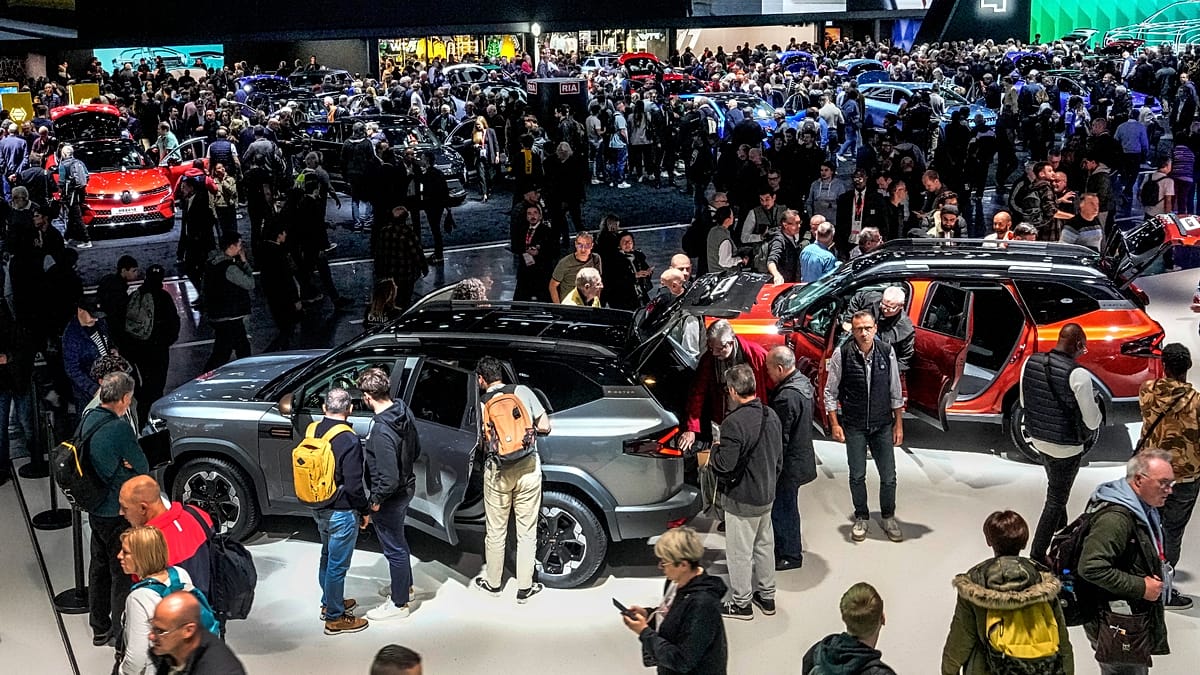
The 91st Paris Motor Show opens its doors at Paris Expo Porte de Versailles on 12 October, with a press day before the public is welcomed from 13 to 18 October. First held in 1898 in the Tuileries Gardens, the biennial event has long been a showcase for the latest in automotive design and technology. This year, around a hundred new models are on display, but the spotlight is firmly on the accelerating shift to electric mobility and the growing presence of Chinese manufacturers.
Serge Gachot, CEO of the Paris Motor Show, emphasises the importance of physical interaction with vehicles. “I genuinely think people need to see the cars, touch them, sit in them, and try them out,” he says. That is particularly true for electric models, where range, interior space, and software experience are often decisive factors for buyers.
Electric sales surge across Europe
According to the European Automobile Manufacturers’ Association (ACEA), fully electric cars accounted for 21.7% of all new vehicle registrations in the EU during the first eight months of 2026, up from 15.8% in the same period a year earlier. France has been one of the fastest-growing markets, with registrations of fully electric vehicles jumping by 74.2% year-on-year. Hybrids remain the most popular powertrain type, holding a 36.6% market share, while plug-in hybrids stand at 10%. The combined share of petrol and diesel has fallen to 29%, down from 37.5% a year earlier.
High fuel prices, government incentives, and a wider choice of more affordable electric models are driving this shift. Yet European carmakers are navigating the transition under exceptionally difficult conditions. Elevated oil prices, partly linked to the conflict involving Iran, are squeezing margins. Consumer confidence remains weak, stricter emissions rules are looming, and the once-lucrative Chinese market has become far less profitable for German giants like Volkswagen, BMW, and Mercedes-Benz.
“There was a time when the Chinese market was something of a cash cow for European carmakers. That’s no longer the case,” says Tim Urquhart, principal automotive analyst at Mobility Global. He adds: “There are huge geopolitical tensions, oil prices are very high, the overall economic environment is under pressure, and confidence in Europe is suffering as a result.”
Chinese brands make a strong push
Around 20 Chinese brands are expected in Paris, eager to capture European buyers. Their rapid technological progress has been remarkable. “The advances made by China’s car industry in recent years have been extraordinary, particularly over the past decade, but above all that progress has accelerated even further over the last five years,” Urquhart notes. The influx comes as the EU and China remain locked in a trade dispute over state aid, tariffs, and the rising number of Chinese-made vehicles entering Europe.
For European manufacturers, the response is a blend of nostalgia and innovation. Retro-inspired models are set to be a headline theme at the show, with Renault, Citroën, Peugeot, Opel, Lancia, and Fiat all presenting designs that evoke their heritage while embracing electric powertrains. This strategy aims to appeal to buyers seeking familiarity in a rapidly changing market.
The Paris show also reflects broader European trends. In a related development, French farmers have driven tractors into Paris to protest the EU-Mercosur trade deal, highlighting the continent’s agricultural and trade tensions. Meanwhile, the automotive industry’s challenges are part of a wider economic picture, with QatarEnergy’s LNG expansion and other energy projects reflecting the global scramble for resources.
As the show opens, the message from analysts is clear: European carmakers must adapt quickly or risk losing ground. The combination of electrification, Chinese competition, and geopolitical uncertainty makes this one of the most pivotal moments for the continent’s automotive industry in decades.