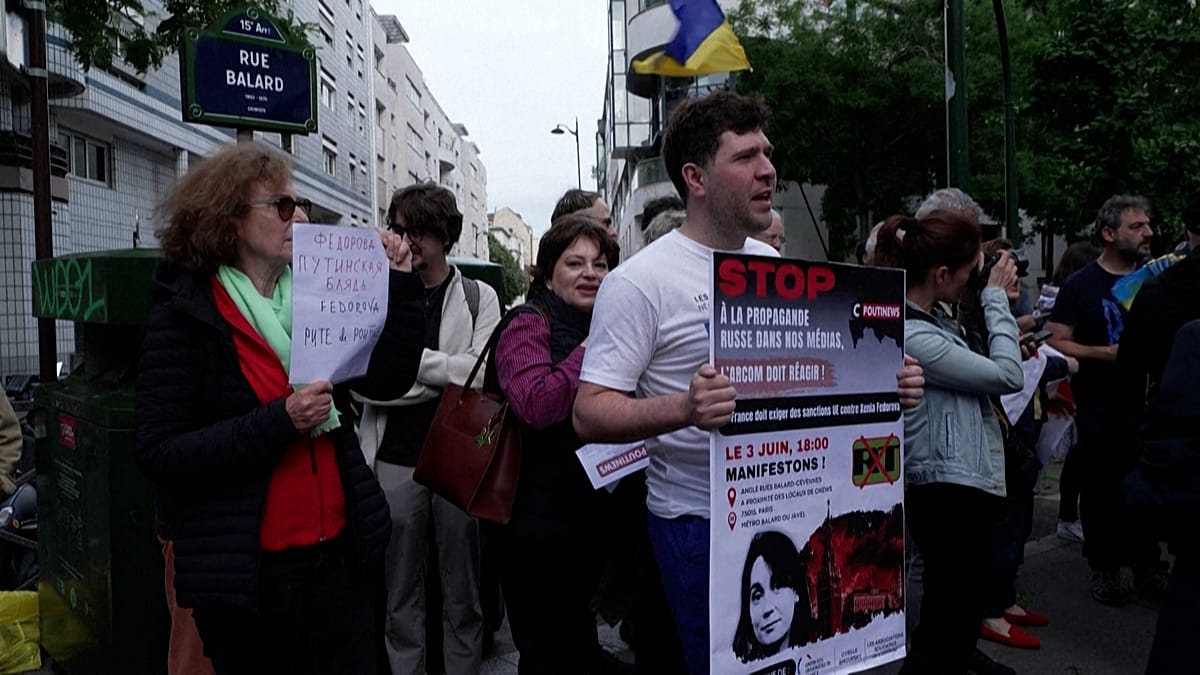
On 3 June, dozens of demonstrators gathered outside the Paris headquarters of CNews, the conservative French television channel, to protest the appointment of Ksenia Fedorova, the former director of RT France. The rally, organized by media watchdog groups and civil society organizations, accused the channel of becoming a conduit for Kremlin propaganda under Fedorova's influence.
Fedorova, who led RT France until the European Union banned the network in 2022 following Russia's full-scale invasion of Ukraine, joined CNews as a consultant earlier this year. Protesters held signs reading "CNews, Kremlin's Voice" and "Stop Russian Interference," demanding that the channel sever ties with her. The event underscores a broader European debate about foreign meddling in domestic media landscapes, particularly from Moscow.
Broader European Concerns Over Media Independence
The protest in Paris is not an isolated incident. Across the European Union, member states have grappled with the influence of Russian state-backed media outlets. In 2022, the EU imposed sanctions on RT and Sputnik, blocking their distribution within the bloc. However, critics argue that former employees of these networks can still find roles in European media, potentially carrying over agendas. France, with its strong tradition of press freedom, has been a focal point for such concerns, especially given the country's upcoming elections and ongoing debates over disinformation.
"This is about protecting the integrity of our information space," said Marie Dupont, a spokesperson for the protest group Reporters Without Borders, which participated in the rally. "When someone who led a state propaganda machine moves into a major French news outlet, it raises legitimate questions about editorial independence." CNews, owned by the conservative billionaire Vincent Bolloré, has faced previous accusations of bias and sensationalism, but the Fedorova case adds a new dimension of foreign influence.
The channel has defended its hiring, stating that Fedorova brings valuable expertise in international affairs. In a statement, CNews said, "Ksenia Fedorova is a professional journalist with decades of experience. Her past role at RT France does not dictate her work here, and we fully respect French and European media regulations." However, the protest organizers remain unconvinced, pointing to Fedorova's close ties to the Kremlin during her tenure at RT.
Legal and Political Ramifications
The controversy has also reached French political circles. Several lawmakers from the left and center have called for a parliamentary inquiry into foreign influence in French media, with some urging the regulatory body ARCOM to investigate CNews. The issue is particularly sensitive given France's role as a key EU member and its recent push for digital sovereignty, as seen in initiatives like the Arcadia AI battlefield system tested in NATO drills.
"We cannot have a major news channel potentially acting as a Trojan horse for Russian interests," said deputy Claire Leblanc of the Green Party. "This is a matter of national security and democratic health." The protest also drew attention to the broader context of European efforts to counter disinformation, including the EU's Digital Services Act, which imposes stricter rules on platforms and media. Yet, enforcement remains uneven, and critics argue that loopholes allow former state propagandists to slip through.
Meanwhile, the rally in Paris was peaceful, with police monitoring the crowd of about 200 people. Similar protests have occurred in other European capitals, such as Berlin and Warsaw, where activists have targeted outlets perceived as sympathetic to Russian narratives. The issue is likely to persist as the EU prepares for its next round of sanctions against Russia and debates new measures to protect media independence.
For now, the spotlight remains on CNews and its editorial direction. The channel, which has seen rising viewership in recent years, positions itself as a counterweight to what it calls "mainstream liberal media." But the Fedorova controversy threatens to undermine its credibility, especially among European audiences wary of foreign interference. As the continent navigates a complex geopolitical landscape, the line between legitimate journalism and propaganda grows ever more contested.



