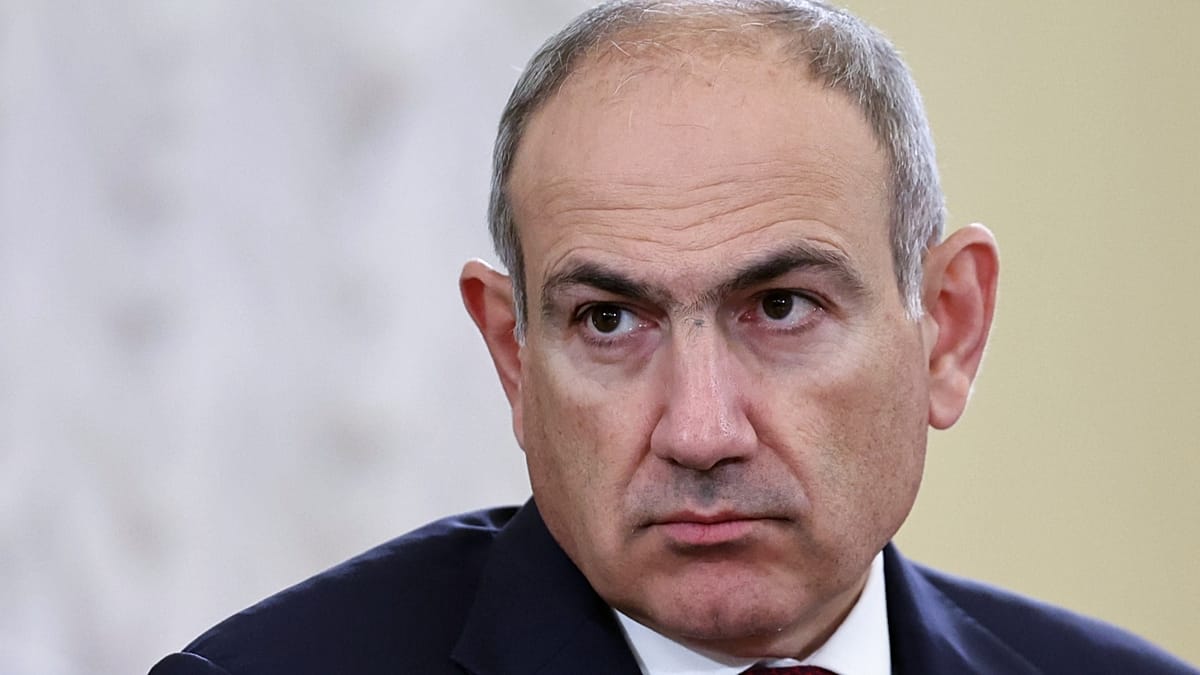
In a remarkable break with decades of national narrative, Armenian Prime Minister Nikol Pashinyan has stated unequivocally that Nagorno-Karabakh was not Armenian territory and that the movement to claim it was a fatal error. Speaking in a video circulated widely on 11 May, Pashinyan challenged critics who accuse him of having “lost” Karabakh, asking repeatedly: “How was that land ours? How was it ours? Please explain how it was ours?”
Pashinyan dismissed the idea that sporadic cultivation by a few generals constituted ownership. “Did we build a school there, did we build a kindergarten, did we build a factory, did we live there, a settlement… How was it ours? It was not ours. It was not ours,” he said. The remarks mark a stark departure from the position of previous Armenian governments, which had long considered Karabakh an integral part of the nation.
The prime minister’s admission comes just days after Yerevan hosted the eighth European Political Community summit, where French President Emmanuel Macron hailed Armenia’s turn toward Europe. “Eight years ago, many saw Armenia as a country heavily dependent on Russia, with its security entirely in Russian hands,” Macron said at the summit. “After the Velvet Revolution, its policy of peace, and its turn toward Europe, we are now witnessing the opening of a new era.”
Pashinyan’s pro-European course has been underscored by a series of diplomatic moves, including hosting Ukrainian President Volodymyr Zelenskyy and EU leaders in Yerevan. The EPC summit sent a clear signal that Armenia is seeking to reduce its traditional dependence on Moscow and align more closely with Brussels.
Aliyev Warns Against Anti-Azerbaijan Sentiment
Azerbaijani President Ilham Aliyev, speaking on 11 May during the inauguration of a residential complex in Zangilan, cautioned against the rise of anti-Azerbaijani forces in Armenia ahead of June parliamentary elections. “We know that within Armenia’s political sphere there are still circles driven by hatred towards the Azerbaijani people and state, and if they come to power, it is the Armenian people who will suffer,” Aliyev said.
Aliyev laid the foundation stone for the Zangilan City Park hotel and met with the first families returning to the area. He described Zangilan, located along a key transport corridor, as set to become a transport hub “not only for Azerbaijan but for the entire region,” highlighting the economic cooperation now emerging between the two former adversaries. The reconstruction of Karabakh has drawn international attention, with European and US diplomats assessing progress on the ground.
The Azerbaijani leader also took aim at unnamed foreign leaders who, he said, now portray themselves as “false heroes” for allegedly protecting Armenia. “We had no intention of destroying Armenia or depriving it of its independence,” Aliyev stated. “Yet they portray themselves as if they are protecting Armenia from us. There is no need to protect Armenia from us. We have achieved what we set out to achieve.”
Putin Suggests Referendum, Draws Parallel to Ukraine
Russian President Vladimir Putin, in a press conference on 10 May, responded to Armenia’s pivot by suggesting it would be “logical” for Yerevan to hold a referendum on EU membership. “In my view, it would be right both in relation to the population, the citizens of Armenia, and in relation to us, as the main economic partner, to decide as early as possible,” Putin said. He added that if Armenia chose to leave Russia’s orbit, Moscow would “make our own choice as well” and pursue “a gentle, civilised and mutually beneficial separation.”
Putin also drew a direct parallel to Ukraine, noting that Russia’s full-scale invasion began after Kyiv announced its intention to join the EU. “We are all going through everything that’s happening in the Ukrainian direction right now. But how did it all start? With Ukraine’s attempt to join the EU,” he said. The remark was widely interpreted as a veiled warning to Yerevan.
Pashinyan responded on 12 May that Armenia is “not currently planning to put this to a referendum vote.” He added that such a step would only be taken “when there is an objective necessity,” describing the EU path as “not a matter of political taste, but a matter of transformation.”
The peace process between Armenia and Azerbaijan is already yielding economic dividends, with new transport links and investment opportunities emerging across the South Caucasus. As Yerevan and Baku look to the future, Pashinyan’s frank reassessment of the past may prove to be the foundation for a lasting settlement — one that brings Armenia firmly into the European fold.