World leaders began arriving in Yerevan, Armenia, on Sunday for the eighth meeting of the European Political Community (EPC), a forum launched in 2022 in response to Russia's full-scale invasion of Ukraine. The summit, held under the motto 'Building the Future: Unity and Stability in Europe', brings together representatives from nearly 50 countries, including all 27 European Union member states, plus partners from the wider continent and beyond.
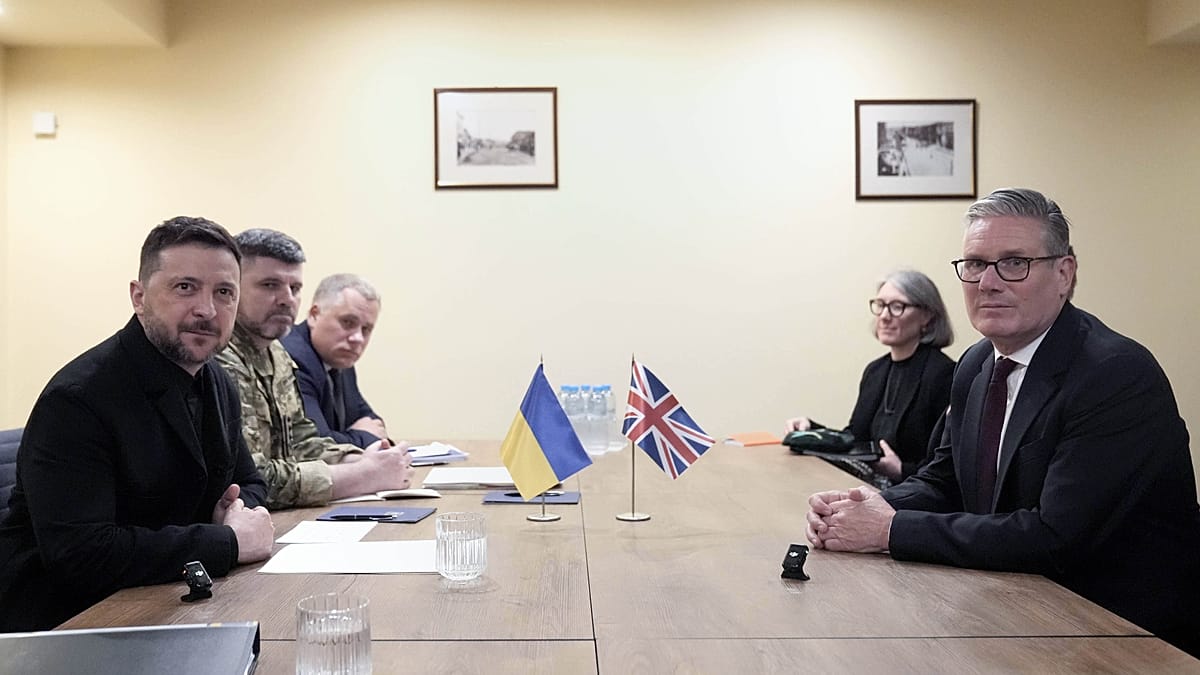
Among those arriving on Sunday afternoon were British Prime Minister Sir Keir Starmer, Ukrainian President Volodymyr Zelenskyy, French President Emmanuel Macron, and Polish Prime Minister Donald Tusk. The summit is co-chaired by European Council President António Costa and Armenian Prime Minister Nikol Pashinyan.
Canada Joins as First Non-European Participant
A notable development at this year's gathering is the participation of Canadian Prime Minister Mark Carney as a guest — the first time a non-European country has attended the EPC. 'Europe and Canada are more than just like-minded partners — together we are building a global alliance to defend peace, shared prosperity and multilateralism,' Costa said ahead of the meeting.
Carney, speaking at the World Economic Forum in Davos, Switzerland, earlier this year, identified a 'rupture' in the US-led system of global governance and argued that middle powers must chart a new path to defend key international values. The growing alignment between Europe and Canada comes as relations with the United States under President Donald Trump have become more strained, pushing both sides to deepen cooperation in trade, security, and diplomacy.
The summit's agenda includes discussions on US-Iran tensions, the war in Ukraine, and broader geopolitical shifts. Zelenskyy is expected to hold sideline meetings with several leaders to discuss continued support for Kyiv.
Armenia's European Aspirations
For Armenia, the EPC summit is part of a broader strategy to move closer to the European Union. The former Soviet republic, with a population of three million, has seen its relations with traditional ally Moscow deteriorate in recent years, particularly after Russian peacekeepers were criticised for failing to intervene decisively during military conflicts with neighbouring Azerbaijan.
Prime Minister Pashinyan has pursued a policy of 'diversification', seeking ties with both Russia and the West. 'In reality it's a process where Armenia tries to establish relationships with the European Union,' said political scientist Alexander Iskandaryan. Olesya Vartanyan, an analyst on South Caucasus security, described the summit as Armenia's way of telling the EU: 'We are here and we are ready.'
Armenia signed a comprehensive partnership agreement with the EU in 2017, deepening cooperation in trade and other areas. Last year, the country adopted a law formally declaring its intention to apply for EU membership. The first-ever EU-Armenia summit, held alongside the EPC meeting, underscores Yerevan's determination to integrate further into European structures.
The EPC remains an intergovernmental forum focused on political and strategic discussions about Europe's future. Its eighth edition in Yerevan highlights the continent's shifting alliances and the growing importance of the South Caucasus in European security calculations. As Europe grapples with the consequences of the war in Ukraine and evolving transatlantic relations, the summit offers a platform for leaders to coordinate responses and reaffirm commitments to multilateralism.