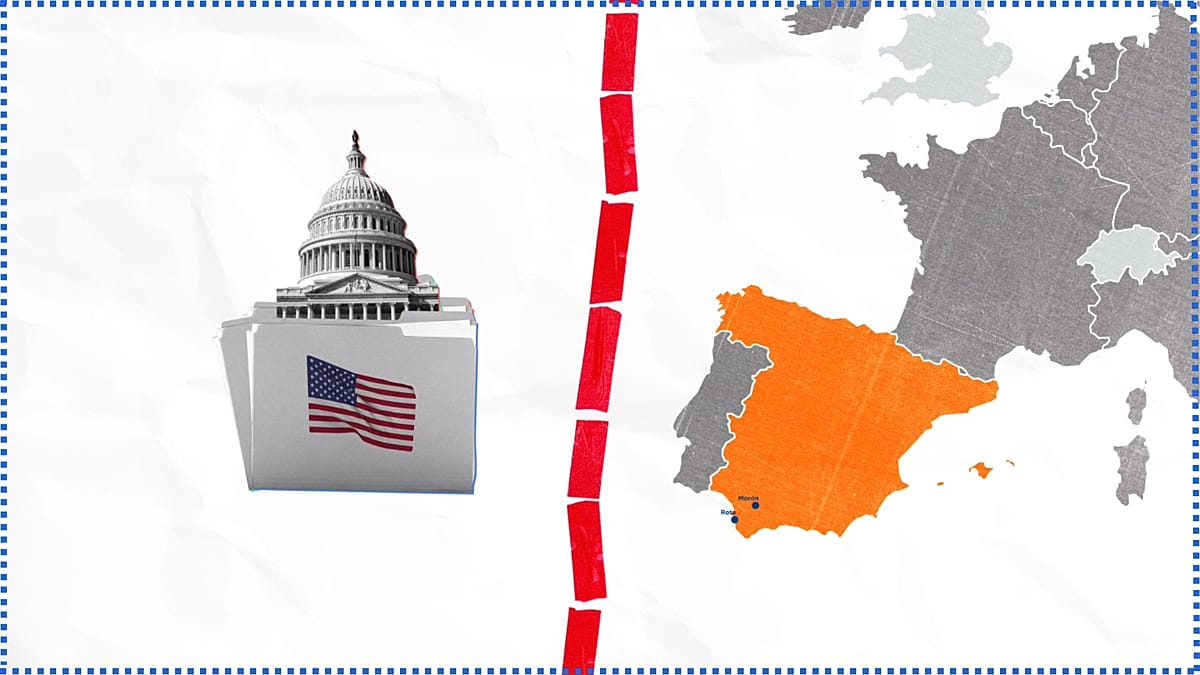
A leaked Pentagon email has sent ripples through diplomatic circles in Brussels and Madrid, revealing a list of punitive options against NATO allies who refuse to assist in a potential war with Iran. The most striking proposal: attempting to suspend Spain from the alliance.
Spain has been the most vocal European opponent of military action against Iran, denying refuelling and overflight rights at the Rota and Morón bases for strikes against the Islamic Republic. While Washington considers this cooperation the "absolute baseline" for alliance membership, Madrid insists these bases cannot be used for operations outside the NATO treaty framework.
But can the United States actually suspend a member state? The short answer is no. The North Atlantic Treaty, signed in Washington in 1949, contains no provision for suspension or expulsion. Article 13 allows only voluntary withdrawal. Experts note that Spain is well within its sovereign rights to deny use of its territory for operations not mandated by the alliance.
This is not the first time a European ally has refused the US access to its bases. In 1986, both Spain and France closed their airbases to American aircraft during Operation El Dorado Canyon against Libya. The precedent suggests that such refusals, while politically awkward, are not grounds for disciplinary action.
Beyond Spain: The Falklands Dimension
The leaked email also indicates that the Pentagon is reviewing diplomatic support for British control of the Falkland Islands after the United Kingdom denied the US use of its Royal Air Force bases for strikes against Iran. This suggests the potential retaliation could extend well beyond Spain, targeting one of Washington's closest allies.
The leak comes at a time when the US commitment to European security appears increasingly uncertain. With Washington pivoting its strategic focus toward the Indo-Pacific, European nations are being forced to reconsider their own defence postures.
Last Wednesday, Germany's Defence Minister Boris Pistorius unveiled the country's first comprehensive military strategy for the Bundeswehr, aiming to build Europe's strongest conventional army by 2039. The document explicitly acknowledges that with the United States focused elsewhere, the European pillar must assume greater responsibility for its own defence.
This shift is part of a broader trend. The Pentagon email proposing sanctions on NATO allies has accelerated discussions in European capitals about strategic autonomy. For Spain, the episode underscores the tension between its NATO obligations and its independent foreign policy, particularly regarding the Middle East.
Spain's position on Iran is consistent with its broader approach to international conflicts. The government of Prime Minister Pedro Sánchez has been a vocal advocate for diplomatic solutions, as seen in its push to suspend the EU-Israel Association Agreement over the Gaza war. Madrid's stance on Iran reflects a similar reluctance to endorse military action without clear UN Security Council authorisation.
The leaked email has also reignited debate about the future of NATO itself. Some analysts argue that the alliance's inability to enforce solidarity on military operations undermines its credibility. Others counter that the treaty's flexibility is precisely what has allowed it to survive for over seven decades, accommodating the diverse foreign policy priorities of its 32 members.
For now, Spain remains a full member of NATO, and the leaked proposal appears to have little chance of implementation. But the episode has exposed deep rifts within the alliance and raised questions about how Europe will defend itself if the United States continues to prioritise other regions.