Spain's diplomatic initiative to suspend the European Union's Association Agreement with Israel is poised for failure at a meeting of foreign ministers in Brussels, with broad opposition from several major member states rendering the proposal politically unviable. The call, renewed by Spanish Prime Minister Pedro Sánchez over the weekend, accuses Israel of violating international law and the terms of the bilateral pact, but it has failed to galvanize the unified support required for such a significant step.
A Coalition Without Consensus
While Madrid has found common cause with Dublin and Ljubljana, arguing that Israel's actions in Gaza, the West Bank, and Lebanon constitute a breach of its human rights obligations, this bloc remains a distinct minority. The core of the EU's political and economic weight—notably Berlin and Rome—maintains its firm opposition. An EU diplomat, speaking on condition of anonymity, confirmed to European Pulse that "there is no broad consensus among the member states" to trigger the agreement's suspension mechanism.
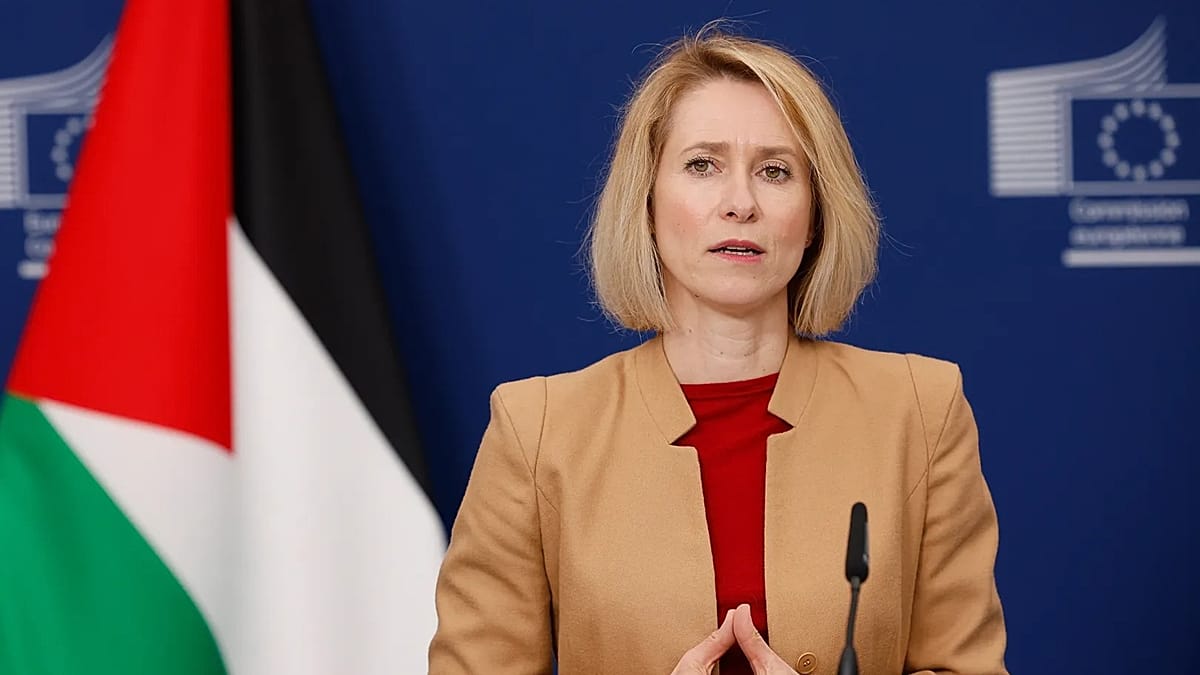
EU Foreign Affairs Chief Kaja Kallas has underscored that a "unified position" is the necessary political precondition, even if not explicitly mandated by treaty. Italy's government, led by Prime Minister Giorgia Meloni, has stated it will pursue a "serious and balanced approach" to avoid measures that could harm Israeli civilians. Germany's stance has been similarly consistent, with Berlin viewing the agreement as a crucial channel for dialogue.
Stalled Sanctions and the Hungarian Hurdle
The debate over the association agreement is not the only EU-Israel policy facing deadlock. A separate, more targeted proposal from the European Commission to sanction violent Israeli settlers in the West Bank has also been paralyzed, solely by Hungarian opposition. All other 26 member states are reportedly in agreement with the plan, which aligns with commitments made in the 2025 New York Declaration.
Kallas suggested the recent Hungarian elections, which will see a new government formed by the Tisza party, could provide an opening. "Settler crimes need to be punished," she stated, adding that the bloc could re-examine the policy pending Budapest's new approach. However, the party has not yet clarified its foreign policy stance on the issue.
The Commission's earlier attempt to apply pressure—a proposal last September by President Ursula von der Leyen to suspend only the trade pillar of the association agreement—met a similar fate. It was blocked by a coalition including Germany, Hungary, and the Czech Republic, which together prevented the formation of the required qualified majority. This dynamic highlights the profound divisions within the Council on how to leverage the EU's economic relationship with Israel. The issue has resonated beyond governments, with over one million European citizens signing a petition calling for the agreement's full suspension, a move mirrored by calls from cultural figures to boycott events like Eurovision.
Kallas, referencing the partial suspension option, noted, "I think it should be assessed whether it's possible to move with those [measures] if the member states have the wish to do so, to put pressure on Israel." Her comments followed a meeting on implementing a two-state solution with Palestinian Prime Minister Mohammad Mustafa. Yet, the prevailing sentiment among a majority of capitals is that a full suspension is a disproportionate tool that would eliminate EU influence and is unlikely to alter the conflict's trajectory. Other member states, while open to discussion, do not foresee the political will materializing for any immediate, decisive action.
The impasse underscores the limits of EU foreign policy when core member states hold fundamentally different strategic assessments. For now, the EU's response remains fragmented, caught between vocal calls for a harder line from states like Spain and Ireland and the cautious, status-quo-oriented approach of its largest powers. This internal discord occurs against a backdrop of continued regional tension, illustrated by incidents such as the docking of a Russian ship suspected of carrying Ukrainian grain in an Israeli port, which further complicates the geopolitical landscape.



