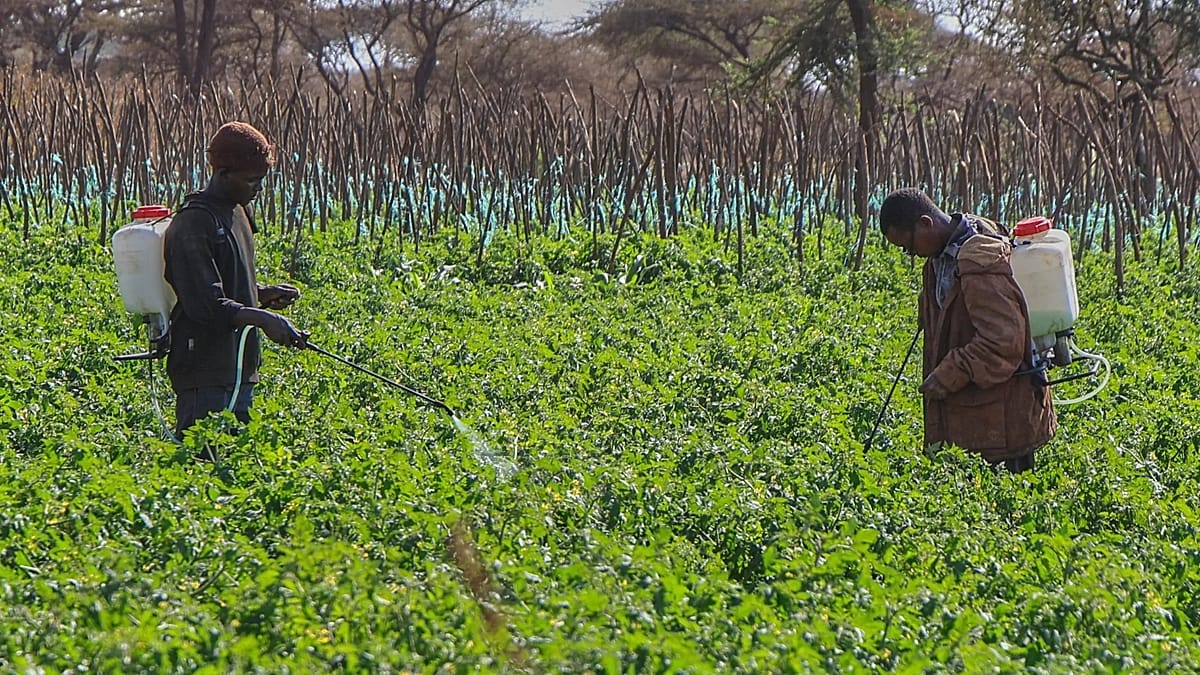
Every year, between 402 and 433 million agricultural workers worldwide suffer acute pesticide poisoning, according to a new study published in Frontiers in Public Health. With a global farming population of roughly 934 million, that means nearly half of all farmers and farmworkers are affected annually.
The research, commissioned by Pesticide Action Network (PAN) Germany, highlights a persistent public health crisis despite two decades of international efforts to curb pesticide use. Global consumption has actually doubled since 1990, reaching 3.8 million tonnes in 2023.
“We can no longer accept that those who work in the fields and grow our food are exposed to harmful pesticides and become sick,” said Susan Haffmans of PAN Germany.
Regional disparities and Europe's mixed record
The hardest-hit regions are southern Asia, followed by Southeast Asia and East Africa. Burkina Faso records the highest national rate, with nearly 84% of its farmers poisoned each year. In contrast, Europe is the only major region where pesticide consumption has declined since 1990, a trend the authors attribute to strict regulatory frameworks.
However, the continent is not immune. Southern Europe bears the heaviest burden, with a 32% poisoning rate and over 1.5 million cases annually. Western and Eastern Europe report much lower rates—around 6%—but the researchers caution that Eastern European data is sparse, currently represented only by Hungary. This suggests the true scale may be underestimated.
Fatalities in Europe remain low, ranging from just 2 deaths in Western Europe to 60 in Eastern Europe each year. Yet the study stresses that non-fatal poisonings impose a significant health and economic toll on farming communities.
Data gaps hinder progress
The authors call for urgent action at international, national, and research levels. Priorities include better monitoring systems, improved training for those handling pesticides, and implementing the United Nations target to phase out highly hazardous pesticides by 2035.
But progress is hampered by widespread underreporting. “Underreporting remains widespread, driven by limited access to healthcare and a lack of clinical training or systems to recognise or record pesticide poisoning,” said Sheila Willis of PAN UK.
The study underscores the need for harmonised data collection across countries to enable accurate comparisons and targeted interventions. Without reliable figures, policymakers cannot effectively address the problem.
For Europe, the findings serve as a reminder that while regulatory progress has been made, vigilance is still required—especially in southern member states and in the under-monitored east. As the continent debates agricultural reform, the health of those who produce our food must remain a central concern.