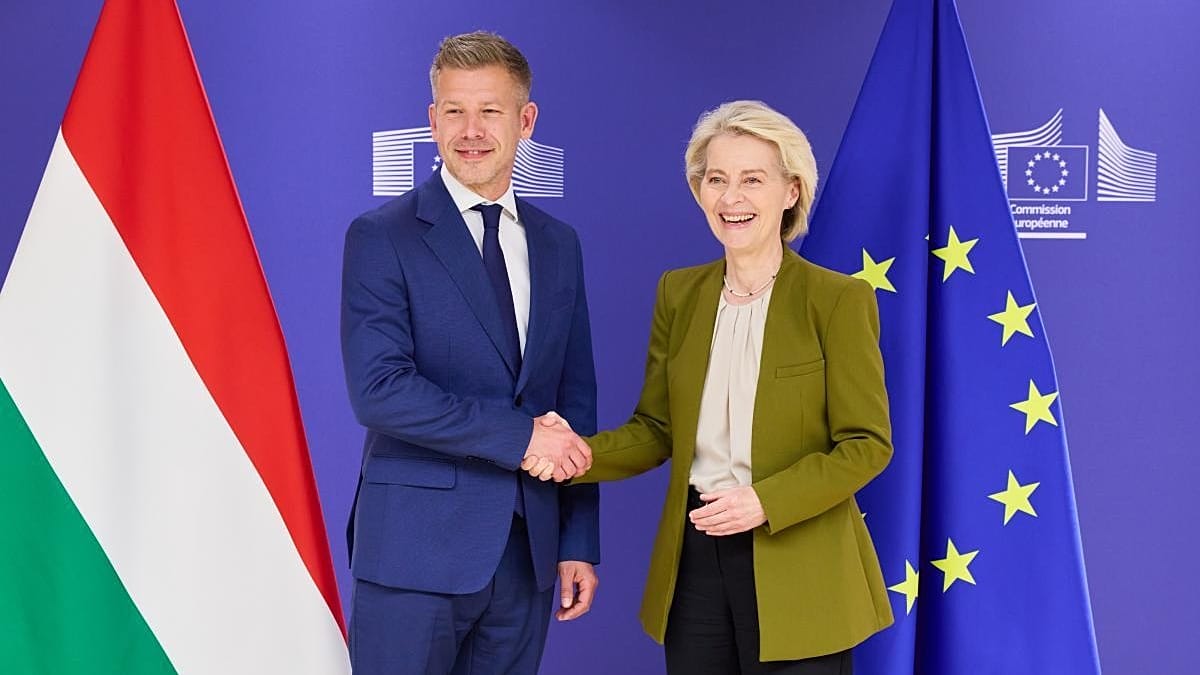
Hungary's incoming Prime Minister, Péter Magyar, made his first official visit to Brussels this week, seeking to unlock billions of euros in frozen EU funds that Budapest risks losing by August. The trip underscores the delicate balancing act facing the new Hungarian leader as he navigates relations with Brussels while managing domestic expectations.
Magyar, who is set to take office after a contentious election campaign, met with European Commission President Ursula von der Leyen and other senior EU officials. At stake is approximately €10 billion in cohesion and recovery funds that the Commission has withheld over concerns about rule-of-law and anti-corruption standards in Hungary. Without a breakthrough by August, the funds could be permanently lost.
Speaking after the meetings, Magyar expressed cautious optimism, stating that he expects the funds to flow "soon" following constructive talks. However, EU officials remain wary, noting that any disbursement will depend on concrete reforms, not just promises. The Commission has demanded changes to Hungary's judicial independence, media freedom, and anti-corruption framework.
EU-China Tensions on the Rise
Meanwhile, the broader geopolitical landscape is shifting as tensions between the European Union and China intensify. Euronews correspondent Angela Skujins reported that Brussels is preparing for a potentially confrontational meeting with Chinese officials next month, focusing on trade imbalances, technology transfers, and human rights concerns.
The EU has grown increasingly assertive in its dealings with Beijing, particularly after China's recent crackdowns in Xinjiang and its military posturing near Taiwan. European Commission Vice President Valdis Dombrovskis has warned that the bloc will not hesitate to use trade defense instruments if China fails to address market access issues. The upcoming meeting is seen as a critical test of whether the EU can maintain a unified front against Chinese economic pressure.
In a related development, China hawks are gaining influence within the European Commission, pushing for tougher measures on technology transfers and subsidies. This shift reflects growing unease among member states about China's strategic ambitions in Europe, particularly in sectors like renewable energy and electric vehicles.
Russia's Victory Day and Cultural Participation
From Strasbourg, Euronews' Vincenzo Genovese reported on Russia's Victory Day parade, which took place amid ongoing tensions over the war in Ukraine. The event highlighted the Kremlin's continued efforts to use cultural and sports events as tools of soft power, despite EU sanctions. Several European countries have called for a boycott of Russian cultural exchanges, but the EU has struggled to enforce a unified stance.
The debate over Russia's participation in European cultural and sports events remains divisive. While some member states, like Poland and the Baltic states, advocate for a complete ban, others, including France and Germany, argue for maintaining cultural dialogue. The European Parliament is expected to debate the issue later this month.
Sahel Region: EU Special Representative Weighs In
In an interview on Europe Today, EU Special Representative for the Sahel region, João Cravinho, outlined the bloc's strategy to address the deteriorating security situation in the Sahel. Cravinho emphasized the need for a coordinated approach that combines military support with development aid and governance reforms. The Sahel has become a focal point for EU foreign policy, as jihadist groups expand their influence and military coups destabilize countries like Mali, Burkina Faso, and Niger.
Cravinho warned that the EU cannot afford to disengage from the region, as instability there directly impacts European security through migration flows and terrorism. He called for increased investment in local governance and economic opportunities to counter extremist recruitment.
Looking Ahead
As the EU navigates these multiple challenges, the coming weeks will be crucial. For Hungary, the clock is ticking on the frozen funds, and Magyar's ability to deliver reforms will determine whether Budapest can secure the financial lifeline it needs. Meanwhile, the EU's relationship with China faces a pivotal moment, with trade and technology disputes threatening to escalate into a full-blown confrontation.
For viewers, Europe Today continues to provide comprehensive coverage of these developments, airing daily at 8 AM Brussels time on Euronews. The programme offers a concise yet thorough overview of the day's most important stories, from Brussels to the broader continent.