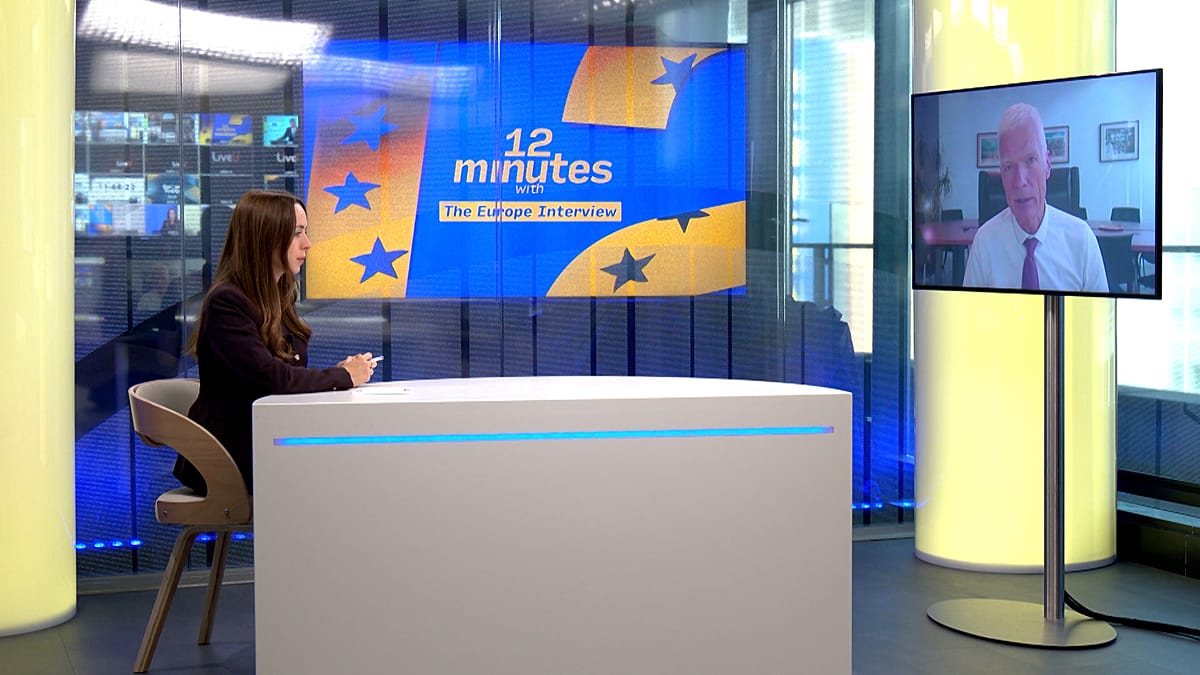
The latest PISA results paint a troubling picture for education across Europe, with 15-year-olds recording their lowest scores ever in reading and mathematics. Andreas Schleicher, the architect of the OECD's influential standardised tests, describes the situation as "really concerning," noting that young people are losing skills that are "particularly important for the times we live in."
The 2025 assessment, which tested students in 91 countries, measures how well they can apply reading, maths, and science to real-world problems. Beyond basic literacy, Schleicher points to a more worrying trend: a decline in students' ability to critically evaluate information and engage with complex texts.
"We see that young people not only have lower literacy skills, but we are seeing a decline in students' capacity to triangulate and to critically reflect on information, to engage with more complex texts," he said. These skills, he argues, are essential in an era of artificial intelligence, where tools can produce convincing but inaccurate content. "This technology is not necessarily accurate and therefore that intuition to check and verify should be really present."
AI's double-edged sword
Schleicher warns that AI is creating a vicious cycle: the more students rely on these tools, the more they lose the very capabilities they need. "These tools are not designed to make us think harder," he said, and the PISA results reflect this. Students who do not use AI tend to perform better.
His analogy is simple: "You don't get fit by watching sports. You get fit by doing sports." Learning, he stresses, comes from engaging with ideas, comparing and contrasting, not from passively consuming content. "AI can hollow out that very process. That's what we observe."
Part of the problem is that technology is advancing faster than education systems can adapt. "Humans have always been better at inventing new things than using them wisely," Schleicher noted.
Yet the OECD assessment also found that when AI is used actively and guided—for example, by challenging its output—it can enhance learning. "There are really interesting examples of countries where AI is used to make pupils think harder, to make them think about the right questions, to give teachers powerful tools to help students learn better," he said. The key, he added, is to "shift gears away from a consumptive use of AI to a more creative use."
Small countries lead the way
Schleicher, who created PISA in the 1990s to move beyond measuring education by spending and classroom hours, says the latest results highlight stark disparities within Europe. While seven EU countries scored significantly above the OECD average, 13 fell well below it.
"The biggest declines were recorded in large European countries, like France, Germany, and Spain. The most interesting solutions were found in the small, dynamic economies," he said.
Estonia is a standout, ranking first in Europe and in the global top ten across all three test domains. Schleicher credits its cautious but thoughtful approach to digital technology. "It's a clear example of a country that is engaging with the digital world in a cautious but very thoughtful, very productive way."
This success is particularly relevant given the Estonian government's recent initiative to address youth digital mental health risks, showing a holistic approach to digital challenges.
What parents and teachers can do
Looking ahead, Schleicher argues that education must prioritise human skills that are hard to digitise, such as ethical decision-making and navigating complex relationships. Students can no longer be "passive consumers" of education; they must become active learners.
For parents, the message is straightforward. "One of my real concerns is that parental interest in education in Europe has dramatically declined," he said. The solution is not about hours of homework at the kitchen table, but about showing genuine interest. "Children whose parents ask them how their school day went are two school years ahead in their test results," he noted.
Teachers, meanwhile, should evolve from instructors to coaches and mentors, taking a "genuine interest in who your students are and who they want to become." But in a Europe facing teacher shortages, Schleicher stresses that systems must "give teachers more time and more to play that much more important role."
The findings echo broader concerns about the impact of AI on skills, as a recent survey found that AI inflates workers' perceived skills, potentially masking real gaps. As Europe grapples with these challenges, Schleicher's warning serves as a call to action for educators, parents, and policymakers alike.