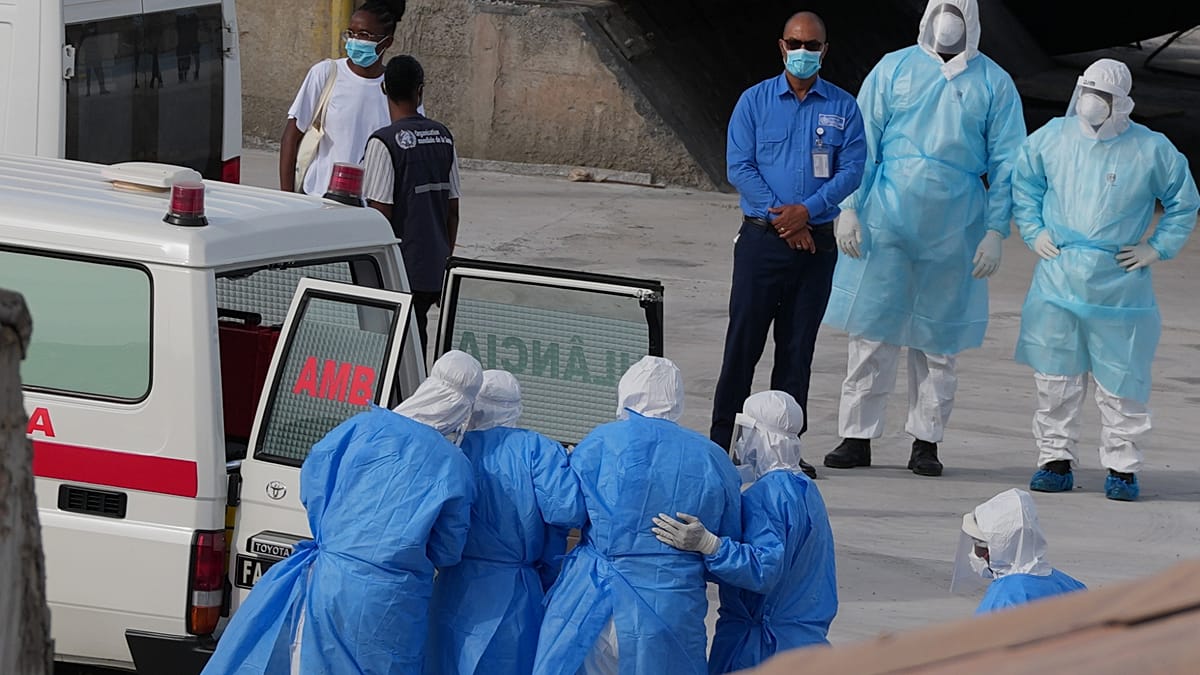
Residents of Russia's Irkutsk region are on edge after the death of a laboratory worker sparked rumours of a pneumonic plague outbreak in Siberia. The incident has led to quarantine measures, compulsory mask-wearing, and a flurry of contradictory official statements that have done little to calm public anxiety.
Death of a lab assistant
Darya Shipilova, a 28-year-old laboratory assistant at the Irkutsk Research Anti-Plague Institute, died in the early hours of 2 October in the intensive care unit of Shelekhov district hospital. According to local media, she had accidentally broken a test tube containing Yersinia pestis, the bacterium that causes plague, while handling live biological material on 25 September.
Two days later, her condition deteriorated sharply. Initially, doctors suspected a severe case of COVID-19 and admitted her to a specialised coronavirus unit. However, her rapid decline prompted urgent tests for highly dangerous infections. She was placed on a ventilator but could not be saved. The pulmonary form of plague develops swiftly and, without prompt targeted antibiotic treatment, is almost invariably fatal.
Quarantine and public alarm
Authorities responded with immediate but opaque measures. Around 200 people were placed under strict medical observation. Several hospitals in Irkutsk were closed and quarantined for three weeks, according to the local outlet Baikal People. On Saturday, masks were made compulsory at the Irkutsk aluminium plant in Shelekhov, and residents reported seeing people in protective suits on the streets. Parents said masks were distributed in kindergartens.
The official narrative has been muddled. On 2 October, regional governor Igor Kobzev spoke of a "particularly dangerous infection" but avoided the word "plague", insisting the situation was "under strict control". The next day, authorities in Baikalsk urged residents not to travel to Shelekhov because of plague, but the post was deleted hours later. Alexey Tsydenov, head of Buryatia, initially said the death was linked to plague infection, then amended his statement to a more cautious wording.
This lack of clarity has fuelled panic on social media across Irkutsk and neighbouring regions. Well-known Russian epidemiologist Gennady Onishchenko tried to reassure the public, noting that plague carriers—rodents and fleas—in Siberia typically enter winter dormancy by early October. But his words did little to dispel fears.
Official denial
On Sunday, Rospotrebnadzor, Russia's consumer safety watchdog, declared the sanitary and epidemiological situation in Irkutsk region "stable". The agency stated that Shipilova died from "pneumonia of unknown aetiology" and that further testing of samples revealed no micro-organisms related to her professional work.
"The sanitary and epidemiological situation in Irkutsk region, in the cities of Irkutsk and Shelekhov, is stable," the press service said. "A special package of measures has been organised and carried out in connection with the illness of an employee of the Irkutsk Anti-Plague Institute of Siberia and the Far East, diagnosis: 'Pneumonia of unknown aetiology'."
Despite these assurances, the incident raises broader questions about laboratory safety and transparency in Russia's handling of dangerous pathogens. The Irkutsk Anti-Plague Institute is one of several facilities across the country that research and store some of the world's most lethal microbes, a legacy of the Soviet biological weapons programme. Similar incidents have occurred elsewhere; in 2019, a lab worker in Novosibirsk accidentally pricked herself with a needle containing Ebola, though she did not become ill.
For now, the immediate crisis appears contained, but the psychological impact on the local population is profound. As one Shelekhov resident told a local news site, "We don't know what to believe. They say it's pneumonia, but we see people in hazmat suits." The coming weeks will reveal whether the quarantine holds and whether any secondary cases emerge. Meanwhile, the rest of Europe watches with concern, mindful that infectious diseases know no borders. The situation echoes past scares, such as the Ebola outbreak in DR Congo, which also tested public health systems and official communication.
As winter approaches, the region's health authorities face the dual challenge of managing a potential outbreak and restoring public trust. The Russian government's track record on transparent communication, particularly in times of crisis, has been mixed, as seen in its handling of the COVID-19 pandemic and the ongoing conflict in Ukraine, where Russian strikes have crippled Ukraine's power grid. For now, the people of Irkutsk are left waiting for answers that may never come.