In a strategic move to bolster energy independence and counter Russian hybrid threats, Poland and Germany are accelerating plans for massive offshore wind farms in the Baltic Sea. At the 4th German-Polish Energy Transition Forum in Berlin, diplomats and business leaders outlined a vision for the Baltic to become Europe's next major energy hub.
Jan Tombiński, Poland’s ambassador to Germany, invoked a Chinese proverb: “A good crisis should not be wasted.” He argued that the current geopolitical turmoil—driven by Russia’s full-scale war against Ukraine and instability in the Middle East—presents an opportunity for Europe to reshape its energy landscape. Tombiński noted that Poland has become a more important economic partner for Germany than the United States, with deeply interconnected economies.
Baltic Sea as a Strategic Energy Zone
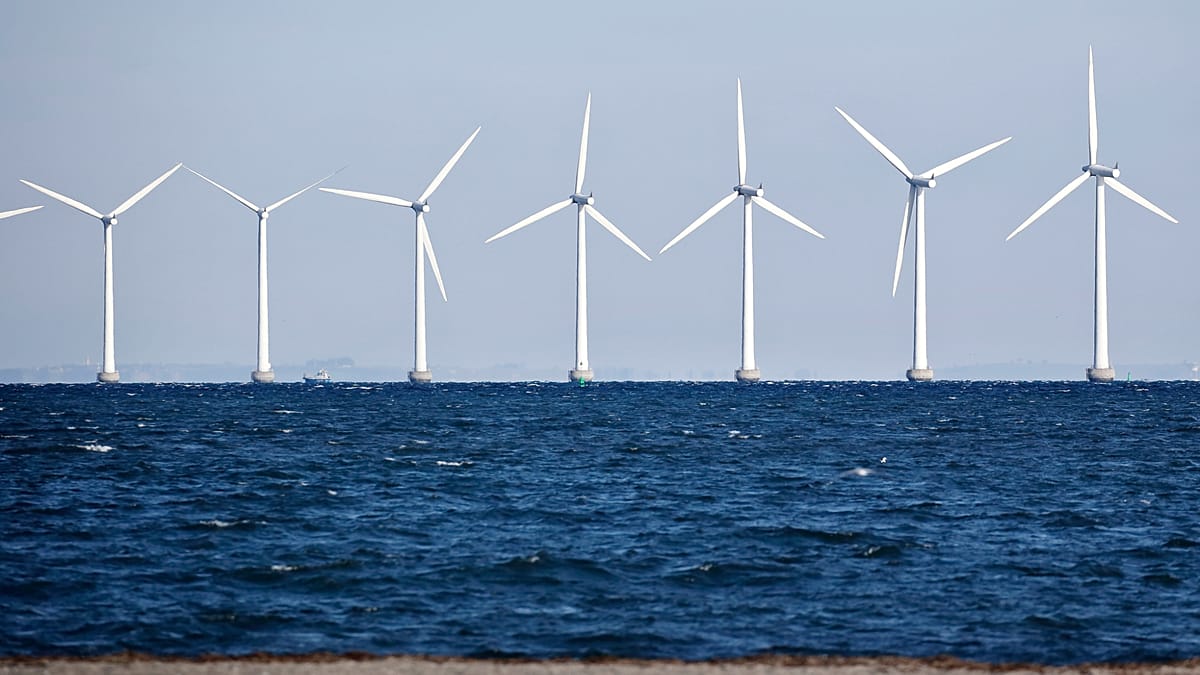
The Baltic Sea is central to this cooperation. While Germany has been hesitant to expand offshore installations there, Poland is pursuing a dynamic strategy. Poland’s first offshore wind farm, Baltic Power, is under construction and expected to be fully operational by the second half of 2026. Additional projects like Baltic 3 and Baltic 9+ are in development, with German companies increasingly involved as suppliers and project developers.
Konrad Wojnarowski, State Secretary at Poland’s Ministry of Energy, emphasized a strategy of “diversification of energy sources.” He warned that a nationwide blackout would cost Poland €9.5 billion per day, underscoring the urgency of reducing dependence on Russia. Poland has already expanded onshore wind capacity to over 11 gigawatts, enough to supply seven to ten million households annually.
Dr. Elmar Stracke, Strategy and Policy Advisor at the German Association of Energy and Water Industries (BDEW), acknowledged Germany’s slower progress. “Things are moving better in Poland than they are here,” he said, calling for more efficient spatial planning. Stracke stressed that the future lies offshore: “The sea is the space that matters, not the individual coastline.”
However, the Baltic Sea also presents challenges. The region has become a stage for Russian hybrid attacks, including signal interference, sabotage, and provocations targeting critical infrastructure. These threats underscore the need for resilient energy systems. As Stracke noted, “The infrastructure of the energy system must be resilient enough not to throw us off course.”
Poland’s economy, growing faster than the EU average with projected real GDP growth of 3.3 to 3.5 percent in 2026, provides a strong foundation for these investments. The country is also pursuing nuclear power alongside renewables, aiming for “as little dependence on Russia as possible,” according to Wojnarowski.
Cross-border cooperation is key. Piotr Wiśniewski, Deputy Chairman of the Board of the Polish Chamber of Renewable and Distributed Energy (PIGEOR), emphasized the need for the right infrastructure. “In twenty years, it will work very well,” he predicted.
This initiative aligns with broader EU efforts to streamline defence procurement and counter Russian threats, as seen in recent EU policy moves. The Baltic offshore wind farms represent a tangible step toward European energy sovereignty, reducing reliance on fossil fuel imports and strengthening resilience against hybrid warfare.