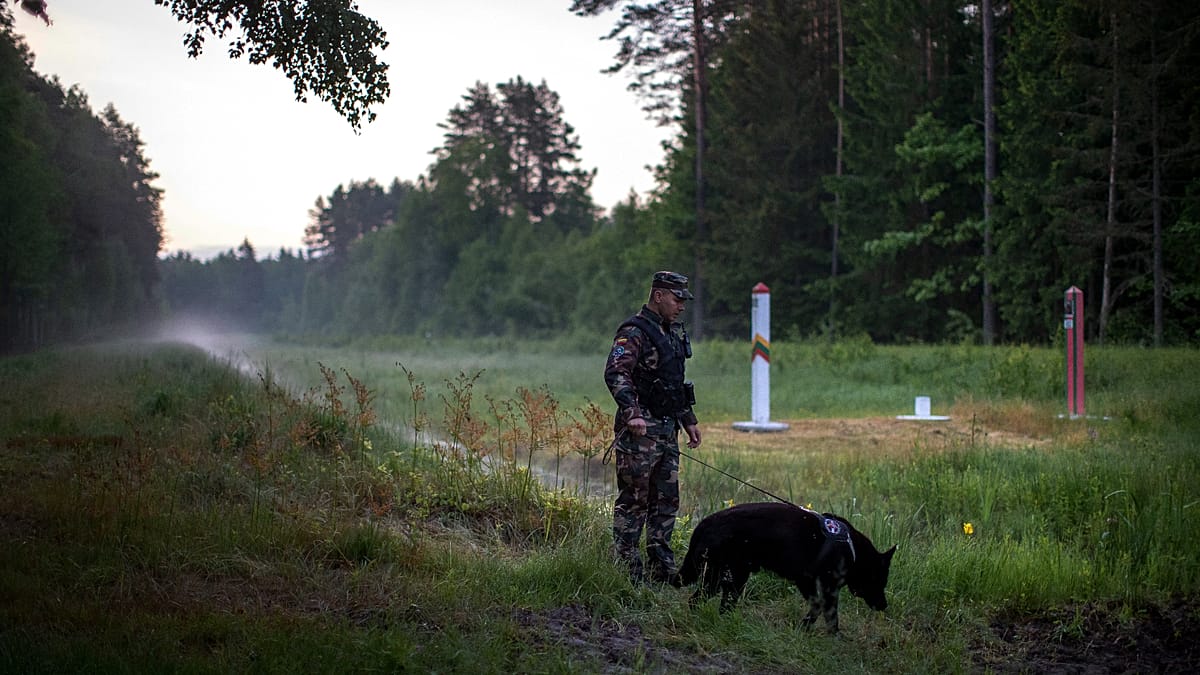
Poland and Lithuania are jointly developing an international evacuation plan that would move civilians from the Baltic states across the Polish border in the event of a major crisis or military threat. The initiative, confirmed by Vilmantas Vitkauskas, head of Lithuania's National Crisis Management Centre, is currently in its analytical phase, with officials from both countries examining procedures, logistics, and infrastructure capacity.
Once a formal agreement is reached, a detailed blueprint will be drafted. The preparations are being tested as part of Lithuania's Vyčio Skliautas 2026 exercises, which began on 25 September and run until 3 October. These drills are designed to stress-test the national mobilisation system and inter-institutional cooperation during emergencies, including the practical evacuation of residents.
The strategic Suwałki Gap
At the heart of the plan lies the Suwałki Gap, a narrow strip of land connecting Poland and Lithuania. This corridor is the only land link between the Baltic states and the rest of NATO and the European Union, making it a critical chokepoint for both military reinforcement and civilian movement. Vitkauskas underscored its importance, saying, "The Suwałki gap is of huge importance, both militarily and logistically."
The region hosts the main road and rail routes between the two countries. In a severe crisis, controlling this area would be essential for moving troops, supplies, and evacuees. The plan therefore pays particular attention to ensuring that evacuation routes through the gap remain viable under pressure.
Testing procedures and cooperation
The current exercises involve around 3,000 officials, officers, and representatives from local authorities, companies, and NGOs, plus about 1,000 volunteers. A delegation of roughly 20 experts from various Polish institutions is also participating. During the drills, systems for warning residents, setting up assembly and registration points, and managing transport and the movement of evacuees across successive regions are being evaluated. Poland is actively involved in the cross-border planning aspects.
Lithuanian authorities stress that these are training activities and do not indicate an imminent threat. The goal is to refine procedures and ensure that all agencies can work together effectively in a crisis. The exercises also build on a September study trip in which Lithuanian and Latvian representatives visited Poland to learn about mass evacuation, civil protection, and reception arrangements for evacuees.
Poland is already preparing to receive evacuees, with talks involving Polish security and civil protection services. Lithuania has also developed its own national evacuation plan for residents in case of a military threat or crisis.
The move comes amid heightened security concerns in the region, as seen in recent incidents such as Poland attributing a Starlink station fire to sabotage and the broader debate over AI's role in NATO's eastern flank. While the evacuation plan is a precautionary measure, it reflects the seriousness with which Baltic and Polish authorities view potential threats.
For the Baltic states, the ability to move civilians quickly and safely to Poland would be a lifeline in a worst-case scenario. The Suwałki Gap, often described as NATO's most vulnerable point, is now also being reinforced as a route for humanitarian evacuation. The ongoing exercises are a clear signal that Warsaw and Vilnius are determined to be prepared, even as they hope the plan never has to be used.