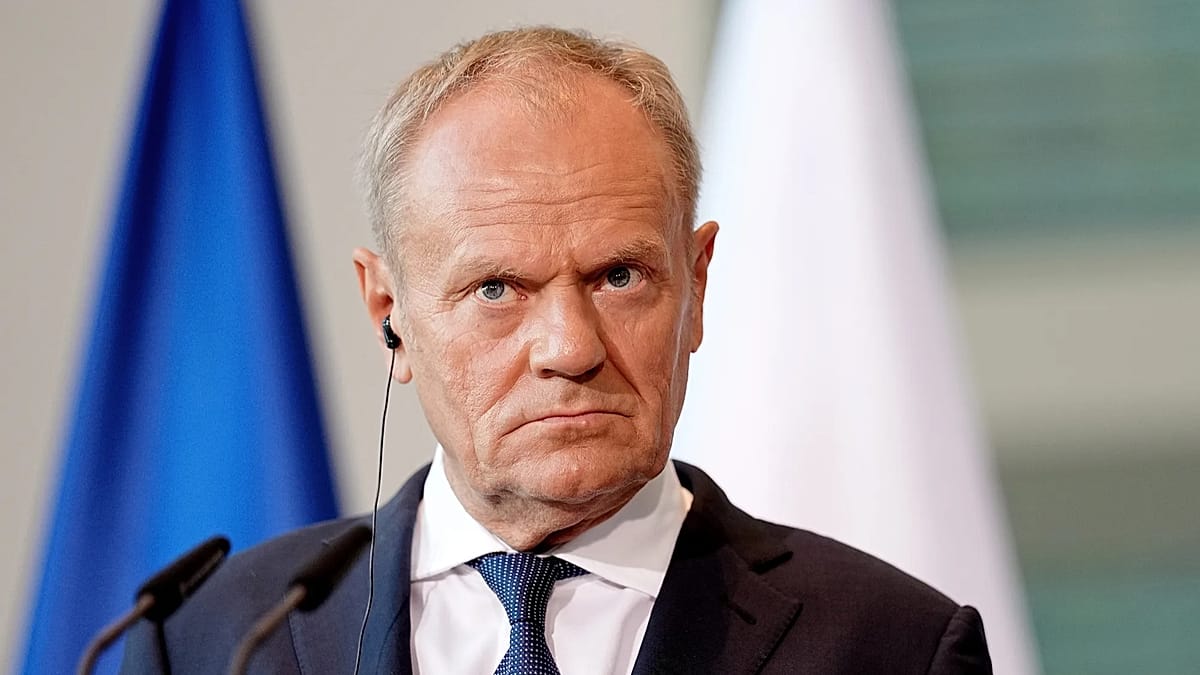
Polish security services moved swiftly over the weekend after police received information pointing to a possible attack on Prime Minister Donald Tusk and Defence Minister Władysław Kosiniak-Kamysz. The interior ministry confirmed that a coordination meeting was convened at the headquarters of the Internal Security Agency (ABW) in Warsaw at 11am on Sunday to assess the situation.
According to a spokesperson for the Ministry of the Interior and Administration, the gathering brought together representatives of the police, the State Protection Service (SOP) — the uniformed unit responsible for guarding senior state officials — and the ABW itself. Jacek Dobrzyński, the spokesman for the minister coordinating Poland's special services, told the Polish Press Agency (PAP) that he could not yet disclose operational details, but said journalists would be briefed if a press conference were called.
What is known — and what is not
At this stage, the precise nature of the information that reached the police remains undisclosed. It is unclear whether the warning concerned a specific plot, a credible but unverified tip, or a broader threat assessment. Officials have not confirmed whether any individual has been detained, whether security around the two ministers has been visibly reinforced, or whether the alert is linked to any ongoing investigation.
The lack of detail is not unusual in the early phase of such cases. Polish counter-terrorism and protective procedures typically require verification before public statements are issued, particularly when the targets are sitting members of government. The SOP operates under the interior ministry and is tasked with the physical protection of the prime minister, the president, and other senior figures; any credible threat against Tusk or Kosiniak-Kamysz would fall squarely within its remit.
Poland has been on a heightened security footing for much of the past two years, shaped by the war in neighbouring Ukraine, repeated incursions into Polish airspace, sabotage attempts attributed to Russian intelligence, and a series of hybrid incidents along the eastern flank. The country's police have already increased patrols in other contexts this year, reflecting a broader climate of vigilance.
A wider pattern of pressure on Warsaw
The alert comes as Warsaw navigates an unusually crowded threat landscape. Tusk's coalition government has taken a firmly Atlanticist line on Ukraine, pushed for tougher EU sanctions enforcement, and clashed repeatedly with Moscow and Minsk. Kosiniak-Kamysz, who leads the Polish People's Party (PSL) and serves as deputy prime minister, has overseen a rapid modernisation of the armed forces and signed defence contracts worth billions of złoty.
That profile makes both men visible targets in a way that transcends ordinary political disagreement. Polish prosecutors have in recent months pursued cases involving alleged foreign-directed sabotage, arson, and disinformation, while NATO allies have warned that Russia is running an aggressive campaign of low-level operations across Europe. Against that backdrop, even an unconfirmed threat against two of the country's most senior officials is treated with the utmost seriousness.
The ABW meeting on Sunday should be read as a procedural response rather than evidence that an attack was imminent. Still, the fact that the interior ministry chose to confirm the gathering publicly — however sparse the accompanying detail — signals that the matter is being handled at the highest level of the state's security apparatus.
Political reaction and next steps
Polish political figures across the spectrum have so far refrained from speculative commentary, a restraint that reflects both the sensitivity of the case and the country's recent experience with security scares. Officials are expected to release further information only if the investigation reaches a stage where disclosure would not compromise operational work.
For now, the key questions remain unanswered: what exactly the police were told, who provided the information, and whether the threat has been neutralised. What is clear is that Warsaw is not treating the warning lightly. The coordination between the police, the SOP, and the ABW — three bodies with distinct but overlapping mandates — indicates a full-spectrum response, at least at the assessment stage.
European partners will be watching closely. Poland sits at the centre of NATO's eastern defence planning and is one of the largest contributors to military and humanitarian support for Kyiv. Any serious security incident involving its leadership would reverberate well beyond Warsaw, sharpening debates in Brussels and other European capitals about the resilience of the continent's political class to hybrid pressure.
Further updates are expected once the security services conclude their initial review. Until then, the interior ministry's message is one of caution: the situation is being handled, and the public will be informed when there is something concrete to say.



