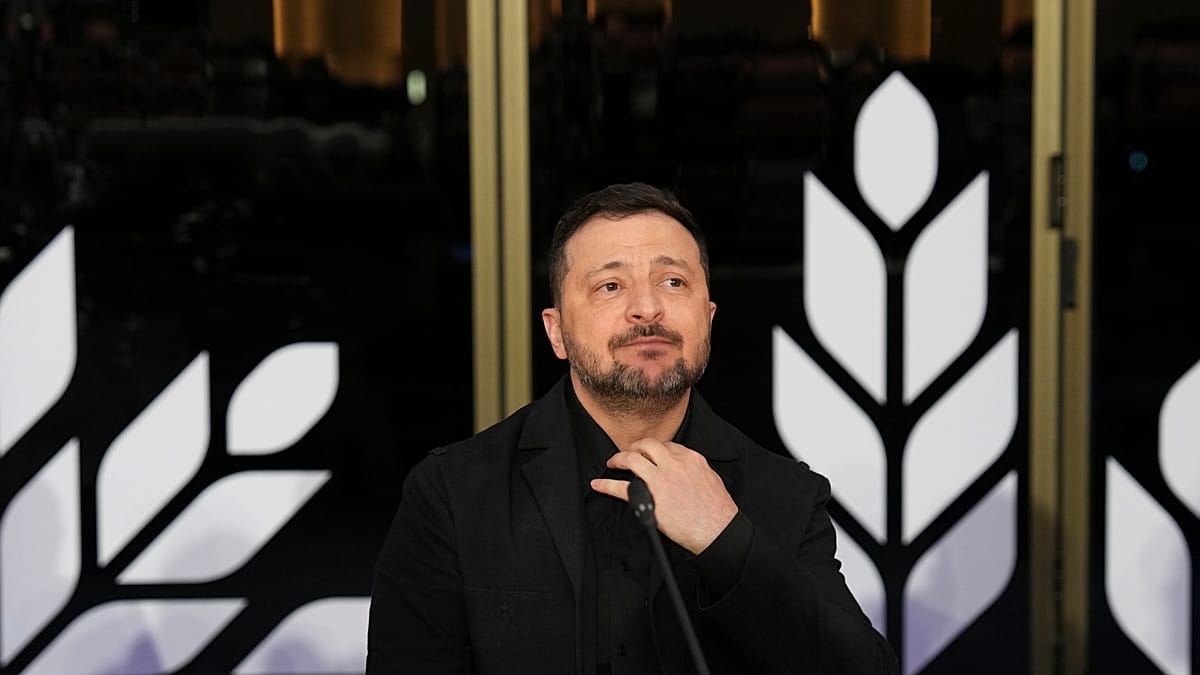
Polish President Karol Nawrocki has announced he will seek to strip Ukrainian President Volodymyr Zelenskyy of the Order of the White Eagle, Poland's highest state honour. The decision comes after Zelenskyy named an elite Special Operations Forces unit after the Ukrainian Insurgent Army (UPA), a formation that led massacres of ethnic Poles during World War II.
Speaking to journalists in Warsaw on Friday, Nawrocki said he received Zelenskyy's decree "with great sadness." He argued that glorifying the UPA provides Russian propaganda with "a lot of oxygen for disinformation" and that "this is not how relations between nations are built." Nawrocki added that he had taken seriously an appeal from MP Grzegorz Płaczek of the Confederation New Hope party, and has proposed that the Chapter of the Order—scheduled to meet on 8 June—include a motion to revoke the award.
The Order of the White Eagle was conferred on Zelenskyy on 5 April 2023 by then-President Andrzej Duda. At the time, Duda praised Zelenskyy for "services in deepening relations between Poland and Ukraine, for efforts to ensure security and for unwavering commitment to the defence of human rights," adding that "your stance is today saving Europe from a tide of Russian imperialism." Zelenskyy accepted the honour on behalf of the entire Ukrainian nation and its army.
A Fracture in Wartime Solidarity
The UPA, active between 1942 and 1949, was linked to the Organisation of Ukrainian Nationalists (OUN) and fought for an independent Ukrainian state. Its actions included the ethnic cleansing of Poles in Volhynia and Eastern Galicia, events that remain deeply painful in Polish historical memory. Zelenskyy's decree, issued on 27 May, justified the naming as a move "to restore the historical traditions of the national army" and in recognition of the unit's performance in defending Ukraine's territorial integrity.
Prime Minister Donald Tusk has sought to calm the tensions. In the Sejm, he urged both sides to "cool emotions, because we have one enemy." He acknowledged that Zelenskyy's decision "hurts our historical sensibilities," but warned: "If we fall out over the past, someone else will win the future. The President of Ukraine should finally understand this. So should the President of Poland. Before it is too late!"
Deputy Prime Minister and Foreign Minister Radosław Sikorski echoed Tusk's caution, saying he was "disappointed by the failure to take Polish historical sensitivities into account," but stressed that "only Putin will gain from a Polish-Ukrainian row over history." The Polish Foreign Ministry lodged a diplomatic protest, summoning Ukraine's ambassador to Poland, Vasyl Bodnar, and expressing "deep dissatisfaction" with the decision. In a statement, the ministry emphasised that "in the face of Russia's ongoing aggressive war against Ukraine... Polish-Ukrainian relations... should not become hostage to a difficult history."
Former President and Nobel Peace Prize laureate Lech Wałęsa reacted more sharply, writing on social media: "By honouring the bandits from the UPA, the President of Ukraine has insulted me and all our compatriots who were murdered. As a result, I have publicly removed the Ukrainian flag from my lapel."
From the Ukrainian side, Lviv Mayor Andriy Sadovyi urged restraint. In an interview with Polsat News, he noted that "every city has its own heroes" and that "there were difficult times between Poles and Ukrainians, but now we are on the same side." He warned that Nawrocki's move would be remembered, and called for wisdom to "stop picking on the names of Ukrainian military units and to focus on supporting an army that is holding the largest front in Europe since the Second World War."
The dispute comes at a delicate moment for European security. Poland has been one of Ukraine's staunchest allies since Russia's full-scale invasion, hosting millions of refugees and providing substantial military aid. The UK and Poland recently signed a major defence treaty, underscoring the region's focus on deterring Russian aggression. Meanwhile, Zelenskyy continues to appeal for advanced weapons as Ukraine faces ammunition shortages.
As the Chapter of the Order prepares to meet on 8 June, the question remains whether historical grievances will be allowed to undermine the strategic partnership that both countries need to confront a common adversary. Tusk's plea—that "if we quarrel about the past, someone else will impose the future on us"—captures the stakes for Europe as a whole.