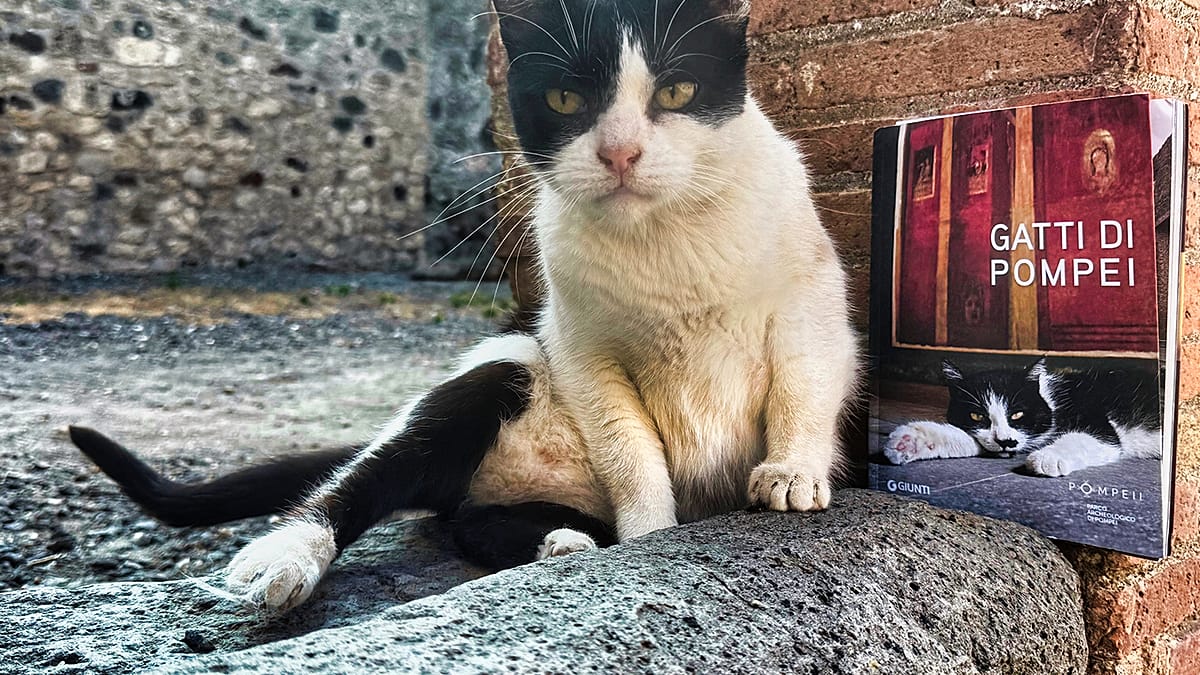
For years, the cats that roam the ancient streets of Pompeii have been a quiet attraction for millions of visitors. Now, these feline residents are getting their own moment in the spotlight with a new photography book, Cats of Pompeii, published by Giunti Editore in collaboration with the Pompeii Archaeological Park.
The book features photographs donated by archaeologist and photographer Silvia Vacca, offering an intimate look at the colony of roughly 40 to 50 cats that live within the UNESCO World Heritage site. The images capture the animals as they wander among the ruins of Roman villas, gardens, and cobbled streets, providing a fresh perspective on a presence that has become as much a part of Pompeii's identity as its frescoes and amphitheatres.
Balancing heritage and animal welfare
The park's feline population is carefully managed through a system that aims to reconcile animal welfare with the preservation of the archaeological heritage and the safety of visitors. Video surveillance has been installed to deter abandonment, and the park works closely with the charity Archeogatti Onlus, led by Antonella Carotenuto, to run sterilisation campaigns, health checks, and feeding programmes. Some of the cats are also put up for adoption, giving them a chance to leave the ruins for a permanent home.
This approach reflects a broader European trend of integrating animal care into heritage management. Similar initiatives exist at other historic sites, but Pompeii's colony has a particular charm, partly because of the ancient city's unique atmosphere. As the park notes, the cats have become a symbolic feature of life at the site, and their presence is appreciated by visitors from across the globe.
The book also touches on the historical relationship between humans and felines in the ancient world. Ongoing archaeological research continues to shed light on how cats were perceived and treated in Roman times, adding a layer of depth to the modern-day photographs.
Vacca's lens captures the park during its quietest moments, when the crowds have gone and the streets fall silent. The result is a portrait of a different Pompeii, one where the protection of cultural heritage goes hand in hand with the care of the animals that have made it their home.
Cats of Pompeii is available at the park's bookshops and through Giunti's distribution network. For those who cannot visit in person, the book offers a way to experience the charm of Pompeii's feline residents from afar.
This publication comes at a time when European heritage sites are increasingly exploring creative ways to engage the public. From wildlife photography awards to digital-age policies, the continent is finding new angles on old stories. For Pompeii, the cats are more than just a photo opportunity—they are a living link between the ancient past and the present day.