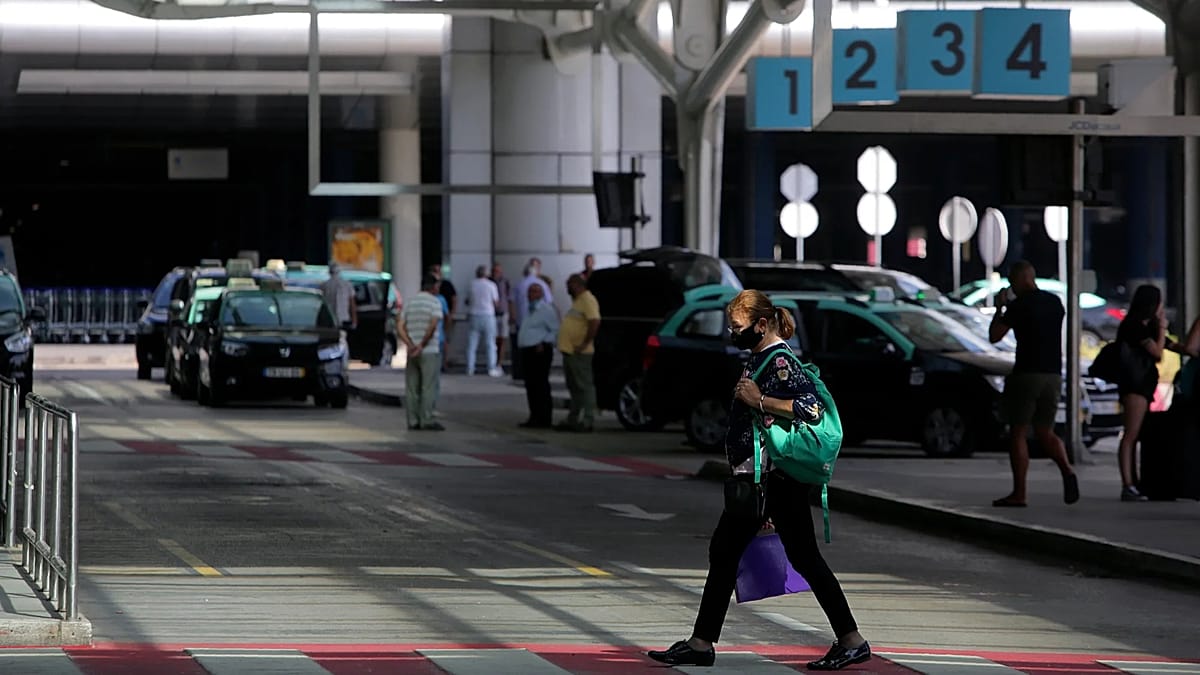
Passengers arriving at Lisbon's Humberto Delgado Airport can now expect a fixed price for taxi rides to many parts of the city, a move designed to end the 'tourist trap' reputation that has plagued the service for years. The new fare structure, which took effect on Thursday, applies to all taxi drivers operating at the airport, even those not yet formally accredited to use the rank.
The initiative follows a wave of complaints from both tourists and locals about inflated prices, rigged meters, and drivers refusing card payments or taking unnecessarily long routes. In August, Josien Nation, a Dutch national living in Portugal, described the situation as a 'tourist trap' in a video posted on the Facebook page Nations Without Borders. She acknowledged that not all drivers are dishonest, but noted that some try to negotiate the fare before departure and then drive with the meter switched off, a practice that is explicitly banned in Portugal.
Another account, shared on Reddit, detailed a journey from the airport to Rossio where the passenger was charged €18.50 despite the meter showing €13. The driver justified the extra cost as a luggage fee and refused to accept card payment. Such stories are common among foreign visitors, but residents have also reported similar experiences. One Portuguese man recounted how a driver refused to take him because he didn't accept cards, and when asked for an estimated fare, the driver cited vague factors like traffic and journey time.
How the fixed fares work
The new system divides the city into two zones. For trips to Zone 1, which covers the central area, the fare is €16 during the day (07:00–22:00) and €20 at night (22:00–07:00). For Zone 2, which includes more distant neighbourhoods, the cost is €19 by day and €23 by night. These rates apply on weekends and public holidays as well. Destinations outside these zones will still be metered.
The fixed prices include luggage, eliminating the previous €1.60 surcharge for bags larger than 55x35x20 centimetres. Carlos Silva, president of the Portuguese Taxi Federation (FPT), told the Lusa news agency that the system will be fully operational by November, and that fares for areas just outside the capital, such as Moscavide, Sacavém, and Prior Velho, still need to be set. He argued that it would be unfair for a passenger to pay €16 to Parque das Nações and then, for a destination just a few hundred metres further into the neighbouring municipality of Loures, to be charged by the meter.
Mixed reactions from the public
Social media has been quick to react, with many criticising the new prices as too high for short journeys. An Instagram user pointed out that a taxi from the airport to Oriente station in Parque das Nações, a distance of about two kilometres, used to cost between €7.50 and €10. 'And now a fixed fare at such a high rate, why?' she asked. Some commenters suggested that ride-hailing services like TVDE (the Portuguese term for app-based transport) would benefit from the change.
Others accused the authorities of setting 'tourist prices' or of legitimising the practices of unscrupulous drivers. 'They are going to legalise what some have already been doing for years: turning off the meter,' read one comment. However, there are also voices in favour of the fixed fares, noting that they bring transparency. A Reddit user wrote, 'Having already seen this system in other countries, having the fares per destination set in advance without depending on the meter is actually useful.'
The debate has also revived discussion about public transport alternatives, with some pointing out that the metro and bus are cheaper options, though they may be impractical for travellers with heavy luggage or young children.
Beyond fares: a broader protocol
The fixed-fare scheme is part of a wider protocol signed in September by Lisbon City Council, ANA – Aeroportos de Portugal, the Lisbon Tourism Association (ATL), the FPT, and ANTRAL (the National Association of Road Transport in Light Vehicles). The agreement also includes a rule that drivers cannot refuse service, and it introduces an accreditation process for airport taxis, which began on the same day the fares took effect.
Carlos Silva believes the new rules could attract more drivers to the airport rank. 'We know that many do not stop at the airport for various reasons, but that they are considering doing so if there are rules, because at the moment they do not feel comfortable. Fixed prices may be more advantageous, offsetting the time they might have to wait,' he said.
While the fares are now in force, information panels displaying the new prices are not yet installed in the arrivals area or outside the terminal. The authorities say these will be added soon, as transparency is a key goal of the reform. The protocol also aims to 'improve the quality of the service and protect users'.
Lisbon has been gaining attention as a top European destination, with recent accolades including a spot in Condé Nast's ranking of the most welcoming cities. The city is also set to benefit from the new Lisbon–Porto high-speed rail link, which will improve connectivity. For now, the fixed taxi fares are a step towards ensuring that visitors and residents alike can navigate the city without fear of being overcharged.