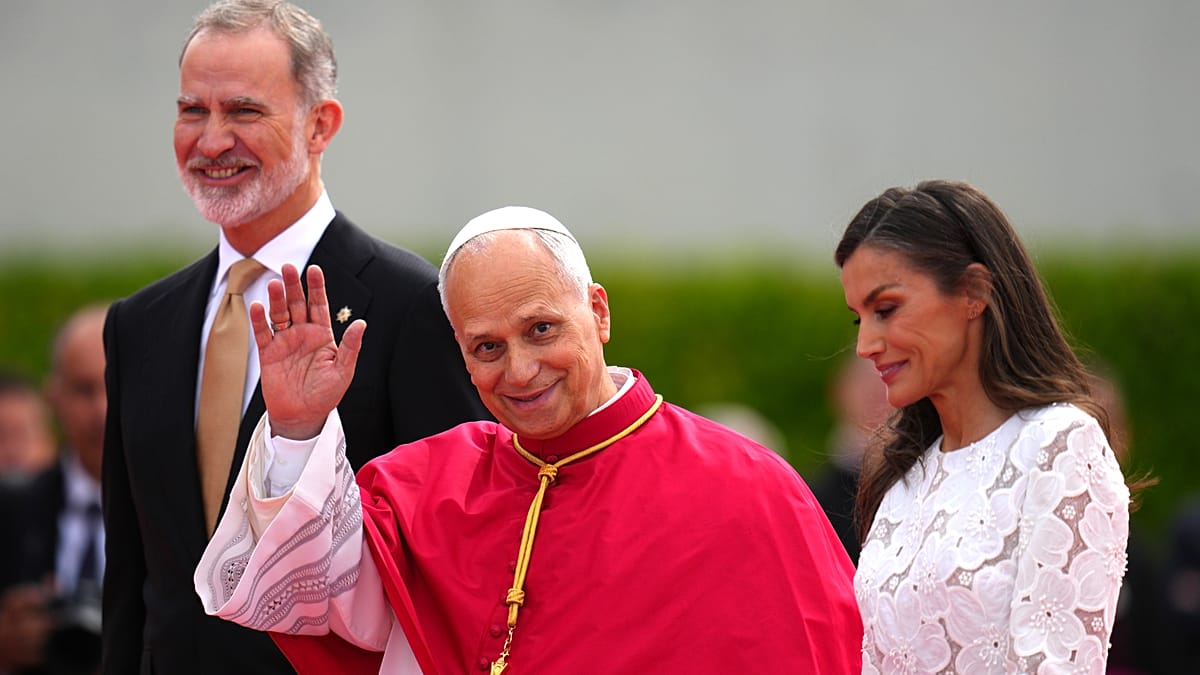
Pope Leo XIV touched down at Adolfo Suárez Madrid-Barajas Airport on Saturday morning, 6 June, marking the start of a six-day apostolic journey across Spain. The visit, which runs until 12 June, takes in Madrid, Barcelona, Gran Canaria, and Tenerife. It is the first papal visit to the country in fifteen years, since Benedict XVI attended World Youth Day in 2011.
King Felipe VI and Queen Letizia welcomed the pontiff on the tarmac. From there, the popemobile wound through central Madrid, passing Plaza de España, Calle de la Princesa, and Plaza de Colón. According to the Government Delegation, roughly 130,000 people lined the streets to catch a glimpse of the new pope.
A Call for Reconciliation
In his first official address at the Royal Palace, Leo XIV steered clear of soundbites and instead delivered a reflective speech that touched on Spain's historical role as a crossroads of cultures. He cited Alfonso X's school of translators and cities like Córdoba and Toledo as examples of coexistence. Without naming names, he warned: "I invite everyone, for love of the truth, to abandon the divisive, polarising narratives of your social reality and its history, and to move from sterile simplifications to a fruitful appreciation of complexity."
The pope also thanked Spain for its commitment to international law and multilateralism, a remark widely interpreted as an endorsement of Madrid's stance on Gaza, Ukraine, and migrant reception. The speech set the tone for a trip that includes 21 events across four locations, with the pontiff expected to speak openly on international politics.
Notable absences at the official reception included former prime minister José Luis Rodríguez Zapatero, Basque lehendakari Imanol Pradales, and MPs from most parliamentary parties. Those present included former prime ministers Felipe González, José María Aznar, and Mariano Rajoy, as well as PP leader Alberto Núñez Feijóo and Vox leader Santiago Abascal. Abascal used the occasion to criticise Prime Minister Pedro Sánchez, accusing him of trying to "whitewash" his image in the shadow of the pontiff.
Addressing Abuse and the Social Agenda
King Felipe VI was unusually direct on the subject of sexual abuse within the Church, stressing the need for reparation and support for victims. This marked the first time the king addressed the issue so explicitly in front of a pontiff. The Vatican has confirmed that Leo XIV will meet victims of abuse during his stay, though dates and locations remain unspecified. Several associations have insisted that this must be more than a symbolic gesture. "We do not want a photo with the pope; we want rights and reparation for all victims," they stated jointly.
Later on Saturday, the pope visited the Cedia centre run by Cáritas Madrid, spending time with homeless people. He then presided over a mass gathering in Plaza de Lima, with over 240,000 young people registered. On Monday 8 June, he will address the Cortes Generales, an unprecedented event in Spain's parliamentary history.
The trip continues to Barcelona, where Leo XIV will celebrate Mass in the Sagrada Família and inaugurate the Torre de Jesucristo, making Gaudí's basilica the tallest religious structure in the world. The journey concludes in the Canary Islands, where the pope will visit migrant reception centres in Gran Canaria and Tenerife, a gesture seen as continuing the approach of his predecessor Francis.
This visit comes at a time when Spain is grappling with political polarisation and social challenges, including a recent heatwave and ongoing debates over migration and tourism. The pope's message of reconciliation resonates against a backdrop of European tensions, from the war in Ukraine to the pressures on NATO defence spending.