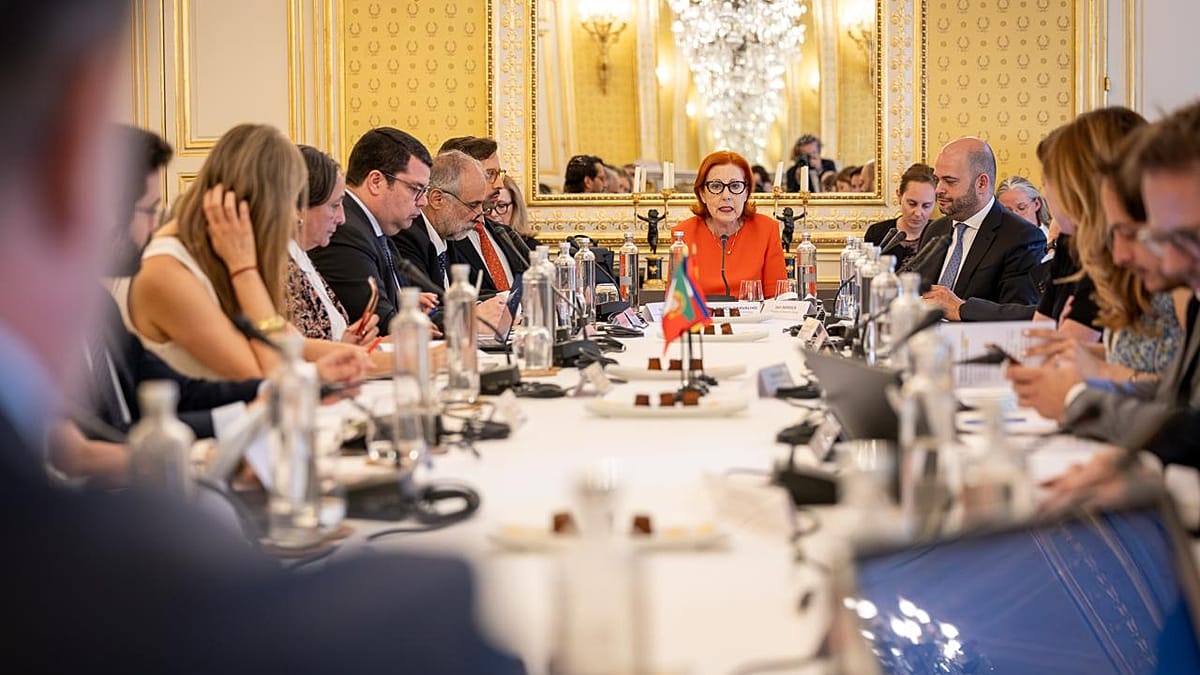
Portugal is escalating its push for faster electricity interconnections with France and the European Union, arguing that the Iberian Peninsula's limited grid links create unique challenges that deserve special financial treatment. Energy Minister Maria da Graça Carvalho told reporters on 6 July that the country effectively operates as an isolated system despite leading Europe in renewable energy deployment.
'From the point of view of electricity and energy in general, we are an island,' Carvalho said on the sidelines of a ministerial meeting in Paris. 'And that's more difficult to manage. We need more flexibility, more storage and much greater grid resilience than if we were fully integrated.'
The meeting brought together Carvalho, her Spanish counterpart Sarah Aagesen, French energy minister Maud Bregeon, and Energy Commissioner Dan Jørgensen. Carvalho, a former member of the European Parliament, framed the issue as a matter of European energy security, competitiveness, and resilience, not merely infrastructure. She pointed to the April 2025 blackout that plunged the Iberian Peninsula into darkness as a key argument for accelerating grid integration.
For the European Commission, revamping the bloc's grids is central to its goal of electrification and reducing reliance on imported fossil fuels. A major target to electrify the bloc's economy is set for 17 July. Carvalho argued that Portugal has been managing its national electricity system with all the challenges of an island nation and that the Commission should pay 'special attention to the financing of energy storage' for countries in its situation.
'We need more storage capacity and flexibility to strengthen our electricity grid,' Carvalho said. 'We also hope that the Commission, as it has done for other island nations in Europe with derogations and special funding for certain situations, will pay attention to Portugal and, naturally, to Spain.'
Carvalho noted that Portugal has already met the EU's 2030 electricity interconnection target of 15 percent, with Spain ahead of schedule. While Spain did not demand official 'outermost region' status, it asked the Commission for 'greater ambition in European funding for these projects,' according to sources at the Spanish Ministry for the Ecological Transition.
Pyrenean Bottleneck
The three countries and the Commission agreed to hold a new technical meeting of the high-level group in September to advance trans-Pyrenean electricity interconnections. Commissioner Jørgensen stressed the need to move forward with two planned links across the Pyrenees, a plan that involves delicate political navigation between France—a net electricity exporter—and the historically isolated Iberian Peninsula.
'The European Commission is doing its utmost to support the member states and enable the implementation of such projects, and we remain committed to providing all the necessary support going forward,' Jørgensen said, noting that €11 million in EU funding has been earmarked for one interconnector linking Spain and France.
The bottleneck between France and Spain remains a headache for the Commission, which identified it as a strategic target in its Grids Package legislation to revamp the bloc's power grid by 2040. Carvalho acknowledged the costs France would need to accept: 'It is an expensive connection, and it has some environmental impacts, but it is not impossible.'
France has been reluctant to build as many new cross-border links as Spain, Portugal, and the Commission want. Greater interconnection would increase market integration, altering electricity flows and prices. During periods of abundant Spanish solar or wind generation, electricity could flow north into France, affecting French generators' market position. At a ministerial meeting in Luxembourg on 26 June, Bregeon said Paris had 'demands' but stressed the importance of 'a European approach' to power network development.
'We are just in an uncertain position,' she said. 'There are still several months of discussion, of negotiations, of exchanges during which we will obviously be fully involved. So, once again, we are approaching these negotiations with requirements that we consider legitimate.'
Portugal's push comes amid broader EU efforts to improve grid resilience. The EU Auditors: €43 Billion Renovation Fund Lacks Proof of Energy Savings report highlights challenges in energy efficiency funding, while the Canary Islands Launch Voluntary Tourist Tax to Fund Local Sustainability Projects shows how other regions are seeking innovative solutions. For Portugal, the path to full integration remains a test of European solidarity and political will.