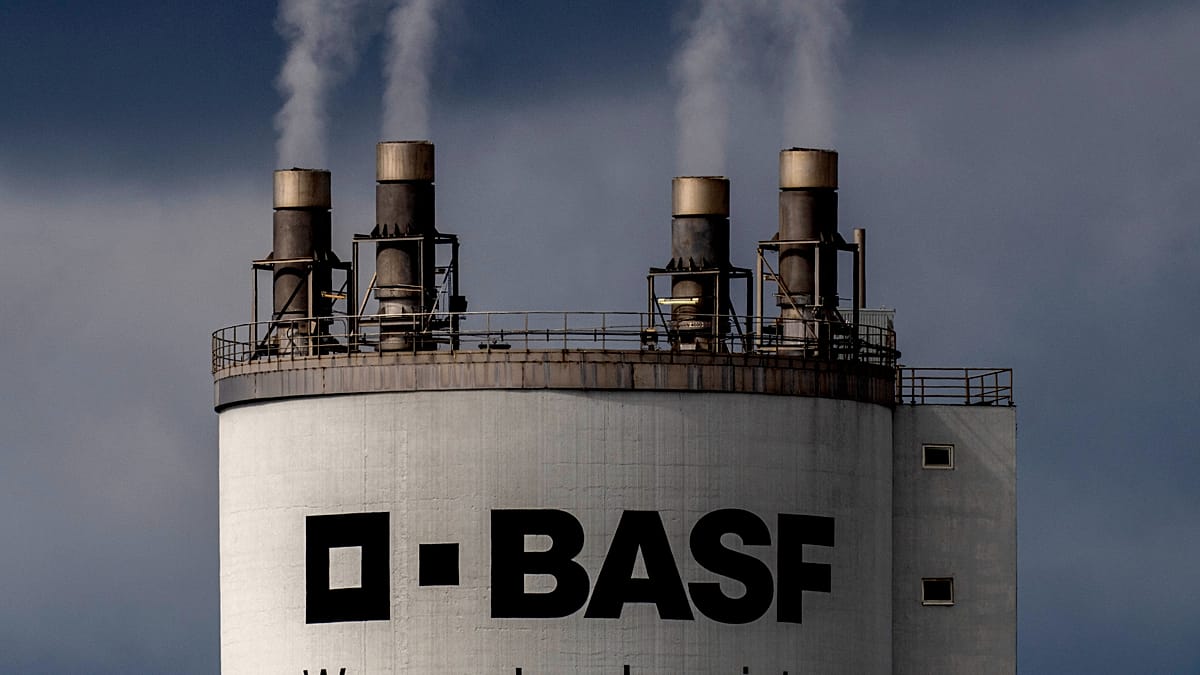
Brussels — A watchdog report published on Monday challenges the European Union's flagship industrial initiative, the Critical Chemicals Alliance (CCA), arguing that it has become a vehicle for chemical companies to push for relaxed pollution rules and public subsidies without meaningful environmental conditions.
Launched in January 2026 with the European Commission's endorsement, the CCA includes major players such as BASF, TotalEnergies, and Avantium. Its stated purpose is to identify chemical substances and production sites deemed "critical" to the European economy, potentially unlocking billions of euros in state aid and public support. However, research by the Corporate Europe Observatory (CEO) and the European Environmental Bureau (EEB) contends that the alliance's agenda is overwhelmingly shaped by the very industry it is meant to oversee.
"Since the Alliance's launch, it has been clear that the European Chemical Industry Council (CEFIC) is in the driving seat of this initiative, with the Commission's industry department unconcerned by the risks of the process being unduly influenced by corporate interests," the report states.
Industry Claims of Crisis Questioned
The report challenges the industry's repeated assertion that European chemical manufacturers face an existential crisis due to high energy costs and competition from China. It notes that major chemical companies generated hundreds of billions of euros in profits over the past decade, much of which was distributed to shareholders rather than reinvested in modernising production. The authors also point out that generous free carbon allowances under the EU's Emissions Trading System have already provided substantial public support to the sector.
Among the substances the CCA has flagged as "critical molecules" for public investment are benzene, a known carcinogen; chlorine; petrochemical feedstocks like ethylene and propylene; and hydrofluoric acid, which is linked to PFAS, or "forever chemicals."
The report highlights that CEFIC representatives serve as vice-chair of the group defining critical molecules and production sites, and as chair of the trade working group. This, the watchdogs argue, amounts to "structural corporate capture" rather than ordinary lobbying. They call for public funding to be granted only with stronger conditions and resolved conflicts of interest.
"My impression, based on the way CEFIC presented things … the structure of the Steering Board and working groups, was that there must have been substantial preparatory work behind the scenes involving both DG GROW (the Commission's industry department) and CEFIC," said Tatiana Santos, EEB's head of chemicals policy. "My perception was that it was CEFIC running the show."
CEFIC did not respond to a request for comment at the time of publication.
Environmental Concerns Neglected
Although the Commission formally chairs the CCA, the report argues that much of the agenda, governance, and technical work has been delegated to industry representatives, while environmental organisations have been largely excluded from decision-making. As a result, key environmental priorities—such as reducing hazardous chemicals, cutting dependence on fossil feedstocks, and decreasing overall production of petrochemicals and plastics—are largely absent from discussions. Instead, the focus has been on maintaining existing industrial capacity, investment support, and deregulation.
The report also warns that climate measures promoted within the CCA, including carbon capture and certain bio-based solutions, risk prolonging fossil fuel dependence rather than accelerating genuine decarbonisation. The authors argue that EU policymakers should shift their focus from asking which chemicals are economically "critical" to which are socially essential—those necessary for health, safety, and vital public functions, and deserving of direct public investment.
"The concept of 'essentiality', the societal value of chemicals and making public funding conditional on driving detoxification are not even on the radar of the Commission, let alone running the CCA process," the report reads.
The Commission did not respond to a request for comment at the time of publication.
This controversy comes amid broader debates over the EU's industrial competitiveness and environmental ambitions. The chemical industry has been a vocal proponent of the Green Deal, but critics argue that its actions often contradict its rhetoric. The findings also echo concerns raised by rights groups about the need for stronger safeguards in other sectors, such as AI regulation.