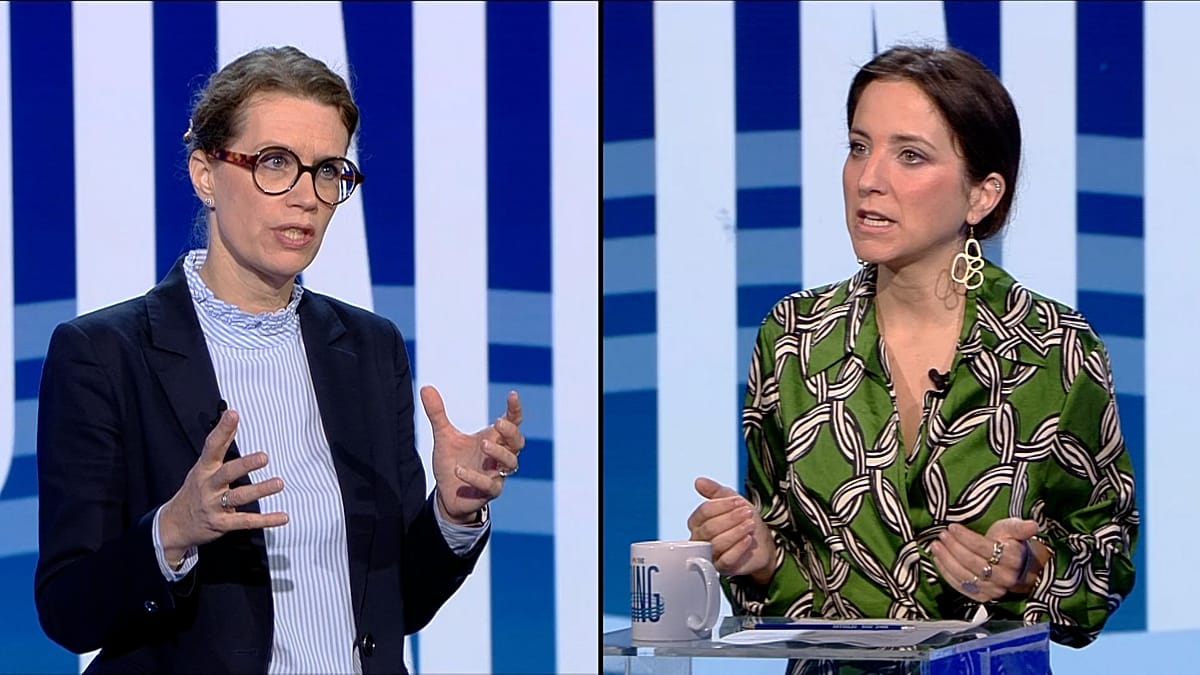
Europe is the fastest-warming continent on Earth, heating at roughly twice the global average. As temperatures soar, a critical question emerges: is Europe prepared for a hotter future? This question took center stage in the latest edition of The Ring from the European Parliament in Brussels, featuring Italian Green Benedetta Scuderi and German EPP Andrea Wechsler.
The challenge extends far beyond climate policy. Cities are struggling to manage extreme heat, energy systems face mounting pressure, and governments are scrambling to protect the most vulnerable. The debate is increasingly ideological, touching on consumption, health, and sustainability. Should Europeans retreat into air-conditioned homes, or is drastic action needed to mitigate the worst effects of climate change?
Clash Over the Green Deal
Scuderi and Wechsler repeatedly clashed over the EU Green Deal and lessons from the current heatwave. According to Wechsler, “if we want to really convincingly decarbonize, we need to be open not only for electrons, but also for molecules. And what I see the Greens going for is that they do not treat all technologies that we need for decarbonization equally. This is something (where) we don't get your party (Greens) on board.”
Scuderi accused the EPP of watering down elements of the Green Deal alongside the far-right, stepping back from social legislation, and relying too heavily on fossil fuels. “How can we expect to convince the rest of the world to have good targets, good policies, if we are the first that are doing steps backwards?” she stated.
The heatwave has exposed infrastructure gaps across the continent. In Germany, cities like Berlin and Frankfurt are scrambling to adapt as temperatures hit 41.7°C, revealing weaknesses in public transport and housing. Meanwhile, French hospitals race to adapt as another heatwave looms, with emergency rooms bracing for a surge in heat-related illnesses. In Spain, the second-hottest June on record was linked to nearly 900 excess deaths, highlighting the deadly toll of extreme heat.
Both MEPs found common ground on a statement by Simon Stiell, Executive Secretary of the United Nations Framework Convention on Climate Change. Stiell warned: “Until humanity stops burning colossal amounts of coal, oil and gas, extreme heat will keep getting worse, and other climate impacts – from mega-droughts, floods, wildfires and storms – will keep hammering every economy and population harder each year.”
Yet as the debate showed, consensus on the right European climate policy remains elusive. The heatwave has also reignited the air conditioning debate, with the EU refusing to take sides as the technology becomes a lifeline for millions but also a driver of energy demand and emissions. Over 1,300 lives have been lost in the current heatwave, underscoring the urgency of the crisis.
As Europe faces its second heatwave of the summer, the political battle over the Green Deal is far from over. The choices ahead are difficult, and whether citizens are on board remains an open question.