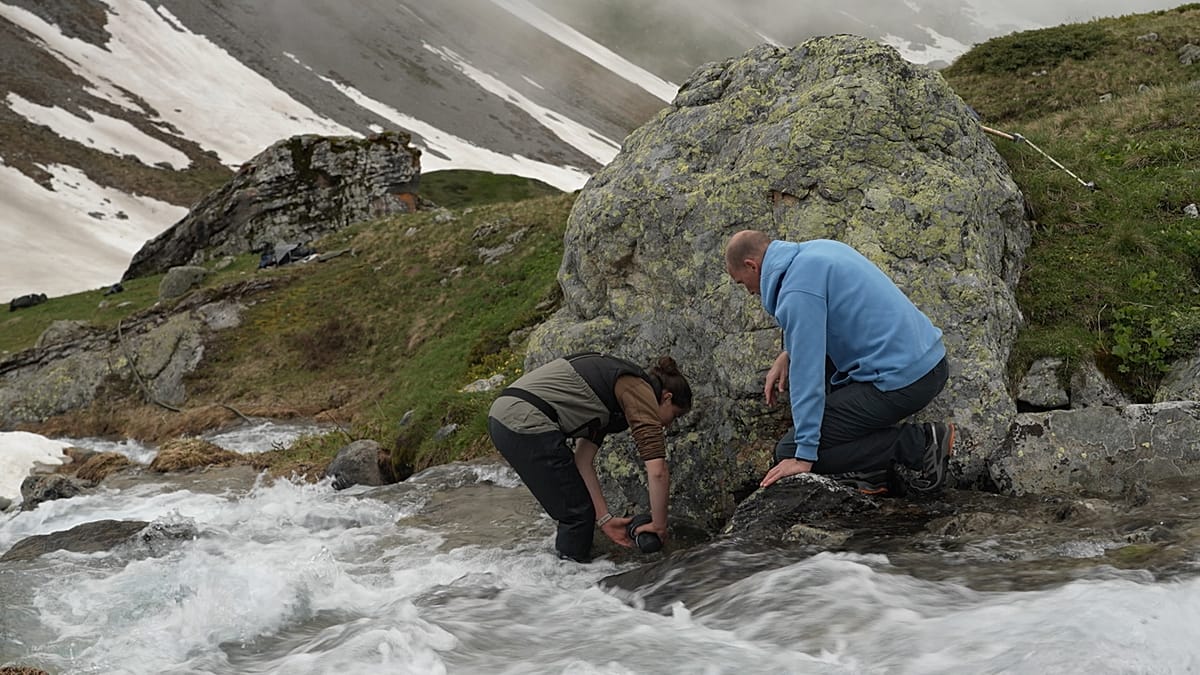
Retreating glaciers, shifting snow patterns, and more frequent extreme weather events are reshaping the Alpine landscape, according to Markus Noack, Professor of hydraulic engineering and water resources management at Karlsruhe University of Applied Sciences and a member of the European Waterwise project. The initiative, led by the University of Neuchâtel and the Edmund Mach Foundation, aims to equip communities across six Alpine countries with tools to anticipate and adapt to water scarcity.
Building a toolbox for vulnerability assessment
At the heart of Waterwise is the development of a “toolbox” that integrates existing data with statistical analysis to produce representative indicators for climate, hydrology, biodiversity, and socio-economics. “We combine existing data with statistical analysis to derive representative indicators for climate, hydrology, but also biodiversity and socio-economics,” Professor Noack explains. This approach allows researchers to cross-reference hydrological and socio-economic models with different future climate scenarios, known as Representative Concentration Pathways (RCPs), to project water balances and assess whether supply can meet demand.
The goal is not to predict a single future but to explore multiple possibilities: wetter seasons, drier ones, or moderate change. In the Alps, annual averages often obscure critical seasonal variations. Summers are growing hotter, while winters see more liquid precipitation rather than snow. One consequence is already evident in the data: the number of low-flow days—periods of reduced river discharge—has risen sharply over the past several decades, Noack notes.
From science to local decision-making
Waterwise’s ambition extends beyond academic research. The project feeds a web-based platform designed to be accessible not only to scientists but also to authorities, managers, and other stakeholders. The platform enables each territory to assess its own vulnerability and craft tailored adaptation strategies. “Our role as scientists is to provide the data to inform the decision. But the decision, in the end, always belongs to the local decision makers,” the researcher stresses.
The transnational dimension is a cornerstone of the project. Tested at sixteen sites across six Alpine countries, Waterwise responds to the recognition that water challenges do not stop at administrative borders—and neither should the solutions. This cross-border collaboration is particularly relevant given the findings of an international study published in Nature in February 2025, which reported that the Alps and the Pyrenees have lost around 40% of their glacier volume in less than a quarter of a century, making them the regions of the world with the greatest relative ice loss.
As Europe grapples with deepening water stress—explored in our analysis of which countries are most at risk—the Waterwise project offers a model for proactive, science-based adaptation. By combining rigorous modeling with local engagement, it aims to ensure that Alpine communities can navigate an uncertain hydrological future.