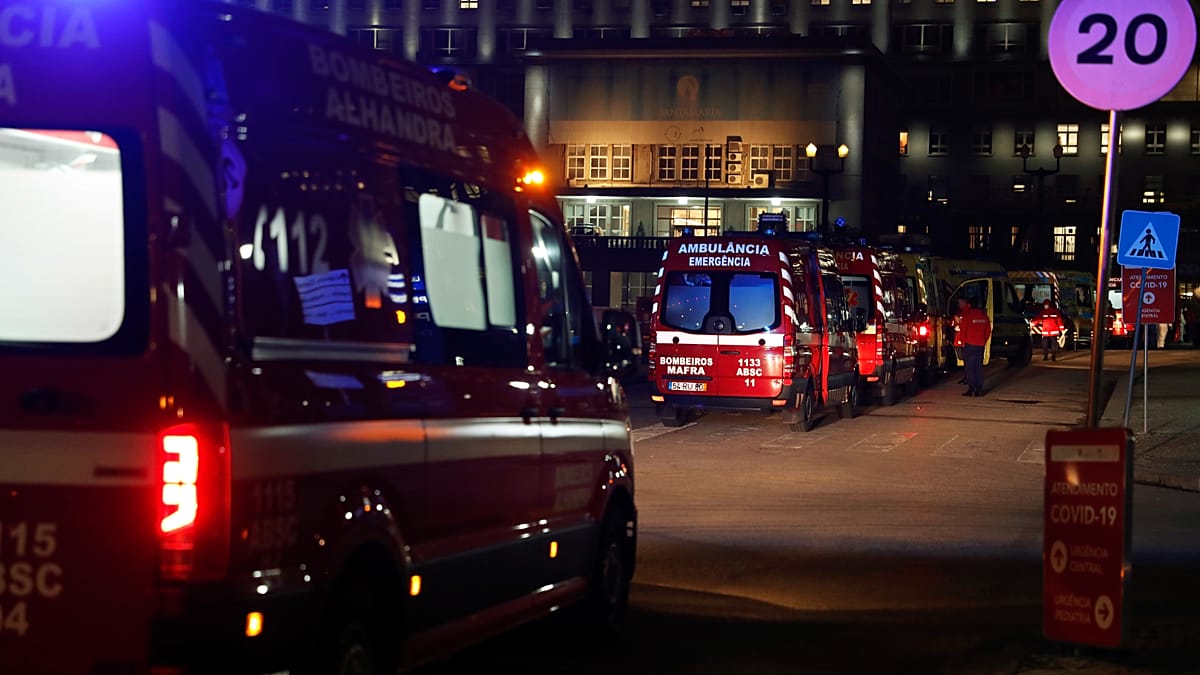
Portugal is experiencing a widespread general strike on Wednesday, with hospitals, schools, and transport networks grinding to a halt. The industrial action, called by the CGTP-IN union federation, is a direct response to the government's proposed changes to labour legislation, known as "Work XXI," which includes over 100 amendments to the Labour Code.
The strike has hit the National Health Service (SNS) particularly hard. According to the National Federation of Trade Unions of Workers in Public and Social Functions (FNSTFPS), adherence among SNS workers during the night shift ranged from 95% to 100%. In Lisbon, the São Francisco Xavier and São José hospitals reported full walkouts, while Santa Maria Hospital saw 90% adherence. In Porto, the Viseu Dão Lafões ULS Hospital and São João Hospital also recorded complete stoppages, and the Portuguese Oncology Institute of Porto reported 90% participation. The Bissaya Barreto Maternity Hospital and the University Hospitals hub in Coimbra saw a total shutdown, while Santarém Hospital reached 74% adherence. Outpatient consultations at Portalegre Hospital are not taking place, though minimum services are being maintained.
For the first time, workers from the SNS24 helpline have joined the strike, potentially making it harder to reach a healthcare professional by phone. Waiting times could extend to three hours, adding pressure to an already strained service.
Schools Closed on Exam Day
The strike has also closed many schools across the country, disrupting the Year 6 Portuguese exam scheduled for Wednesday. José Feliciano da Costa, secretary-general of the FENPROF teachers' union, told SIC Notícias that adherence was "significant" in areas such as Sintra, Olivais, Fundão, Coimbra, Moita, Castelo Branco, and Mafra. He criticised the education minister's decision not to postpone the exam, suggesting it showed that "the exams are of no interest" and could have been held on another day.
The transport sector has been severely affected. Nearly 190 flights have been cancelled at Lisbon, Porto, and Faro airports. At Lisbon's airport, 43 arrivals and 46 departures are cancelled; at Porto's Francisco Sá Carneiro airport, 29 arrivals and 27 departures; and in Faro, 21 arrivals and 23 departures. The Lisbon Metro is at a standstill, with no minimum services operating. In Porto, only the Blue and Yellow lines are running, while the Green, Red, Violet, and Orange lines are suspended. Tejo River ferries operated by Transtejo have also seen several connections cancelled, and CP – Comboios de Portugal expects disruptions to train services. More than two dozen companies nationwide have halted operations.
Under Portuguese labour law, minimum services must be guaranteed in essential sectors such as healthcare, energy, and fuel supply during a strike. However, the scale of the walkout has made this difficult to enforce.
Tiago Oliveira, secretary-general of CGTP-IN, told journalists outside a closed primary school in Lisbon that "the figures point to a major strike." He added, "The goal is to denounce the labour package, to see the labour package withdrawn. For ten months, workers have shown they do not want the labour package, and the prime minister (Luís Montenegro) has shown arrogance and a lack of respect for workers."
The strike stems from the government's failure to reach an agreement with social partners during the Social Concertation process. The PSD/CDS-PP government, led by Luís Montenegro, has pushed forward with the labour reforms despite union opposition. This action follows a broader trend of labour unrest in Europe, as seen in Spain's recent approval of a health worker statute despite strike threats. The situation in Portugal also echoes concerns about labour rights across the continent, with unions increasingly mobilising against what they see as regressive policies.
The strike's impact on daily life is profound, with many citizens unable to access healthcare, education, or transport. As the day progresses, the full extent of the disruption will become clearer, but the message from workers is unequivocal: they oppose the proposed changes and demand their withdrawal.



