Portugal is ramping up its border control capacity ahead of the summer travel surge. Interior Minister Luís Neves confirmed on Friday that 340 additional officers from the Public Security Police (PSP) will be assigned to the country’s airports starting 4 July. The reinforcements are intended to shorten waiting times at passport checks, which have caused frustration among travellers in recent weeks.
Speaking to Portuguese broadcaster SIC, Neves detailed the distribution: “Lisbon alone will get 140, 100 will go to Porto, and then others to Faro, Funchal and Ponta Delgada.” The officers are currently undergoing specialised training for border duties, the minister added.
Bottlenecks and Blame
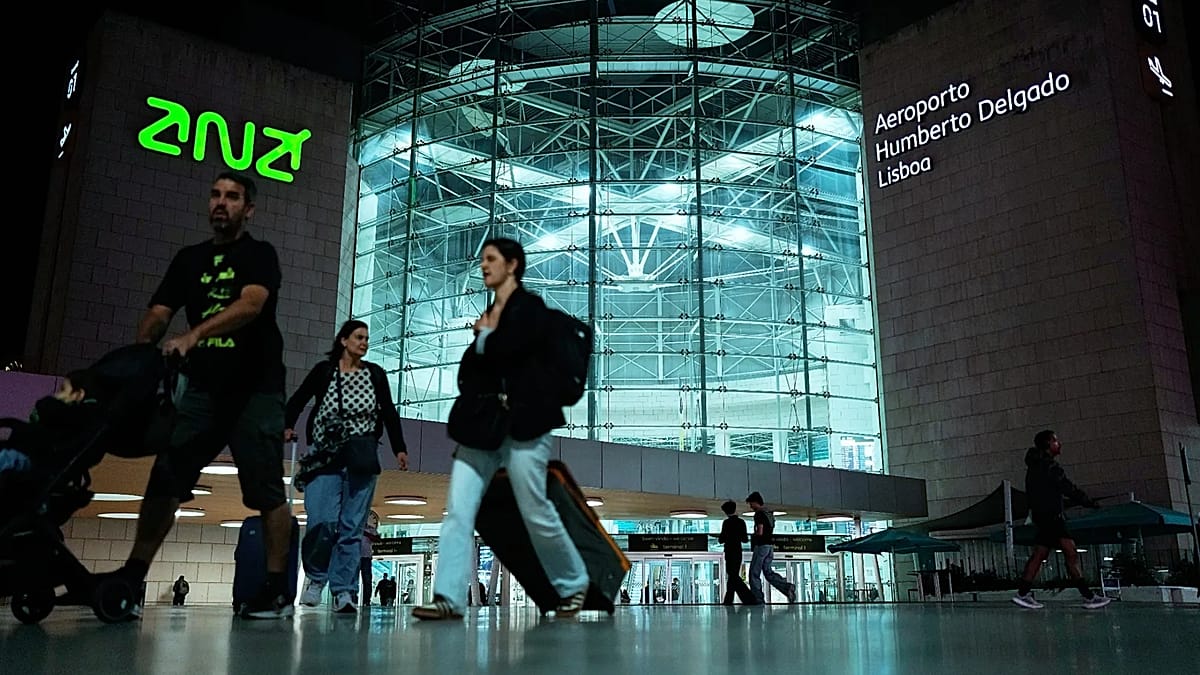
The announcement follows reports of long queues at several Portuguese airports, with Lisbon’s Humberto Delgado Airport bearing the brunt of the delays. The government has partly attributed these bottlenecks to the rollout of the European Union’s Entry/Exit System (EES), which records biometric data and entry-exit information for non-EU nationals on short stays of up to 90 days within a 180-day period.
However, the European Commission has pushed back against that explanation. In a statement to the Lusa news agency, an official source denied that the EES was responsible for the queues. “The challenges faced in Portugal, including longer waiting times, are not related to any problems in the functioning of the Entry/Exit System,” the Commission said. It added that it remains “in contact with Portugal on this matter” and will “continue to provide the necessary support.”
The disagreement highlights the tension between national governments and Brussels over the implementation of EU-wide border systems. The EES, designed to strengthen security and streamline data collection, has faced delays and technical hiccups across several member states.
Neves, for his part, struck a more optimistic note, pointing to recent improvements. “It is important to look at how operations have gone in recent days. Saturday, for instance, may have been the day of the year when the most passengers used Portuguese airports,” he said, describing the situation as having “gone very well.”
This latest deployment builds on a previous measure announced last week, when 48 PSP officers were sent to Lisbon airport on an emergency basis. Lisbon handles the largest share of Portugal’s air traffic, making it the focal point of the government’s efforts to prevent summer chaos.
Portugal’s tourism sector, a cornerstone of the economy, is bracing for another busy season. The country welcomed over 30 million visitors in 2024, and airports in the Algarve, Madeira, and the Azores are also expected to see heavy traffic. The government’s move is a clear attempt to avoid the kind of scenes that have marred travel in other European hubs, such as the overtourism backlash seen in Spain, Italy, and France.
While the immediate focus is on summer, the broader challenge of modernising border control remains. The EES is part of a larger EU push to digitise travel, but its phased introduction has been uneven. Portugal’s experience underscores the difficulties of balancing security with the smooth flow of passengers—a tension that will only grow as travel volumes rebound.
For now, the government is betting that more boots on the ground will keep queues manageable. Whether that proves sufficient, especially during peak weeks in July and August, remains to be seen.