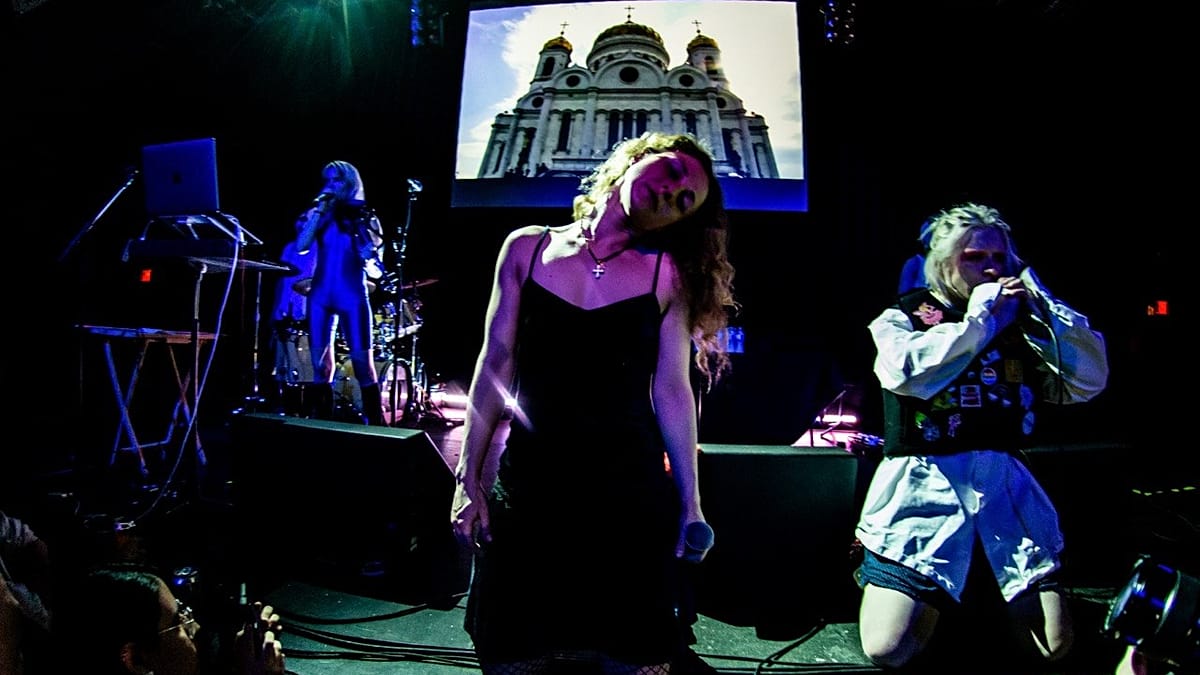
Pussy Riot, the Russian punk collective known for their 2012 protest in Moscow's Cathedral of Christ the Saviour, is bringing their performance "Riot Days" to European audiences this spring. The tour, which began in Paris on 2 April, is a multi-genre show blending electro-punk, spoken word, and multimedia, based on the writings of activist Maria Alyokhina.
The performance is a stark reminder of the war in Ukraine and the state of political repression in Russia. "This show is about what has happened to us and our country in the last ten years," Alyokhina told the audience at the Bateau Ivre venue in Paris. She pointed to the electronic ankle bracelet she wears, a condition of her ongoing investigation by Russian authorities. "It's the Pussy Riot action, it's the key events in the modern history of our country, such as the annexation of Crimea, the murder of Alexei Navalny, the protest rallies from 2014 to 2022. This is my prison history."
Sentenced in Absentia
In September 2025, Pussy Riot members were sentenced in absentia to prison terms ranging from eight to 13 years for allegedly spreading "fakes" about the Russian army. Alyokhina received 13 years and 15 days; Taso Pletner, 11 years; and Olga Borisova, Diana Burkot, and Alina Petrova each eight years. The charges stem from the 2022 music video "Mum, don't watch TV" and an anti-war action in Munich. In December 2025, Moscow designated Pussy Riot an "extremist organization," banning all its activities in Russia. "For distributing extremist materials, i.e. Pussy Riot's likes, reposts and comments, you can get up to five years in prison, as well as for a homemade balaclava," Alyokhina added.
The activists say their relatives in Russia are effectively hostages. "Everyone who left and continues to be active realises that their relatives in Russia are hostages. We are not unique in this respect. Searches, surveillance, wiretaps, threats, summons for interrogation - elements of everyday life," Alyokhina explained. Pletner described raids on family members: "Classic: six in the morning, broken doors, masked men, hours of interrogation, intimidation, threats, with weapons."
The collective's members are on an international wanted list, and their legal status abroad is precarious. "We don't all have a stable situation with our documents. If our passports expire or we lose them, we'll find ourselves in limbo, stuck in the country we are in, without any status," Pletner said, noting that some have only temporary residence permits.
Europe's Attention Waning
The performance includes footage of detentions at anti-war rallies, police violence, strikes on Ukrainian apartment blocks, and the self-immolation of journalist Irina Slavina. The artists argue that the war in Ukraine is being overshadowed by other conflicts. "There are so many events going on right now, and people don't have time to keep track of their importance. Some of them are very quickly rubbed out. For example, Russia's conflict with Ukraine is very much overshadowed by conflicts with Palestine, with Iran.... But every day, for the fifth year already, people die. And these are living, real people," said Alina Petrova.
Funds from the tour support hospitals in Ukraine, including Okhmatdet in Kyiv and a hospital in Dnipro, as well as a fund from Kharkiv and aid for Russian political prisoners. The show serves as a call to action, reminding European audiences of the ongoing crisis. As Alyokhina put it, "We don't choose our place of birth or the colour or letters on our passport. But we choose how to live our lives. To fight back or not to fight against the system that makes a human being a cog."
The tour's European leg underscores the continent's role as a haven for exiled artists and a platform for dissent. For more on how protest music shapes political movements, see From Berlin to Kyiv: The European Protest Anthems Defining a Decade.