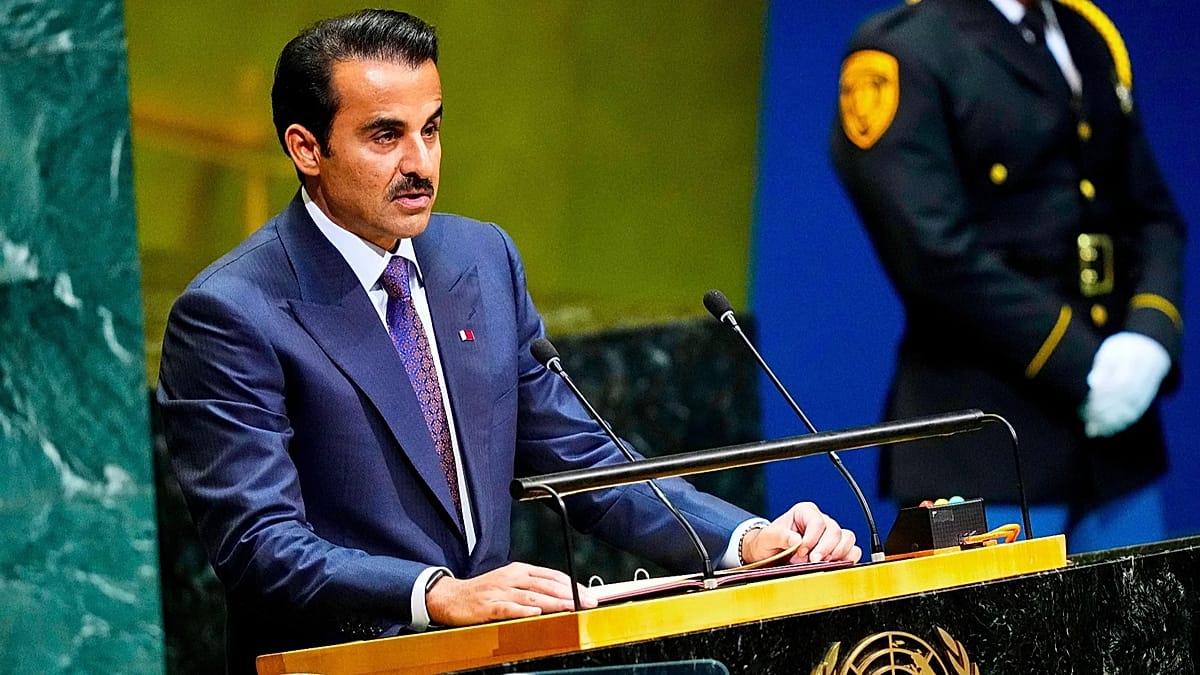
NEW YORK — Addressing the United Nations General Assembly on Tuesday, Qatar's Emir Sheikh Tamim bin Hamad Al Thani described the Gulf as being in "one of the most dangerous phases" of its recent history, arguing that the current war with Iran is the result of years of postponed diplomatic solutions. He called for a "regional system of collective security" grounded in national sovereignty, non-interference, and the peaceful resolution of disputes.
Such a framework, he said, could have prevented the present conflict. Without it, vital energy facilities risk attack and critical waterways may be closed. Any lasting agreement with Tehran, he insisted, must protect the entire region, including Iran itself. "The opportunity for a peaceful diplomatic solution, which we believe is both possible and realistic, must not be missed," the emir added.
Qatar, which has positioned itself as a trusted mediator, urged the reopening of the Strait of Hormuz to maritime traffic. Sheikh Tamim warned that Gulf states were being drawn into a war that is not theirs, and stressed that Doha is doing "everything in our power to address the conflict in the region through diplomatic means."
Gaza and the limits of international law
Turning to Gaza, the Qatari leader described the events there as "genocide in every sense of the word." He argued that "there can be no talk of a just international order as long as Palestine remains in its plight," noting that the scale of destruction has not been matched by the international response. He called on Israel to fully implement the ceasefire by ending military operations, withdrawing from Gaza, lifting the blockade, and allowing unconditional humanitarian access.
The emir also criticised Israeli actions in Syria and Lebanon, saying the international reaction would reveal whether international law is applied equally. His remarks echo concerns raised by European diplomats about the erosion of multilateral norms, a theme that has also surfaced in EU budget negotiations where member states struggle to find common ground.
Turkey warns of wider war
Turkish President Recep Tayyip Erdoğan, in his address, called for maintaining freedom of navigation through the Strait of Hormuz and said Ankara is working with other countries to end the fighting in the Gulf. He warned that letting the war spread to neighbouring states would help no one.
On Gaza, Erdoğan described the territory as the "most inhumane and shameful concentration camp of our time" and urged UN members to increase pressure on Israel. He also called on countries that have not recognised Palestine to reconsider their position. During his speech, the Israeli delegation left the hall.
The Turkish president criticised the absence of Palestinian President Mahmoud Abbas, who was denied a US visa for the second consecutive year. Erdoğan renewed his demand for UN Security Council reform, arguing that decisions affecting more than 190 countries should not rest with the five permanent members. He repeated his long-standing slogan that the "world is bigger than five" and said international law should not be applied differently to strong and weak nations.
Jordan: inaction is a choice
Jordan's King Abdullah contrasted the international response to Israel with the sanctions, asset freezes, embargoes, and diplomatic isolation used in other conflicts. When it comes to Israel, he said, resolutions have repeatedly remained on paper. He called the failure to act a political "choice" and said the problem is not a lack of available tools.
The Hashemite monarch accused Israel of seizing land, expanding settlements, and allowing settler violence against Palestinians in the occupied West Bank, and said forced displacement constitutes a war crime. He described Gaza and the West Bank as two parts of an effort to make a viable Palestinian state impossible.
King Abdullah said decades of managing the Israeli-Palestinian conflict instead of tackling its causes have allowed temporary measures to become permanent policy. He also warned that Israeli actions in southern Syria, including territorial expansion around water resources, pose a direct threat to Jordan's northern border and water security.
The speeches come as the United States and Iran hold their first direct talks, a development that could reshape the region's dynamics. European observers note that the EU's ability to influence events is limited, especially as Macron urges the EU to loosen fuel rules in response to the Hormuz closure. The broader implications for European energy security and migration are significant, as the continent watches the Gulf crisis unfold.