European affairs ministers gathered in Brussels on Tuesday for another round of talks on the EU's next seven-year budget, but despite a shared goal of reaching an agreement by year-end, the negotiations remain deeply stalled. The familiar fault lines between member states have resurfaced, with little sign of movement on the core issues.
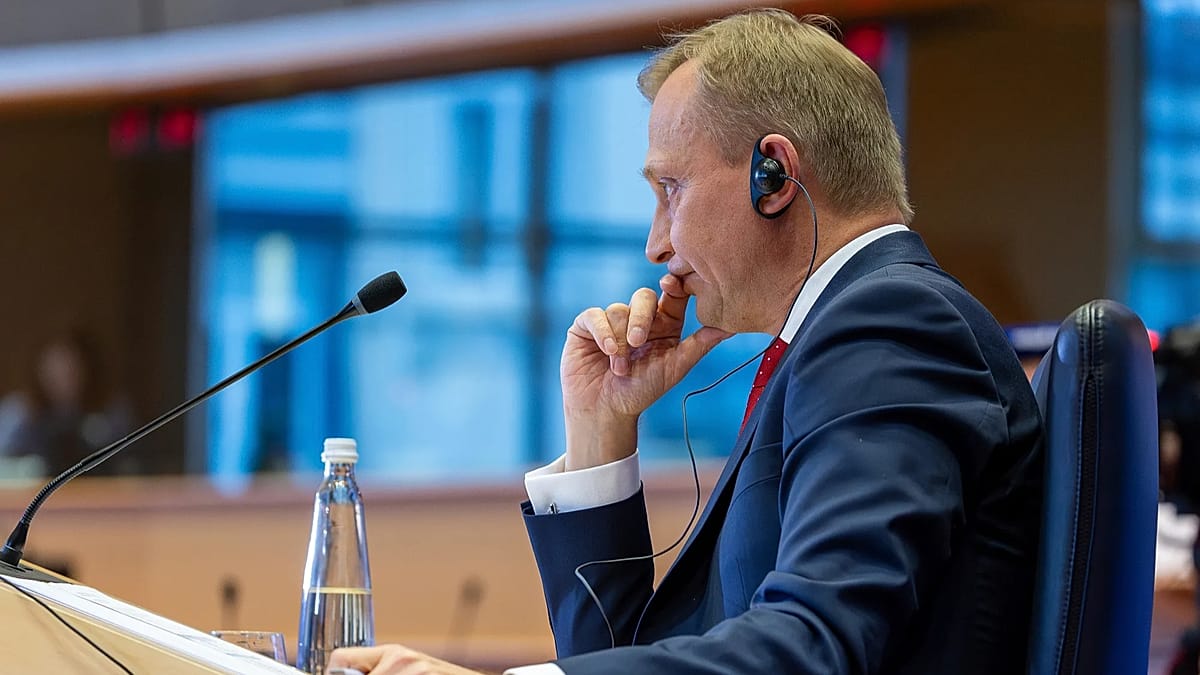
Piotr Serafin, the European Commissioner for Budget, opened the debate with a note of weary recognition. "This is my fourth Multiannual Financial Framework negotiations, so I have to admit that some of the discussions come with a large sense of déjà vu," he said. "Many positions are quite predictable, as they have been consistently repeated over the last decades."
The next milestone is the European Council meeting in mid-October, where leaders will be presented with a compromise text drafted by the Irish presidency, which currently chairs the negotiations among the 27 member states. Irish Minister for European Affairs Thomas Byrne told journalists that there is "a general agreement to reach a deal by the end of the year," but the path to that deal remains uncertain.
The October text is expected to be the penultimate step before a final push in December, when EU leaders will need to bridge their differences. The stakes are high: the budget will shape EU spending from 2028 to 2034, covering everything from agriculture and cohesion funds to defence, AI, and climate action.
Two camps, familiar battle lines
The negotiations have crystallised into two main blocs. On one side, the "Friends of Cohesion"—a group of 17 countries, including many from southern and eastern Europe—are fighting to preserve funding for agriculture and regional development. On the other, the so-called "modernisers" or "frugals"—led by Germany, Austria, the Netherlands, Finland, Sweden, and Denmark—are demanding cuts of "several hundred billion euros" and want to prioritise defence and competitiveness.
The frugal countries argue that, as net contributors, they already shoulder around 40% of the current budget and would bear a disproportionate share of any increase. They remain sceptical of proposals to introduce new "own resources"—EU-level taxes that would reduce reliance on national contributions. The Friends of Cohesion, by contrast, are generally more open to such new revenue streams.
Serafin expressed frustration at the way national contributions are being calculated. "I see many different ways of computing national contributions. It seems that there is a competition going on between capitals to come up with numbers that show that their national contribution increases the most. This is not really helpful," he said, urging member states to build a "common understanding on the actual numbers."
The European Commission's proposal, presented in July 2025, envisages a budget of around €2 trillion. It boosts spending on competitiveness, security, and defence, while proposing significant cuts to agricultural and regional funds compared with the current framework. That proposal has already drawn fire from both sides: the frugals want deeper cuts, while the Friends of Cohesion want to restore traditional spending.
Own resources and the parliament's role
Byrne said the Irish presidency would include a set of proposals on own resources in the October text. The final budget will be financed through a combination of contributions based on gross national income (GNI) and any new own resources that member states agree to introduce. The share of GNI allocated to the EU budget is itself a contentious issue.
The European Parliament, which must approve the budget alongside the Council, is pushing for a 10% increase in funding across the main headings. MEPs also want the repayment of the Recovery Plan loans—issued in 2020 to support the post-pandemic economy—to be kept outside the regular EU budget. Leading MEPs warned against cuts during Tuesday's debate. Romanian MEP Siegfried Mureșan, co-leading the Parliament's negotiating team, said that reducing the EU budget would force member states to tackle challenges alone, "and likely at a higher cost." His Portuguese counterpart, Carla Tavares, urged member states to step up the pace of negotiations.
The deadlock is not new. In the previous round of negotiations, member states ultimately failed to agree on new own resources, leaving the budget reliant on GNI contributions. This time, however, the Commission argues that global uncertainty and the need to boost Europe's competitiveness make additional EU revenue more urgent than ever. The debate over new EU taxes is also linked to broader discussions, such as Ireland's push for new EU taxes as part of the budget deal.
Beyond the budget itself, the negotiations are being watched closely for signals on EU priorities. Some member states, for instance, have called for EU funding to support offshore migrant return hubs, while others are focused on defence and security. The outcome will also affect the EU's ability to respond to external challenges, from the war in Ukraine to instability in the Red Sea, where the EU has been reinforcing its naval mission.
With all 27 member states required to agree, and the Parliament holding a veto, the road to a deal remains narrow. The October summit will be a critical test of whether leaders can move beyond their entrenched positions. If not, December's final round could once again go down to the wire.