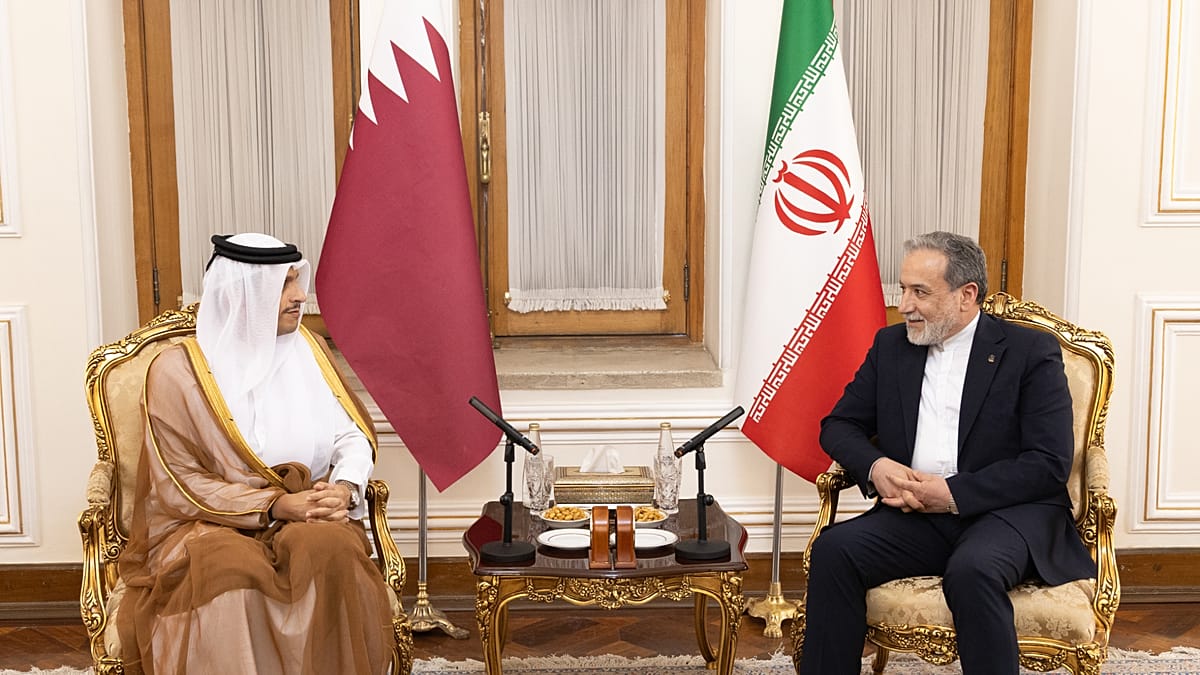
Qatar's Prime Minister and Foreign Minister, Sheikh Mohammed bin Abdulrahman Al Thani, travelled to Tehran on Thursday for talks with Iran's Foreign Minister Abbas Araghchi. The visit, the first high-level Qatari trip to the Iranian capital since the conflict began on 28 February, underscores Doha's intensified efforts to revive diplomacy and ease tensions around the Strait of Hormuz.
According to Qatar's state news agency QNA, the discussions centred on reducing regional tensions and creating conditions for renewed dialogue between Iran and the United States. The two officials also reviewed ongoing negotiations over a proposed phased plan for the Strait of Hormuz, which would include a temporary shipping corridor and a joint project to clear mines from the waterway.
Sheikh Mohammed stressed the importance of respecting the sovereignty of neighbouring states and upholding freedom of navigation, calling for continued diplomatic efforts to resolve differences through dialogue. Araghchi thanked Qatar for its mediation and its sustained support for diplomatic engagement.
The visit comes nearly six months into the war, with direct fighting largely paused but no political breakthrough in sight. Qatar, a US ally that hosts the Al Udeid Air Base and shares the world's largest gas field with Iran, has played a pivotal role as a go-between for Washington and Tehran. It helped broker the June ceasefire that briefly halted hostilities.
Hormuz at the centre of diplomatic push
The Strait of Hormuz remains one of the main sticking points in any broader agreement between Iran and the US. Before the war, roughly one-fifth of global oil supplies passed through the narrow waterway between Iran and Oman each day. Since the conflict began, oil flows have plummeted from about 20 million barrels per day to around five million barrels per day on Monday.
Shipping risks persist, with another tanker hit by an unidentified projectile in the strait this week; its crew was reported safe. The International Maritime Organisation has recorded dozens of incidents in the waterway since the war began, heightening concerns over global energy supplies and shipping costs.
For Doha, the stakes are particularly high. Qatar relies on the strait to export liquefied natural gas (LNG) to global markets. Industry data show Qatar exported just 18 LNG cargoes over the past six months, compared with 509 in the same period a year earlier. Before the war, Qatar supplied about one-fifth of global LNG. Qatari officials also say attacks on Ras Laffan cut production by 17%, with full recovery expected to take up to five years.
Iran and Oman have been holding talks over a temporary shipping arrangement through the waterway. Iran's Islamic Revolutionary Guard Corps said this week that Tehran and Muscat had reached an understanding over control of the strait and its revenues, but an Iranian official later clarified that no final agreement had been reached. A proposed temporary shipping corridor remains under discussion.
Diplomacy remains stalled
Thursday's talks also come as Washington escalates economic pressure on Tehran. US President Donald Trump has said he is in no hurry to return to negotiations, while his administration has announced further sanctions targeting Iran's economic networks. Iranian officials have described the measures as an economic war. Tehran has dismissed the sanctions as ineffective, but the pressure is mounting.
Regional governments have stepped up diplomatic efforts to prevent another round of fighting. Senior Pakistani officials travelled to Tehran earlier this week, while Oman has continued its own discussions with Iran over Hormuz and the wider dispute with Washington. Qatar's daily diplomatic push reflects the urgency of reopening the strait.
The economic toll of the crisis extends well beyond the Gulf. A recent report found that the disruption has added €41 billion to EU fuel import bills, a stark reminder of how instability in the region reverberates across European economies. The cost to European consumers underscores the broader stakes of the diplomatic efforts now underway.
As long as the strait remains a flashpoint, the risk of further escalation persists. Qatar's mediation, while welcome, faces an uphill battle given the deep mistrust between Washington and Tehran. For now, the focus remains on incremental steps: keeping channels open, protecting shipping, and building enough confidence to move toward a more comprehensive agreement.