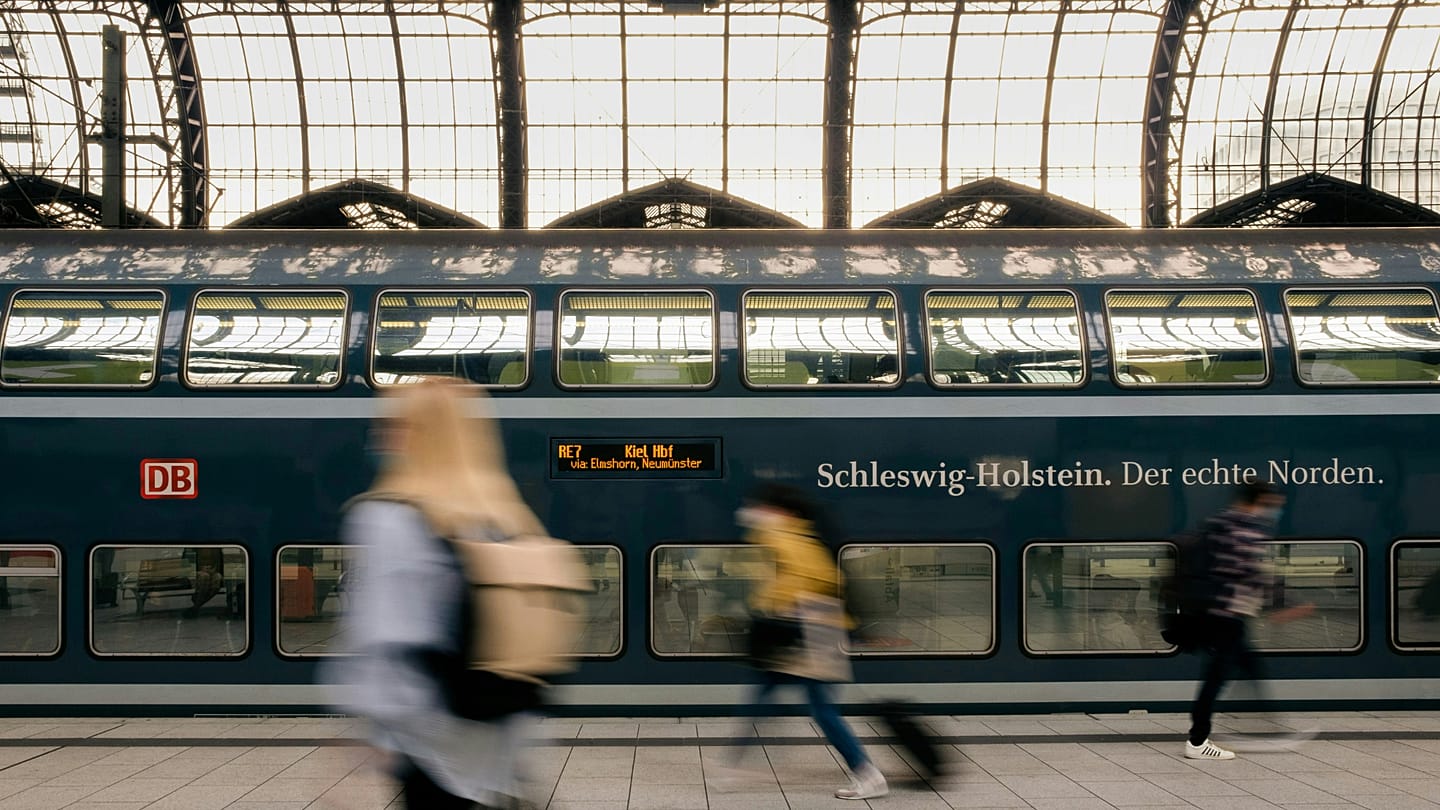
For decades, flying was the default for any journey over a few hundred kilometres. But across Europe, a quiet reversal is underway: on a growing number of popular routes, the train is now faster than the plane — once you factor in the full door-to-door experience.
The shift is most visible on short-haul corridors where high-speed rail has matured. Brussels to Paris, for example, is served by Thalys trains that complete the journey in about 1 hour 22 minutes between city centres. Compare that with a flight: the airborne time is barely 50 minutes, but when you add airport security, boarding, and the trek from Charles de Gaulle or Orly into central Paris, the train wins by a clear margin. Similar logic applies to Madrid–Seville, where the AVE high-speed service covers the 470 kilometres in around 2 hours 20 minutes, while a flight — including check-in and transfers — often stretches to 3 hours or more.
Why rail is gaining ground
The advantages go beyond raw speed. Train stations sit in the heart of cities, while airports are typically on the periphery. A traveller from central Brussels to central Paris can walk onto a train and be in the French capital before a plane would even have taken off. Add the absence of baggage fees, the lack of security queues, and the ability to work or sleep en route, and the calculus becomes even more favourable.
Environmental concerns are also pushing travellers and policymakers alike. Rail emits a fraction of the CO2 per passenger-kilometre compared with aviation. The European Union has been actively promoting rail as part of its Green Deal, and several countries have introduced taxes on short-haul flights or banned them altogether on routes where rail alternatives exist. France, for instance, has prohibited domestic flights on routes that can be covered by train in under 2.5 hours.
This trend is not confined to Western Europe. In Spain, the AVE network has transformed travel between Madrid and Barcelona, cutting the journey to about 2 hours 30 minutes — a time that rivals air travel when airport logistics are included. In Italy, Frecciarossa trains link Milan and Rome in under 3 hours, making the train the preferred choice for many business travellers. Germany's ICE network, though often delayed, still offers competitive times on routes like Berlin–Hamburg.
The shift is also reshaping the airline industry. On routes where high-speed rail is competitive, airlines have reduced frequencies or withdrawn altogether. Brussels Airlines, for example, has cut some short-haul services that overlap with Thalys. Meanwhile, rail operators are expanding their networks and improving onboard services to attract more passengers.
But the picture is not uniform. In Eastern Europe, rail infrastructure lags behind, and flying remains faster on many routes. Warsaw to Prague, for instance, is still quicker by plane, though new investments in Polish and Czech rail may change that in the coming years. The Balkans, too, have limited high-speed connections, leaving air travel as the pragmatic choice for many.
For travellers, the message is clear: before booking a flight, check the train. On routes like Brussels–Paris, Madrid–Seville, and Milan–Rome, rail is not just greener — it's often faster and more convenient. As Europe continues to invest in its rail network, the list of routes where trains beat planes is likely to grow.
For those planning multi-city trips, the rail advantage can be even more pronounced. A journey that combines several cities, such as Paris–Lyon–Milan, can be done seamlessly by train, avoiding the hassle of airport transfers and security checks at each stop. This is particularly appealing for travellers who want to explore Europe's traditional craft towns or follow a four-stop itinerary without the stress of flying.
The trend also has implications for the broader debate on EU enlargement and infrastructure spending. As new member states join, connecting them to the high-speed rail network will be a priority, potentially shifting more travellers from air to rail across the continent.
In the end, the choice between train and plane is no longer just about price or speed. It's about convenience, sustainability, and the kind of travel experience one wants. On many of Europe's busiest corridors, the train is now the smarter choice — and the gap is only widening.