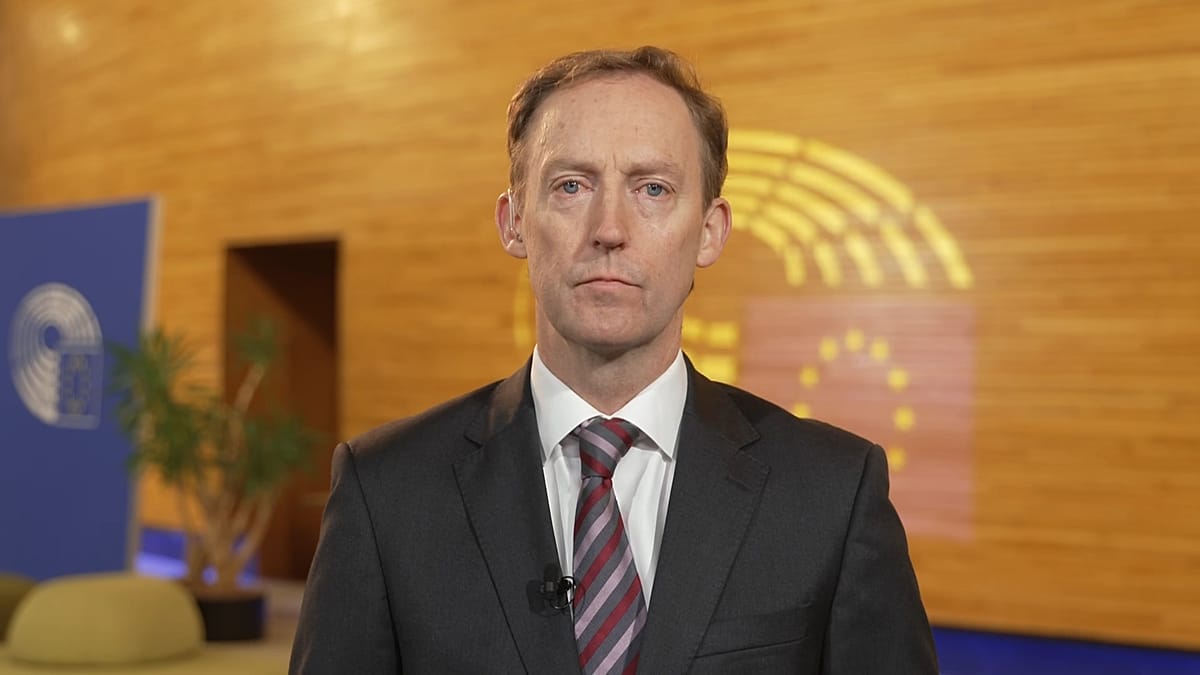
As the European Union prepares for its next round of budget negotiations, an Irish MEP has thrown his weight behind the European Parliament's insistence on protective measures in any transatlantic trade deal. Barry Andrews, a Renew Europe lawmaker, told Euronews that the Parliament was "absolutely right" to push for safeguards that would allow the EU to shield its industries from sudden tariff shocks.
Speaking with Stefan Grobe in Brussels, Andrews urged calm in the face of renewed turbulence from Washington. "We should not be dramatic," he said, even as the administration of President Donald Trump attempts to revive the so-called 'Liberation Day' tariffs that were previously struck down as illegal by the US Supreme Court. The White House has signalled it wants to reimpose those duties, and Andrews acknowledged that Europeans are now left waiting to see what, if anything, the new measures will mean for the transatlantic trading relationship.
A cautious wait-and-see approach
"We need clarification," Andrews said, describing the current situation as one where Europeans have to "sit and wait" for concrete details from Washington. The uncertainty comes at a delicate moment for the EU, which is already navigating a complex set of trade disputes and internal budget pressures. The MEP's comments reflect a broader sentiment in Brussels that the bloc must remain vigilant but not overreact to every signal from the other side of the Atlantic.
Andrews also highlighted the Parliament's role in adding "safeguard agreements" to the EU's negotiating position. These provisions, he explained, are designed to ensure that the Union can "safeguard industry at all costs" if the US follows through on its tariff threats. The safeguards would give Brussels the legal and political tools to respond swiftly, whether through countermeasures or by protecting specific sectors from unfair competition.
Lessons unlearned in Washington
The Irish MEP was blunt about the political dynamics in the United States. He argued that the administration "appears to have learned nothing" from the Republican Party's defeat in the midterm elections earlier this month. That loss, he suggested, should have been a wake-up call about the unpopularity of aggressive trade policies, but instead the White House seems determined to double down on the same approach.
Andrews' remarks come as the EU and the US continue to negotiate a range of issues, from steel and aluminium tariffs to digital services taxes. The European Parliament has been a vocal advocate for a more assertive EU trade policy, and its insistence on safeguards is seen as a way to ensure that any deal is balanced and reversible if necessary.
The broader context is one of growing transatlantic friction, with hybrid threats and geopolitical competition adding to the strain. For European policymakers, the challenge is to maintain a constructive relationship with Washington while protecting the bloc's own interests. Andrews' message is that the EU should be prepared for all scenarios, but not let fear dictate its strategy.
As the budget negotiations unfold, the Parliament's stance on trade safeguards will likely remain a key point of contention. Andrews' defence of those measures signals that the institution is united in its determination to protect European industry, even as it seeks to avoid a full-blown trade war. For now, the ball is in Washington's court, and Europeans are watching closely.



