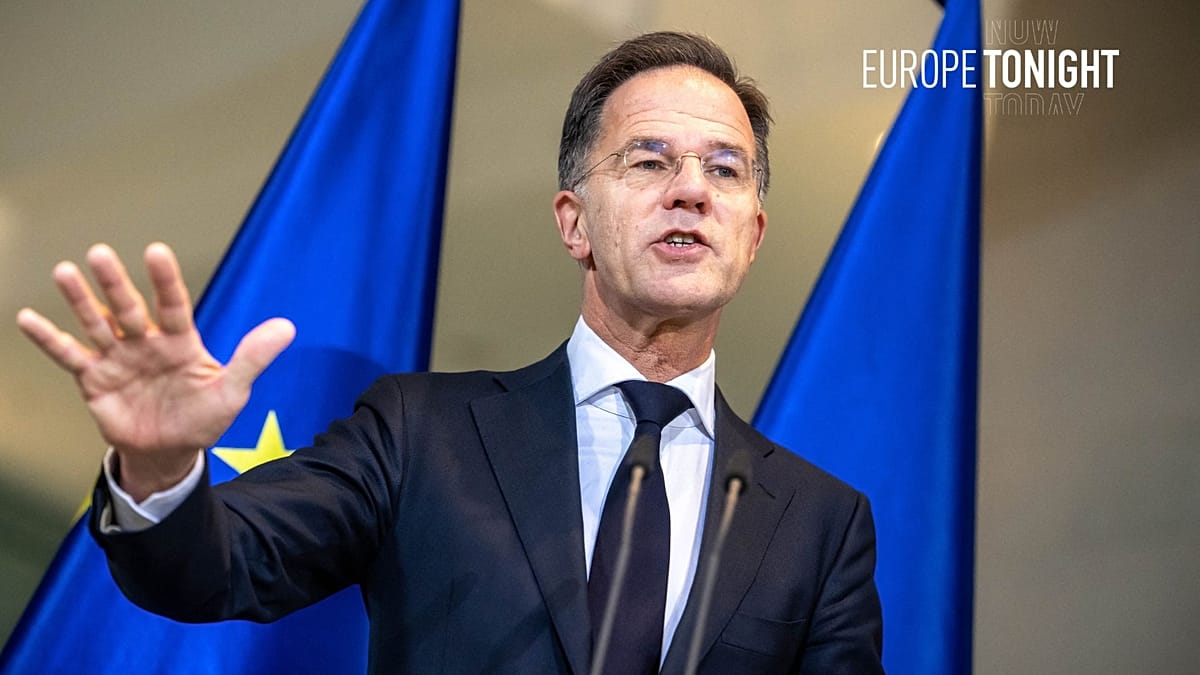
NATO Secretary General Mark Rutte delivered a stark warning in Berlin on Monday, saying that hostile activities targeting Alliance members—including sabotage, cyberattacks, and airspace violations—are expected to become more frequent and more severe. "We are all targeted, we are all affected," Rutte said, urging allies to increase defence spending and ramp up industrial production to meet the challenge. His remarks come as EU military officials have also called for a faster defence buildup in response to hybrid threats stretching from the Baltics to the Black Sea.
Meanwhile, Ukrainian President Volodymyr Zelensky has renewed his push for Ukraine to join NATO, following a proposal by US negotiator Jared Kushner for security guarantees modelled on the Alliance's Article 5. The idea has drawn mixed reactions in European capitals, with some leaders wary of provoking further escalation with Russia.
COP31 ends in disappointment
The UN climate conference in Antalya, Turkey, concluded over the weekend without a major new agreement, marking one of the longest and most disappointing summits in the history of the talks. Deep divisions over fossil fuel phase-outs and climate financing prevented a consensus, leaving many delegates frustrated. Green MEP Michael Bloss will join our programme tonight to unpack the key takeaways and discuss what role Europe should play in the aftermath.
The failure to secure a deal is a setback for European climate diplomacy, which had hoped to build on the momentum of previous summits. With the next conference already being planned, EU officials will need to rethink their strategy to bridge the gap between developed and developing nations.
Spain's pivotal election
In Spain, Prime Minister Pedro Sánchez faces the real possibility of losing power in the upcoming parliamentary election. The centre-right People's Party (PP) leads in most opinion polls, and a potential coalition with the far-right Vox party could secure a governing majority. Such an outcome would raise questions about whether Europe's political firewall against the far right is eroding. Chief Correspondent Maria Tadeo will provide analysis from Madrid on the latest developments.
The election is seen as a test for the European left, with Sánchez having been one of its most prominent standard-bearers. A shift to the right in Spain would have ripple effects across the continent, particularly on issues like migration, climate policy, and EU integration.
German workers strike
Industrial tensions are escalating in Germany's vital metal and electrical sectors. The country's largest trade union, IG Metall, has called on more than 23,000 workers across 19 northern sites—including Mercedes-Benz, BMW, Siemens Gamesa, and shipbuilder Meyer Werft—to stage a 24-hour warning strike. The walkouts follow Friday's nationwide strikes that mobilised 151,000 workers, affecting major hubs such as Audi's main plant in Ingolstadt and three BMW plants in Bavaria.
The strikes are a response to stalled wage negotiations, with the union demanding higher pay and better working conditions. Employers warn that excessive demands could hurt competitiveness, but workers argue that they deserve a fair share of the profits generated by their labour.
Paris lights up for the holidays
Finally, the festive season officially began in Paris on Sunday evening with the illumination of the Champs-Élysées. Paris Mayor Emmanuel Grégoire and Oscar-winning actress Cate Blanchett, the 2026 event patron, flipped the switch on 52 kilometres of lights and two million LEDs spanning 400 trees. Until January 4, 2027, visitors can enjoy a five-minute light show every 15 minutes from 5:00 PM to 1:00 AM, cycling through three distinct visual themes: Nature's Awakening, Winter's Arrival, and Starry Night.
The display is expected to draw millions of visitors to the French capital, boosting tourism and providing a welcome end to a year marked by political and economic uncertainty across Europe.