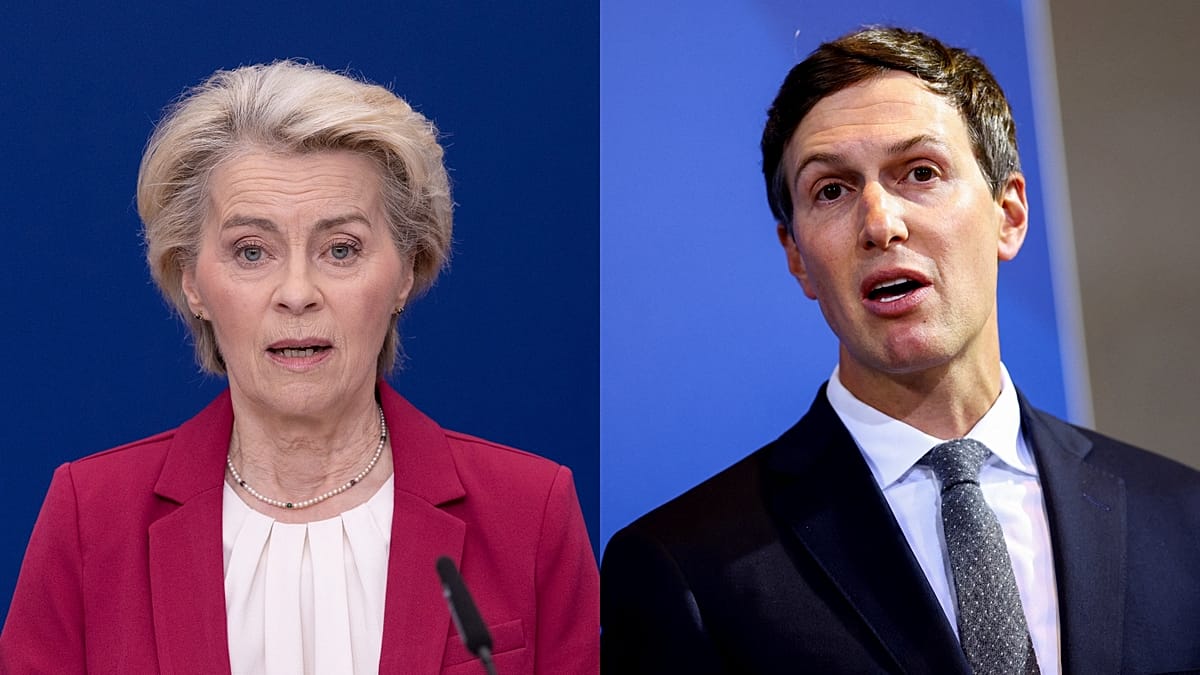
A new transatlantic rift has emerged over the sequencing of peace negotiations to end Russia's war in Ukraine, centering on when and how the future of European security should be addressed. European leaders view the topic as a potential Russian trap and argue that a ceasefire must precede any broader discussion, while Washington's special envoy, Jared Kushner, insists the two cannot be separated.
In a social media post, Kushner, who is brokering the talks, wrote: "Security guarantees for Ukraine cannot be finalised in isolation from post-war European security architecture. The two must be considered together." He suggested that one possible guarantee could be a clause modeled on NATO's Article 5, which would commit allies to defend Ukraine in the event of a new Russian attack. However, he cautioned that US President Donald Trump would only endorse such a provision if "the broader security arrangements made it highly unlikely that the guarantee would ever be invoked."
Kushner's stance directly contradicts the position of European Commission President Ursula von der Leyen and other EU leaders. They argue that Russia, by invading Ukraine, has violated the security architecture that Europe built after World War II, and that Moscow must first demonstrate a genuine commitment to peace. Von der Leyen has repeatedly stated that discussions on security architecture can only begin once a ceasefire is in place.
The European Commission has held firm. Asked about Kushner's latest remarks, chief spokesperson Paula Pinho said: "Our position has not changed since last week. So once there is a ceasefire, then discussions can take place on Europe's security architecture. Those discussions need to take place in the appropriate forum, meaning with NATO allies and with the EU member states fully involved." She added: "So we stick to our position."
Berlin meeting reinforces European unity
German Chancellor Friedrich Merz echoed von der Leyen's view during a meeting of the Coalition of the Willing in Berlin last Thursday, which Kushner also attended. The gathering saw strong resistance to any attempts to divide Europe into spheres of influence. "What's needed now is the right sequence, the right order: first peace in Ukraine, then agreements on Euro-Atlantic security," Merz said at the closing press conference. He added: "Moscow knows: Its maximalist demands from December 2021 are unrealistic."
Those demands resurfaced in a paper Russia tabled at the latest round of talks in Abu Dhabi. According to The New York Times, the document calls for NATO to halt its expansion, withdraw its forces to 1997 borders, and stop military support for Ukraine. European officials have dismissed the proposals outright, describing them as a diversionary tactic designed to shift attention from Ukraine and grant Russia veto powers it does not deserve.
NATO Secretary General Mark Rutte also pushed back on Monday. "What cannot happen is that we are forced to roll back NATO to the 1997 borders or that we should have others to decide our posture other than allies themselves," he said.
Despite the public unity, the prominence that both Moscow and Washington have attached to the security architecture issue makes it increasingly difficult for Europeans to ignore. Privately, officials concede that the subject will have to be addressed at some point, regardless of the preferred sequencing.
The real test will come if and when Russia agrees to participate in multilateral talks involving the US, Ukraine, and Europe simultaneously—something it has so far refused to do. Until then, the debate over when to discuss Europe's security order is likely to remain a point of contention between Brussels and Washington.