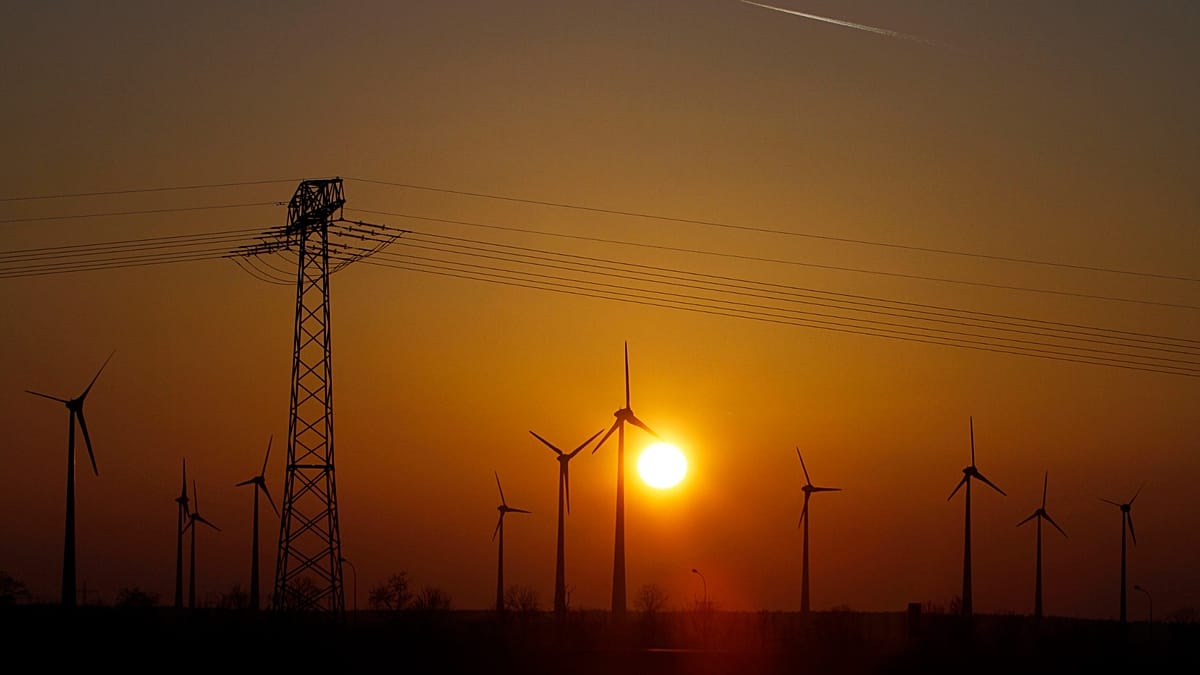
The European Union could break its dependence on imported liquefied natural gas within five years by accelerating the rollout of wind power, solar panels and heat pumps, according to a new analysis from the Institute for Energy Economics and Financial Analysis (IEEFA). The think tank argues that these technologies already displaced 8.8 billion cubic metres of LNG in 2024 — roughly two-thirds of the bloc's imports from Qatar that year — and that meeting existing deployment targets would deepen those savings dramatically.
If the EU installs at least 4 million heat pumps, 75 gigawatts of solar capacity and 22 GW of wind annually over the next five years, gas demand could fall by around 25 percent by the end of 2030, the report estimates. That reduction would be twice the volume of LNG Europe is expected to import from Qatar, a key supplier alongside the United States.
From one dependency to another
Since Russia's full-scale invasion of Ukraine in 2022, the EU has slashed its reliance on Russian pipeline gas. But the IEEFA study warns that the bloc has merely swapped one vulnerability for another. EU LNG imports surged by 84 percent between 2021 and 2025, leaving member states exposed to disruptions such as recent damage to Qatar's export facilities and tensions in the Strait of Hormuz.
“Replacing Russian gas with LNG from other countries simply shifts Europe's dependence to different suppliers, which are vulnerable to their own geopolitical risks,” the authors write. They argue that renewables and heat pumps should be treated as strategic security assets, not just climate tools.
The European Commission has already signalled its intent to ban Russian gas imports from 2027, and the IEEFA analysis supports the Commission's latest electrification ambitions. But the study's projections hinge on optimistic assumptions: that the EU will meet its target of sourcing at least 42.5 percent of energy consumption from renewables by 2030 (with an aspirational 45 percent goal), and that it will continue investing heavily in electricity grids — a politically contentious issue in ongoing budget talks.
As of 2025, clean power accounted for only 26.2 percent of the bloc's energy consumption, well short of the trajectory needed. The report also glosses over barriers such as permitting delays, the high upfront cost of heat pumps, grid congestion and political resistance in several member states.
China's growing advantage
A separate analysis by Oxford Economics, published in July, argues that Europe's energy crisis — exacerbated by the US and Israel's conflict with Iran — is creating a strategic opening for Beijing. Years of industrial policy have given Chinese firms a dominant position in the global manufacturing of solar panels, batteries, electric vehicles, wind turbine components and heat pumps. Chinese exports of these technologies have accelerated since the conflict began, particularly to Europe, Asia, Africa and Latin America.
The Oxford Economics paper coins the term “electrostate” to describe a country whose geopolitical influence stems not from oil and gas reserves but from controlling the technologies, manufacturing capacity and critical mineral supply chains needed for electrification. This contrasts with traditional “petrostates” such as Russia and Gulf producers, whose influence depends on fossil fuel exports.
For Europe, the implication is uncomfortable: even as the EU reduces its reliance on imported gas, it risks becoming dependent on Chinese manufacturing for the very technologies that enable that transition. The IEEFA study does not assess this risk in depth, but it underscores the urgency of building domestic production capacity — a challenge that will require coordinated policy across the twenty-seven member states, plus partners like the UK, Switzerland and Norway.
The broader lesson, according to the IEEFA, is that energy sovereignty cannot be achieved by swapping one set of imports for another. “The EU should seek to eliminate the need for imported gas and double its efforts on renewables as its major response to the climate and energy transition,” the report concludes. Whether the bloc can overcome internal hurdles and external competition to do so remains an open question.