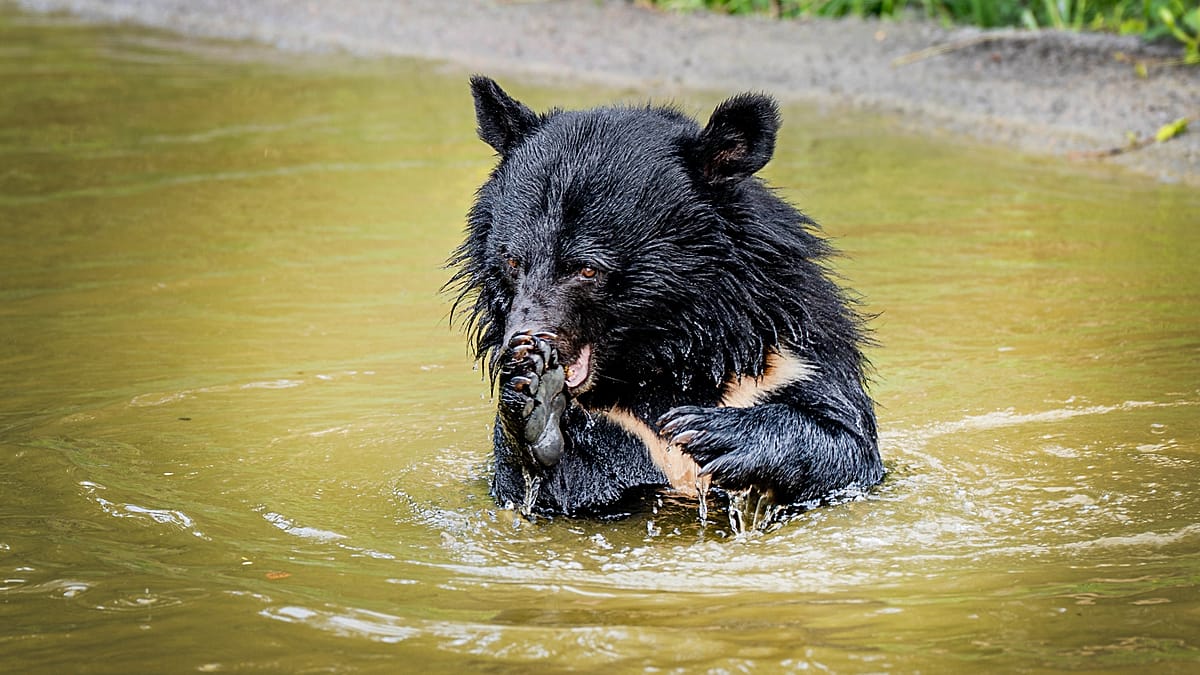
Six Asiatic black bears, rescued from the brutal bile farming industry in South Korea, have been released into a forest enclosure at Knuthenborg Safaripark on the Danish island of Lolland. The operation, coordinated by the international animal welfare group Four Paws, marks a rare success in relocating animals from one of Asia's most controversial agricultural practices to a European sanctuary.
The bears—named Hope, Moon, Joy, Star, Sky, and Lucky—spent years confined to small cages on South Korean farms, where bile was extracted from their gallbladders for use in traditional medicine. After a complex rescue and transport process, they arrived in Denmark earlier this month and were gradually introduced to their new 2,000-square-metre forest habitat, complete with trees, ponds, and climbing structures.
A Second Chance in Scandinavia
Knuthenborg Safaripark, located about 140 kilometres south of Copenhagen, has previously housed other rescued bears from the Balkans and Asia. The park's director, Christoffer Knuth, described the release as emotional. “Seeing these animals step onto grass for the first time in their lives is something you never forget,” he said. “They were hesitant at first, but within hours they were exploring, climbing, and even playing.”
The bears will remain in a dedicated enclosure designed to mimic their natural habitat, with access to indoor dens and veterinary care. Unlike wild bears, they cannot be released into the wild due to their long captivity and lack of survival skills.
The rescue is part of a broader campaign by Four Paws to phase out bear bile farming, which still exists in several Asian countries despite growing international condemnation. South Korea has taken steps to regulate the industry, but thousands of bears remain on farms. The organisation has relocated over 600 bears to sanctuaries worldwide, including facilities in Vietnam, Laos, and now Denmark.
Denmark's role in this effort reflects its broader commitment to animal welfare and renewable energy, as seen in its leadership in renewable electricity generation. The country has also been home to innovative workplace experiments, such as Copenhagen-based Clever running 500 staff with zero managers, a model that prioritises trust and autonomy.
For the bears, the transition has not been without challenges. Some arrived with chronic health issues, including missing teeth, joint damage, and psychological trauma from years of confinement. The park's veterinary team is providing ongoing treatment, and the animals are gradually gaining weight and confidence.
“These bears have endured unimaginable suffering,” said Dr. Sigrid Lüber, a veterinarian with Four Paws who accompanied the animals from Seoul to Copenhagen. “But they are resilient. Within days, we saw behaviours we had never observed in them before—curiosity, social interaction, even play. It is a testament to their will to live.”
The operation also highlights the logistical challenges of international animal rescues. The bears were transported in custom-built crates on a cargo flight from Incheon International Airport to Copenhagen Airport, then driven by truck to Knuthenborg. The entire journey took over 30 hours, with veterinary staff monitoring the animals throughout.
As the bears settle into their new home, the sanctuary hopes to raise awareness about the cruelty of bile farming and encourage visitors to support ethical alternatives. The park plans to offer educational programmes about the bears' stories, linking them to broader conversations about wildlife conservation and animal rights in Europe and beyond.
For now, the six bears are adapting to a life they never had—one without pain, without cages, and with the simple pleasure of a forest to explore. As Christoffer Knuth put it, “This is what rescue looks like. It is not just about saving lives; it is about giving them back.”