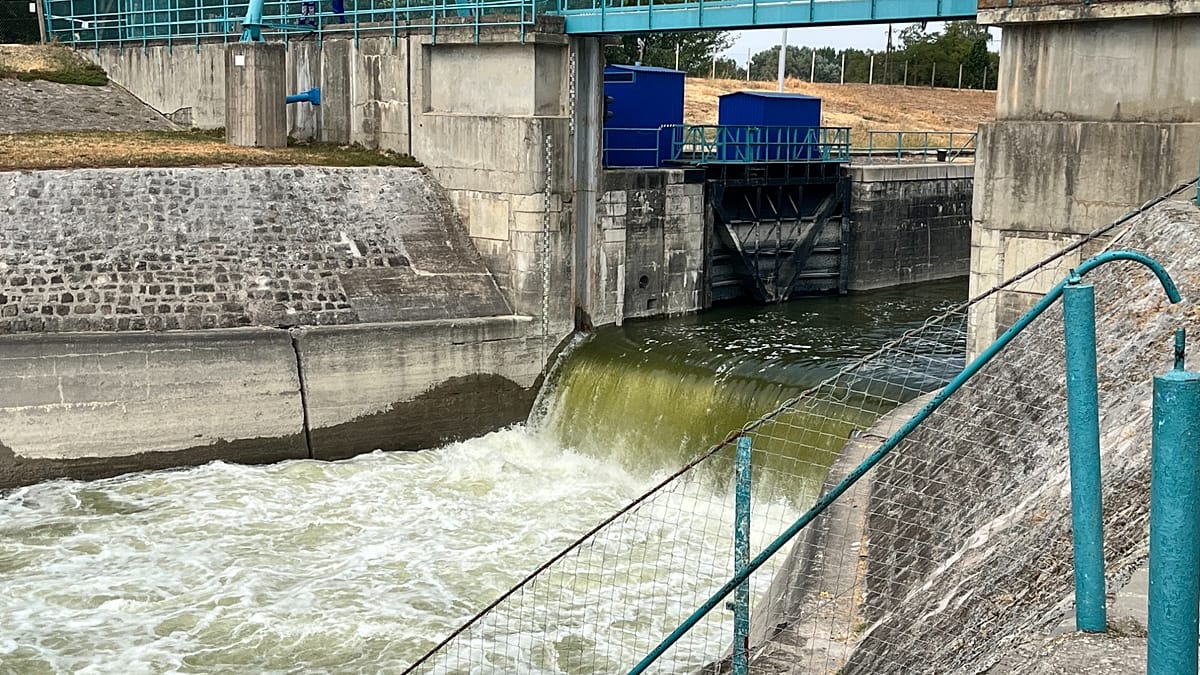
Hungarian authorities are taking emergency engineering steps to counter critically low water levels in the Danube, hoping to avoid another shutdown at the Paks Nuclear Power Plant. Since noon on Monday, an additional 20 cubic metres of water per second has been diverted into the main river from the Ráckeve-Soroksár branch at Dömsöd, about 50 kilometres south of Budapest. The move has lifted the river level by roughly two centimetres.
Further downstream, near Paks, some 100 kilometres from the capital, two barges are being prepared for controlled sinking. Water is being pumped into their hulls so they settle on the riverbed, forming a temporary sill designed to raise the water level close to the plant. Officials hope this intervention will prevent another shutdown of the plant's penultimate operating turbine as the Danube continues to fall.
Permanent sill under construction
Work is also under way on a permanent sill across the river between the Paks plant and the village of Dunaszentbenedek on the opposite bank. The Hungarian government approved the emergency project last week following a site inspection and a unanimous recommendation from water management, energy and defence experts. The structure will initially use 35,000 cubic metres of rock, with the amount later increasing to 110,000 cubic metres. Officials say the project is progressing at "breakneck speed".
Tuesday and Wednesday are expected to be critical, with the Danube forecast to fall by a further 14 to 15 centimetres. The measures come as much of central Europe experiences unusually dry conditions, putting pressure on river transport, agriculture and energy infrastructure. The Paks plant, which supplies about half of Hungary's electricity, has already faced reduced output this summer due to low water levels.
The situation at Paks echoes challenges faced by other European nuclear operators. In Spain, the government recently extended operations at the Almaraz plant to 2030, a decision that reflects broader debates about nuclear energy's role in the continent's energy mix. While Spain's decision was driven by policy, Hungary's current crisis highlights the operational vulnerabilities that climate change can impose on existing infrastructure.
Local water management officials say the temporary sill and the diversion from the Ráckeve-Soroksár branch are designed to buy time until the permanent structure is completed. The additional water released at Dömsöd is modest, but combined with the barges, it is expected to keep the intake levels at Paks above the minimum required for cooling.
The Hungarian government has not disclosed the full cost of the emergency works, but analysts note that the price of a shutdown would be far higher, given the plant's importance to the national grid. The country has also been affected by a recent tragic bus crash involving Polish pilgrims, which has drawn attention to road safety in the region, though the two events are unrelated.
As the Danube continues to recede, authorities are monitoring the situation hour by hour. The coming days will test whether the engineering measures can keep the plant operational until river levels recover, which is expected later this week. For now, the priority is clear: keep the cooling water flowing and the turbines spinning.