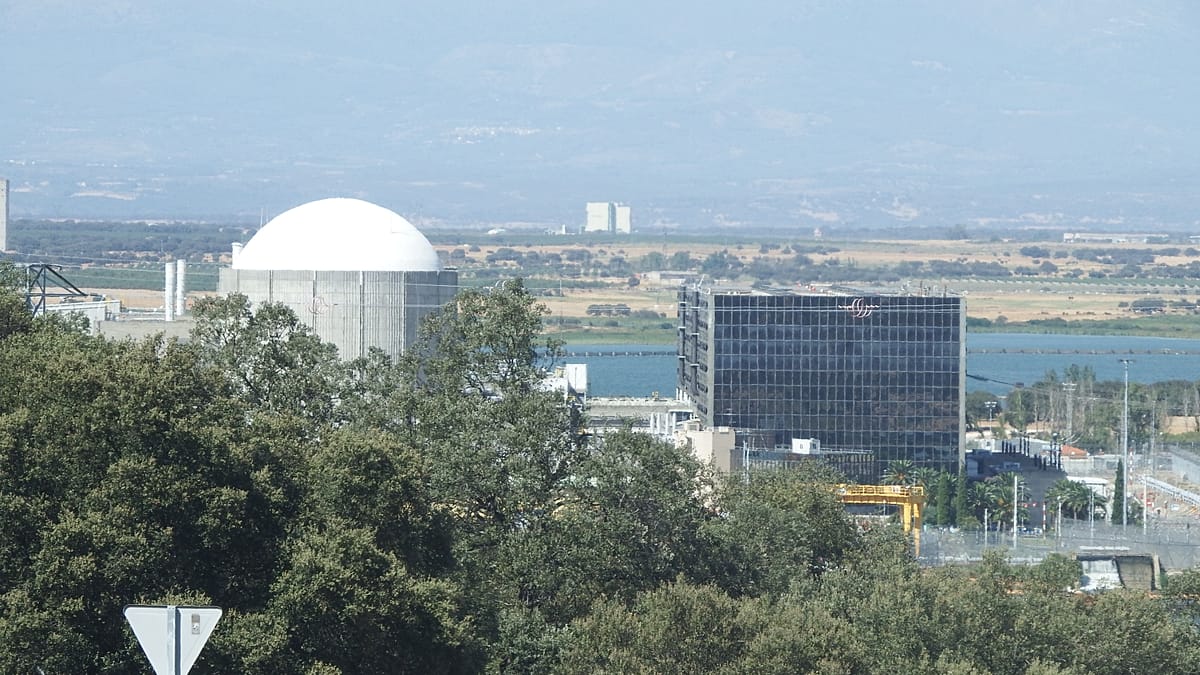
Spain's government has decided to keep the Almaraz nuclear power plant running until June 2030, a three-year extension over the previously agreed schedule. The move, announced on Friday and published in the Official State Gazette, responds to a formal request made last autumn by the plant's owners and has been welcomed in the Extremadura region, where the facility is a major employer.
Almaraz, located in Cáceres province, has historically been Spain's most productive nuclear plant, generating around 7% of the country's electricity. Its two reactors were originally slated to shut down in November 2027 and October 2028, under a phase-out timetable agreed in 2019 between the government and energy companies. That plan, which set a 2035 deadline for closing all seven Spanish reactors, was part of a coalition agreement with left-wing parties Podemos and later Sumar.
The reversal comes after a series of developments that shifted the political and technical landscape. In April 2025, a major blackout hit the Iberian Peninsula, reigniting debate over the reliability of the electricity grid and the role of nuclear power. Then, in February 2026, a delegation of ten MEPs led by Polish conservative Bogdan Rzońca visited Almaraz in response to a citizens' petition against its closure. Rzońca, chair of the European Parliament's Petitions Committee, called the planned shutdown "an ideological issue" and noted that more than 10,000 local residents opposed it.
The committee's subsequent report, approved in May 2026, urged the Spanish government to reconsider the timetable, arguing that the decision was based on "purely political and ideological reasons, without sufficient technical basis." It also warned of severe economic, social, and energy consequences for the region and for Spain's electricity system. MEP Elena Nevado (EPP) stressed that no comprehensive impact assessment had been carried out, and highlighted the plant's support for around 4,000 direct and indirect jobs.
The European Parliament's stance aligns with that of European Commission President Ursula von der Leyen, who has consistently defended the continued operation of nuclear plants across the bloc. The pressure from Brussels, combined with the regulator's green light, left the Spanish government with little room to maintain the original closure schedule.
Regulator clears the way
The Nuclear Safety Council (CSN) issued a favourable report on 16 July, confirming that Almaraz meets all safety conditions to operate until 2030. The plant also complies with the Ministry for Ecological Transition's requirements on security of supply and zero cost to consumers. With the technical hurdle removed, the decision became purely political.
Supporters of the extension point to the plant's track record and its American counterpart, North Anna in Virginia, which has been authorised to operate for up to 80 years. They argue that Spain's nuclear fleet, which also includes Ascó, Cofrentes, Vandellòs II, and Trillo, remains a vital part of the energy mix, especially as the country pushes to expand renewables and reduce carbon emissions.
The news has been met with relief by the citizens' platform "Sí a Almaraz, Sí al Futuro" (Yes to Almaraz, Yes to the Future), which was formed in January 2025 and has united more than a hundred municipalities, business groups, chambers of commerce, and workers' associations across the Cáceres area. "At last we can breathe again and see light at the end of the tunnel," said Fernando Sánchez, the platform's president and mayor of Belvís de Monroy. "This decision restores confidence to thousands of families who for months have lived in suspense, waiting for a ruling that would determine the future of an entire district."
The platform, which describes itself as a civic, plural, and cross-cutting movement, has also received backing from international pro-nuclear groups such as Mothers for Nuclear and WePlanet. Its campaign has drawn attention to the broader issue of rural depopulation in Extremadura, one of Spain's most sparsely populated regions, where the plant is a key economic anchor.
The extension does not mean a permanent reversal of Spain's nuclear phase-out, but it does signal a pragmatic shift in energy policy. The government has not announced any changes to the closure dates for the other reactors, though the precedent set by Almaraz may prompt similar requests. For now, the plant will continue to supply electricity to the grid, and the region can look forward to at least three more years of stability.