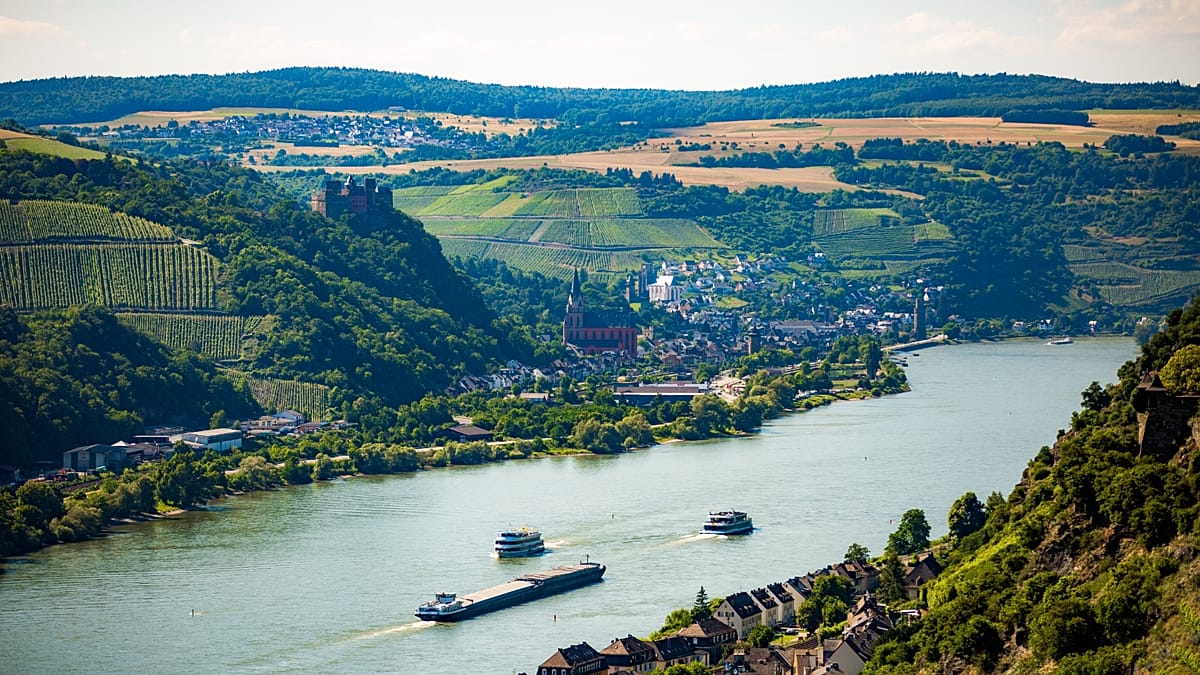
River cruising has moved from a niche offering to a central pillar of European travel. In 2024, the continent's inland waterways carried 1.39 million passengers, generating €3.537 billion in gross ticket revenue and nearly 10 million overnight stays, according to a study by IG RiverCruise. The data, covering 358 ships, confirms a steady upward trajectory that industry groups expect to continue into 2026.
The German Travel Association (DRV) reports that cruises—both ocean and river—were among the most dynamic segments of the German travel market in 2025. German holidaymakers spent roughly €6.7 billion on cruises, an increase of 8 percent from the previous year. Benjamin Krumpen, chair of the DRV's cruise committee, told Euronews: “River cruising continues to show very positive development and, together with ocean cruising, remains an important growth driver for the travel industry.”
The Rhine as the backbone
The Rhine and its tributaries remain the primary stage for river cruising. The route from Amsterdam through Cologne, Mainz, Speyer, Strasbourg, and Basel strings together historic old towns, vineyards, and UNESCO World Heritage landscapes. The Middle Rhine Valley, with its castles, the Lorelei rock, and wine-growing areas, is especially popular among international visitors. For many North American and Asian guests, this stretch embodies a romanticised image of Germany that blends culture, scenery, and history.
Tributaries such as the Moselle, Main, Neckar, Saar, and Danube broaden the offering, leading to smaller towns and culturally distinct regions often overlooked by standard travel itineraries. The Danube, in particular, connects central Europe to the Balkans, offering routes through Vienna, Budapest, and Belgrade—a journey that has gained traction among travellers seeking deeper cultural immersion. For a vivid account of what such a voyage entails, see Belgrade Unveiled: A Grand Voyager's Journey Through History, Architecture, and River Life.
The operator A-ROSA Flussschiff, which specialises in European river cruises, told Euronews that the combination of a relaxed pace, comfort, and variety appeals not only to traditional cruise guests but also to a younger clientele. The company notes that river cruises have long since moved beyond a niche product.
Infrastructure under pressure
Growth, however, is testing the limits of Europe's inland waterway infrastructure. The DRV highlights a lack of shore power connections, moorings in need of renovation, insufficient berthing capacity, and restrictions affecting locks and other hydraulic structures. Krumpen warned: “Infrastructure development in many places cannot keep pace with the growth of the sector and its requirements.” Technical failures and renovation work repeatedly cause delays, complicating planning for shipping companies and passengers alike.
The association also cautions that if investment fails to materialise, operators could shift capacity to other European cruising regions. One example of local adaptation is Weil am Rhein, where the Rheinhafengesellschaft port authority plans to expand its remit to allow passenger vessels. Two new berths are proposed, which could accommodate an estimated 15 ships per week, opening up excursions to the Black Forest, Switzerland, and the town itself.
From the operator's perspective, the goal is not expansion at any price but sensible integration into existing structures, as A-ROSA explains. The industry is also investing in technology: IG RiverCruise reports that 61 percent of European passenger vessels can already run on synthetic fuels, and 96 percent can connect to shore power. Shore power is seen as a key lever for sustainability, allowing ships to switch off their engines while docked.
Major players expand
Tourism groups are betting on continued growth. TUI River Cruises, part of the TUI Group, has announced two additional river cruise ships for spring 2026 and plans to expand its fleet to ten vessels by 2028. The new ships will operate on the Rhine, Danube, and Main and are designed to run on alternative fuels such as methanol. This expansion reflects a broader trend: river cruising is increasingly seen as a complement to other forms of slow travel. For more on this shift, see Luxury cruise and rail combos gain traction as travelers embrace slow tourism across Europe.
The DRV notes that river cruises create added value for ports, hotels, restaurants, retailers, and excursion providers. Yet the association also stresses that modernisation of inland waterway infrastructure is essential to sustain this growth. Without investment in berths, shore power, and lock systems, Europe risks losing its competitive edge in a market that is increasingly global, with rising demand from North America, Australia, and Asia.