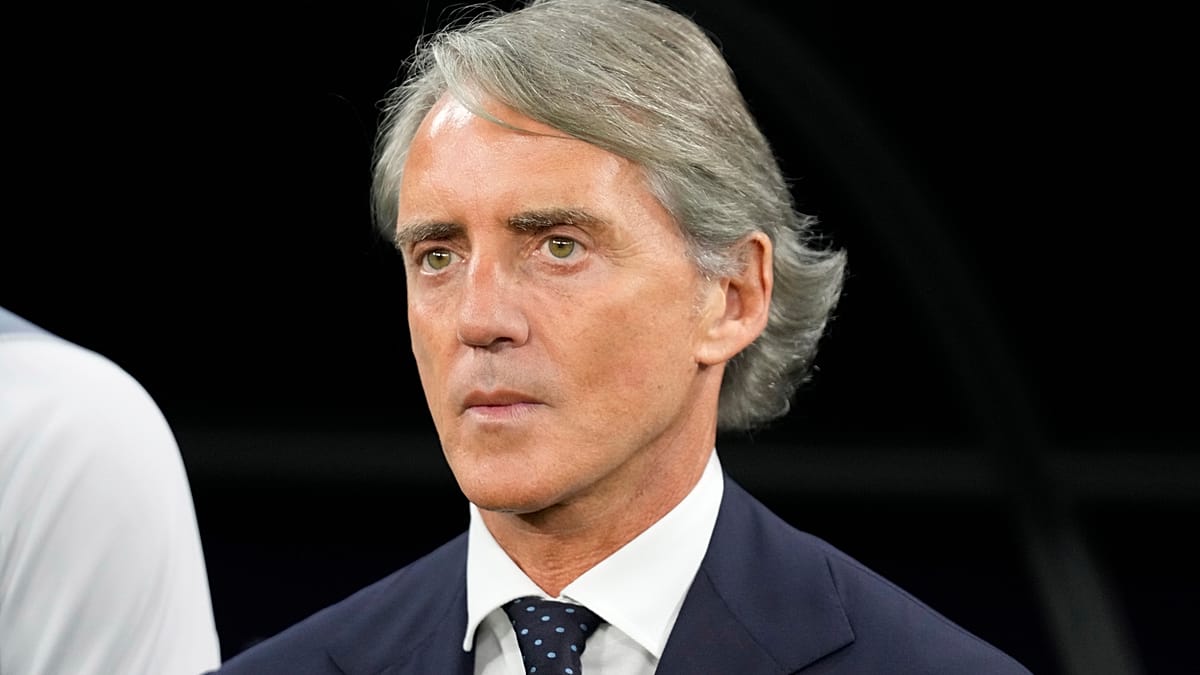
Roberto Mancini is back in charge of the Italian national team, tasked with reviving a side that has missed three consecutive World Cups. The 61-year-old, who led the Azzurri to the European Championship title in 2021, was appointed on Tuesday by Italian Football Federation (FIGC) president Giovanni Malagò.
Claudio Ranieri will take over as technical director, replacing Paolo Maldini, who stepped down just 16 days after being appointed. The reshuffle follows a chaotic period for Italian football, marked by the resignation of former FIGC president Gabriele Gravina and coach Gennaro Gattuso in April after a playoff defeat to Bosnia and Herzegovina.
A familiar face for a familiar crisis
Mancini first took the Italy job after the team failed to qualify for the 2018 World Cup, losing a playoff to Sweden. He then orchestrated a remarkable turnaround, guiding Italy to the Euro 2020 title with a penalty shootout victory over England at Wembley Stadium. Under his leadership, the Azzurri set a world record of 37 matches without defeat between 2018 and 2021.
But the momentum did not last. In March 2022, Italy suffered a humiliating 1-0 home playoff loss to 67th-ranked North Macedonia, again missing the World Cup. Mancini remained in post until August 2023, when he abruptly resigned to take over the Saudi Arabia national team. He left that role last month and most recently coached Al-Sadd in Qatar.
“Time was running out … I believed the person who should become the new coach of Italy is Roberto Mancini, for a whole list of reasons,” Malagò said. “There will be a press conference tomorrow with both Claudio Ranieri and Roberto Mancini.”
When asked about Mancini's sudden departure in 2023, Malagò acknowledged the controversy: “It is clear that all the necessary assessments have been made. I certainly took it into consideration; I am aware of his recent apologies, and obviously, everyone has made the appropriate evaluations.”
Behind the scenes: Pirlo, Guardiola, and Ancelotti
Mancini's return came after several high-profile candidates fell through. Andrea Pirlo had been the leading contender, but his candidacy collapsed amid political concerns over a sponsorship deal with a Russian betting firm. That triggered the departures of Maldini and special adviser Leonardo, which Malagò described as “mutual consent.”
“Practically before we had even started, we were dealing with a unique situation,” Malagò added. “There was no conflict. With utmost respect, like in the best families, there was a calm discussion and a clear and serene consensus that it was best to go our separate ways.”
Earlier, Pep Guardiola and Carlo Ancelotti had both turned down offers to coach the Azzurri. Former Italy coach Antonio Conte was also in the running.
The Italian national team's struggles come at a time when other European sides are also reshaping their coaching staffs. Zinedine Zidane's appointment as France head coach and Mark van Bommel taking over Belgium highlight a broader trend of high-profile changes across the continent.
Mancini's task is clear: restore Italy's standing on the world stage and end a World Cup drought that has now stretched to three cycles. With Ranieri providing experience as technical director, the Azzurri will hope to build a squad capable of competing at the highest level once more.