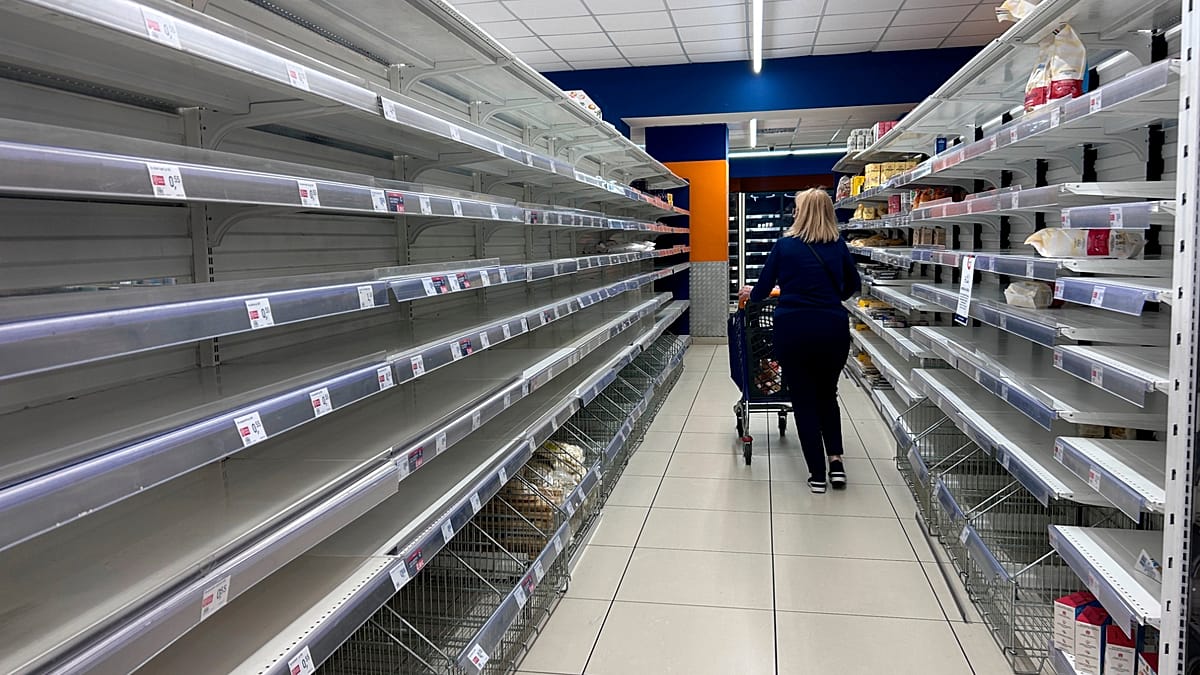
When truck drivers in southern Italy downed tools last week, I assumed it would be a minor inconvenience. By Wednesday, the shelves of my local supermarkets in Sicily were bare. The strike, sparked by soaring diesel prices linked to the US-Iran conflict, had brought food distribution to a standstill across the island and much of the mainland south.
Roadblocks set up by drivers prevented lorries from leaving food warehouses, and petrol stations ran dry. A government minister even alleged that the Mafia were exploiting the protests, intimidating drivers and slashing tyres. It was a stark reminder of how fragile our modern food system is.
A system that runs on fossil fuels
Strikes are not unusual in Italy—public transport workers often walk out, and waste services have been disrupted by organised crime. But I had never been directly affected. Italian friends warned me that a similar trucker strike 15 years ago had emptied shops, but I dismissed it as an exaggeration. I was wrong.
My own awakening came when I ran out of milk for my toddler and fresh fruit. Social media videos showed empty fridges in supermarkets, which I initially dismissed as staged. But when I visited a Lidl, a Eurospin, and a Conad one morning, there was no fresh produce, no dairy, no meat or fish. Other aisles looked normal, but it was clear that within days, even pasta and tinned goods would vanish.
The speed of the collapse was shocking. Hauliers, farmers, and shopkeepers had coordinated to disrupt deliveries, aiming to force government action. The system we rely on for daily sustenance proved alarmingly vulnerable.
Local shops as a lifeline
On my way home, I stopped at a local greengrocer—a frutteria—which I had rarely used, preferring the convenience of supermarkets. To my relief, it was fully stocked. The owner explained that local farmers deliver directly, bypassing the long logistics chains that were paralysed. The fruit and vegetables were fresher, picked days earlier, and free of the chemicals needed for long road journeys.
The visit was a revelation. Beyond the practical benefit, I enjoyed a friendly chat with the owner—something that never happens at a supermarket checkout. It made me reconsider the value of local shopping, not just for resilience but for community.
The cost of the strike
The strike's impact was severe. Mozzarella dairies lost €3 million in a single day because buffalo milk could not be delivered. Construction sites stalled without raw materials. The Italian government eventually convened an emergency cabinet meeting and approved €540 million in tax credits for truckers, farmers, and fishers—up from €434 million.
Even after the roadblocks were lifted, deliveries remained delayed. Online platforms like Vinted warned customers of shipping delays. The disruption was a stark illustration of how dependent we are on diesel-powered logistics.
Electrification as the way forward
The root cause of this crisis is our addiction to fossil fuels. The Iran war has sent energy prices soaring, affecting countries far from the conflict. As climate scientists have long argued, electrification—powering transport and industry with wind, solar, and other clean sources—is a key solution.
Trucking accounts for 11-17% of oil demand in the US, EU, and China, making it a prime candidate for electrification. The diesel price surge has already accelerated the shift: global sales of medium- and heavy-duty electric trucks hit a record 160,000 units in the first half of this year, up 75% year-on-year.
The Italian government should use its tax credits to encourage hauliers to switch to electric fleets, rather than subsidising fossil fuels. As with heat pumps and solar panels, the energy crisis could actually boost clean energy adoption. But the immediate lesson from Sicily is simpler: supporting local food networks can make us all more resilient to shocks. For more on how grocery costs vary across Europe, see our analysis of shopping basket prices.