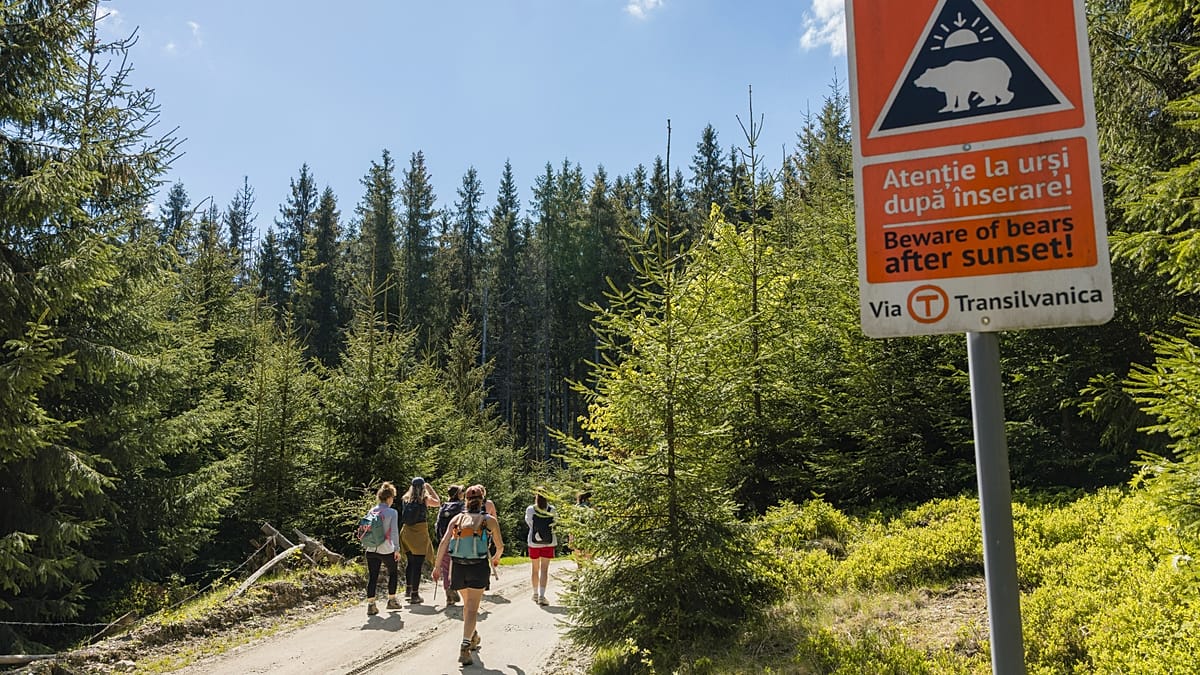
Deep in the Eastern Carpathian mountains, in Romania's Bukovina region, a group of hikers finds shelter from the damp wind under a wooden roof. At Popas la Cosma, a rest stop run by shepherd Cosma Crăciuneac and his family, they are greeted with afinata—a wild blueberry liqueur—followed by homemade cheese, salami, boiled eggs, and bread. This warmth is typical of the roughly 500 hosts along the Via Transilvanica, a 1,600-km trail that cuts diagonally across Romania.
The Path That Unites
The Via Transilvanica was conceived by the NGO Tășuleasa Social, not as a tourist project but as a social initiative to strengthen communities and protect the environment. With no government or EU funding, the trail was built by a core team, volunteers, sponsors, and donations. It passes through some 400 villages in 20 distinct ethnic and cultural regions, earning the nickname 'the path that unites.' The goal is to bring life back to rural areas affected by emigration to cities or abroad. Popas la Cosma, for instance, welcomed around 1,500 hikers last season.
Alin Ușeriu, president of Tășuleasa Social, emphasizes that the project was never about tourism. 'It has always been about volunteering and young people, about doing something meaningful for the community,' he says. Hikers are encouraged to visit the project headquarters near Bistrița, surrounded by mountain meadows, where they can enjoy a hot meal, stay overnight, and meet volunteers.
Hiking in the 'Switzerland of the East'
Led by Intrepid Travel, our group explores some of the trail's lesser-known northern stages in Bukovina, a region often called the 'Switzerland of the East.' Over three days, we traverse deep forests of beech, oak, and spruce, sun-drenched wildflower meadows, and encounter bell-adorned cows. The orange T markers guide the way, alongside warnings about bears after sunset. We spot birds, butterflies, lizards, and snakes, but no bears.
Lunches are a highlight: fresh cheese with paprika jam at Gigi Ursu Chalet, and sarmale—cabbage rolls stuffed with minced meat—at La Moara Bucovina restaurant. Each stop offers a chance to chat with owners, who take pleasure in hosting hikers, often accompanied by a shot of afinata. Hikers can collect stamps in their travellers' booklets, available at over 50 locations along the trail, for each stage completed.
Cultural Riches Along the Trail
The Bukovina stretch also offers cultural depth. We visit two UNESCO-designated painted monasteries, Sucevița and Moldovița, where 16th- and early 17th-century religious scenes cover both exteriors and interiors. In the town of Moldovița, we learn about the tradition of painting eggs with intricate designs at the home of Viorica Semeniuc. The trail's kilometre markers, each uniquely carved, add another layer of artistry.
The Via Transilvanica continues to evolve. In 2026, Tășuleasa Social plans to enhance sections in Bukovina, repair weather-damaged stages, reroute parts for better accessibility, and add a 200-km extension to Brașov in Transylvania. For those seeking a wild, welcoming, and quiet alternative to Europe's more crowded trails, this Romanian path offers a genuine connection to nature and community. For more on Europe's best hiking routes, see our guide to Best European Hiking Trails for Summer.