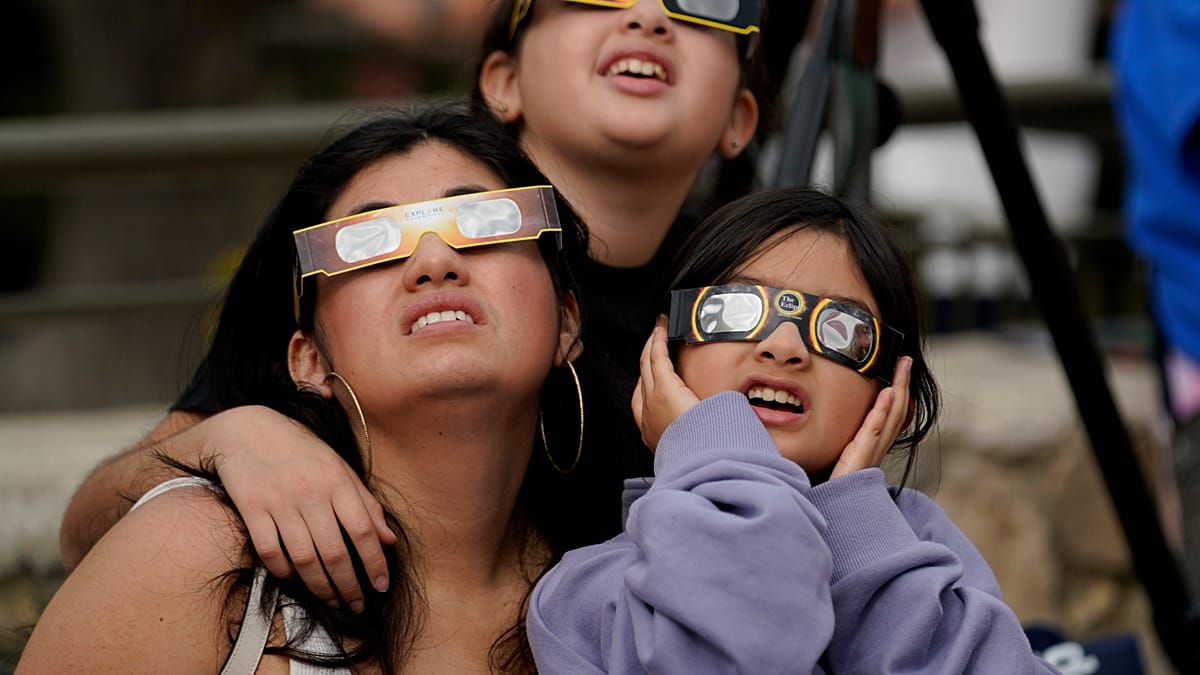
On 12 August, a total solar eclipse will sweep across the Iberian Peninsula, offering a once-in-a-century spectacle. But viewing it safely demands more than just any pair of sunglasses. The only acceptable protection is eyewear that meets the ISO 12312-2 standard, which filters out all but 0.00032% of visible sunlight.
Without such certified glasses, the Sun's ultraviolet radiation can damage the photoreceptors in your eyes—the cones and rods—while infrared energy can cause a thermal burn on the retina, leading to solar retinopathy. Symptoms, which may not appear immediately, include blurred vision, dark spots (scotomas), distorted shapes (metamorphopsia), and photophobia, often accompanied by headaches.
The total phase of the eclipse will last no more than one minute and 48 seconds along the path of totality. Observers closer to the central line will enjoy the longest period of darkness. Only during that brief moment can you safely remove your glasses to view the corona with the naked eye.
Why ISO 12312-2 matters
The ISO 12312-2 standard applies specifically to products designed for direct solar observation—what astronomers call the photosphere, the bright face of the Sun. These glasses ensure that no more than 0.00032% of visible sunlight passes through, protecting your retina from both UV and infrared radiation.
The Spanish Ministry of Science advises: "You must put the glasses on before looking at the Sun, look briefly for a few seconds and then look away, repeating observation of the eclipse always with pauses." Never remove them until you have turned your gaze away from the Sun.
This standard does not apply to ordinary sunglasses (which fall under ISO 12312-1 and let through far too much light), nor to solar filters designed for telescopes, binoculars, or camera lenses. Those require their own specific filters placed over the front aperture.
The key criteria are transmittance—the ratio of light that reaches your retina—at ultraviolet, visible, and infrared wavelengths, the uniformity of that transmittance, and the quality of the material. The Scientific and Advisory Commission of the Eclipse Trio adds that glasses sold in the European Union must also carry the CE mark.
Where to get free certified glasses
The Spanish government, together with ONCE (the national organisation for the blind), will distribute two million certified glasses free of charge. You can pick them up at ONCE stands, as well as at research centres, science museums, and other public institutions across the country. Several regional governments will also hand out approved viewing equipment at designated eclipse-watching sites.
For a detailed list of distribution points, consult the official source (in Spanish). Remember: the glasses are only safe if they meet the ISO standard and bear the CE mark. Do not risk your eyesight for a few minutes of celestial wonder.
As Spain prepares for this rare event, it's worth noting that the country has seen other significant developments recently, from migration shifts at its borders to innovative environmental projects. But for now, all eyes are on the sky.