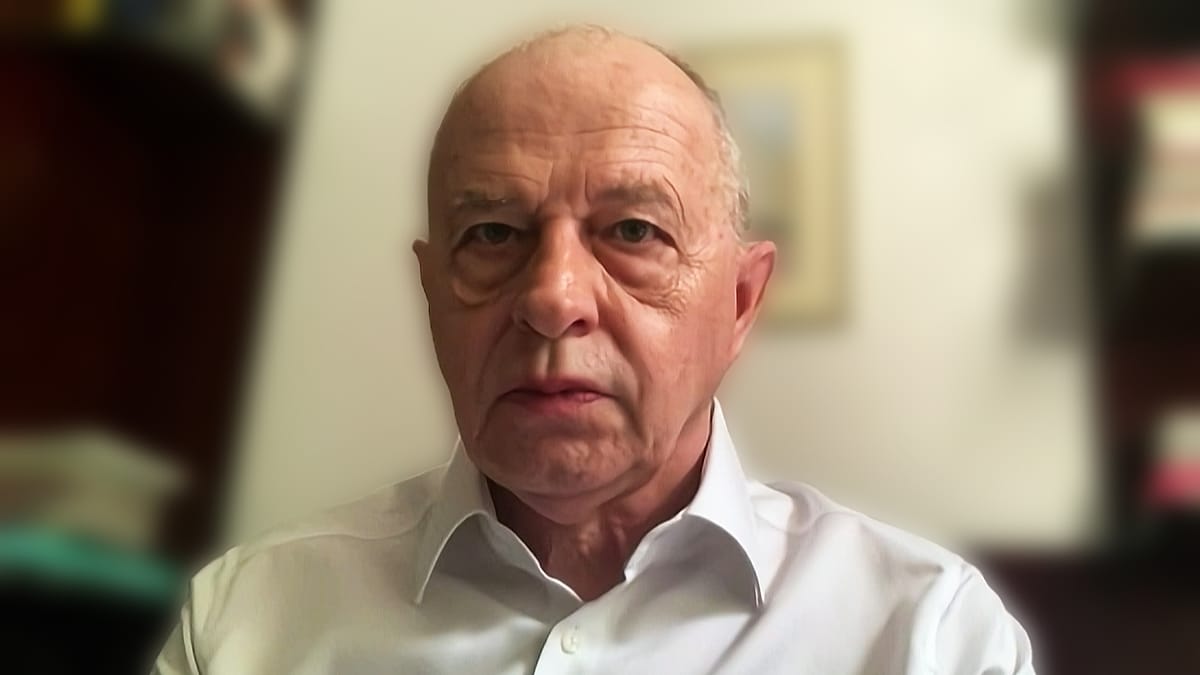
Mircea Geoană, the former NATO Deputy Secretary-General and a former Romanian foreign minister, has warned that European nations must significantly improve their low-altitude air defenses to counter the growing threat from Russian drones. His comments follow an incident late last week in the Romanian port city of Galați, where a Russian unmanned aerial vehicle crashed into an apartment block, sparking a fire and injuring two residents.
The Romanian government swiftly blamed Moscow for the attack, declaring the Russian consul in Constanța persona non grata and closing the consulate. While stray drones have entered European airspace in recent weeks, particularly alarming the Baltic states, this is the first time Romanian civilians have been harmed. Residents in Galați now fear a repeat of the strike.
Geoană: 'The shock is still with us'
Speaking to Euronews’ Europe Today programme on Monday, Geoană described the lingering trauma in Galați, a major industrial city on the Danube River. “The shock of the Russian incursion and explosion on a block of apartments in Galați is still here with us,” he said. “Galați is a big city, an industrial city on the Danube. On the other side of the river, there is Ukraine, and Russia is constantly attacking infrastructure on the Ukrainian side.”
Geoană, who served in NATO’s upper echelons from 2019 to 2024, noted that Bucharest’s concern has been building for more than four years of Russia’s full-scale invasion of Ukraine, given Romania’s proximity to the battlefield. Russian President Vladimir Putin has denied responsibility for the drone crash, while Dmitry Medvedev, deputy chair of Russia’s Security Council, warned that more drones would continue to stray into European skies. “The peaceful sleep is over,” Medvedev said.
Limited time to respond
Romania’s Ministry of Defence scrambled two F-16 fighter jets to intercept the drone, but General Gheorghe Maxim said the forces had only four minutes to act—insufficient time to shoot it down. This contrasts with a successful interception on 19 May, when a Romanian fighter jet of NATO’s Baltic Air Policing Mission downed a stray drone that entered Estonia’s airspace. Asked why a similar response failed in Romania, Geoană explained that the military did not “have enough time or space to shoot.”
The incident underscores a critical gap in NATO’s defensive posture. “We have to do a much better effort to try to find the right kind of air and missile defence for NATO in general,” Geoană said. “For mid-altitude and high altitude, let's say there are some things in place: Patriot missiles, F-16 things, F-35 NATO operations. For this basically low altitude things… you can acquire them, the only thing is that you have to put your right priorities in the right place.”
The drone that struck Galați is believed to be a Geran-2 model, a type increasingly used by Russian forces against Ukrainian infrastructure. Details of the drone's capabilities and origin are still emerging.
Broader European implications
The attack has reignited debate across Europe about the continent’s vulnerability to drone warfare. As Russia continues its aerial campaign against Ukraine, stray drones pose a persistent risk to neighboring NATO members. The Baltic states, Poland, and Romania have all reported incursions in recent months, prompting calls for a coordinated European response. Geoană’s warning echoes concerns raised by other defense officials that NATO’s current air-defense systems are ill-suited to the low-altitude, slow-moving threats posed by drones.
For Romania, the incident is a stark reminder of the war’s proximity. The country shares a 650-kilometer border with Ukraine and has become a key transit hub for Western military aid. The strike on Galați, a city of over 200,000 people, has heightened public anxiety and put pressure on the government to bolster defenses. As Geoană put it, “The only thing is that you have to put your right priorities in the right place.”