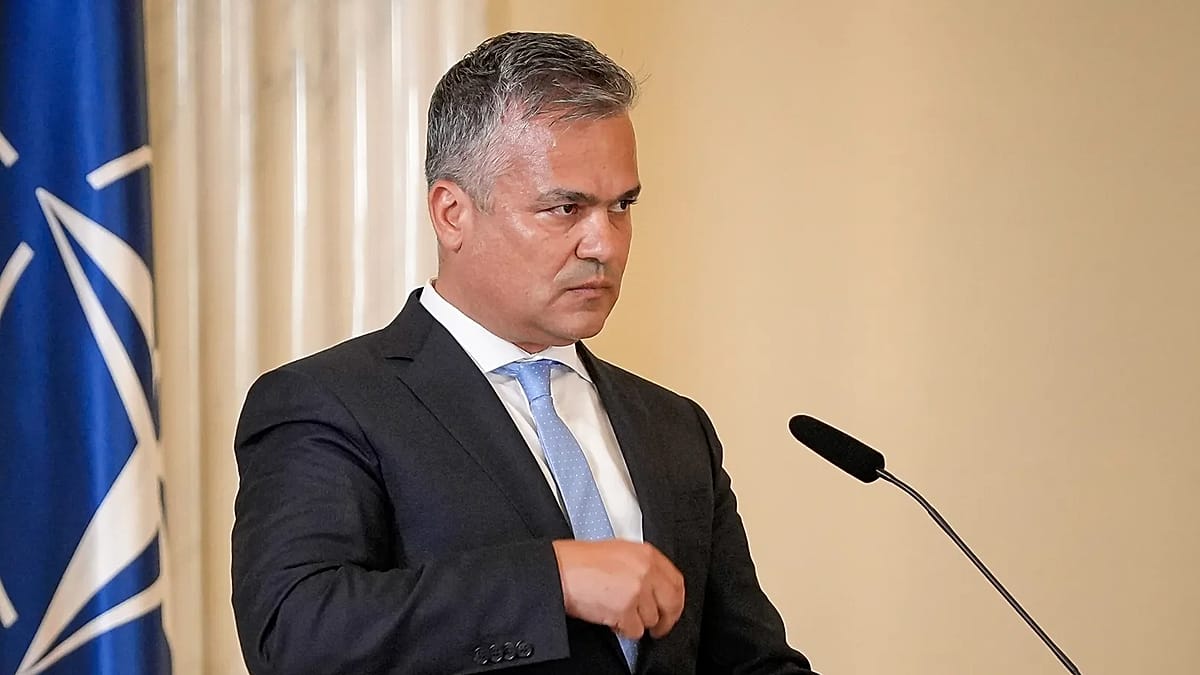
Romanian President Nicusor Dan has nominated Adrian Vestea, a member of the National Liberal Party (PNL), as prime minister after his initial pick, Eugen Tomac, stepped down on Sunday. The announcement, made via a post on X, marks the latest attempt to resolve a political crisis that has gripped the country since its government collapsed in May.
"Eugen Tomac resigned this morning, and under these circumstances, I am appointing Adrian Vestea as Prime Minister," Dan wrote. He added that neither he nor Tomac had been "playing at governing," and that the decision followed consultations with political parties. "At this point, however, it is clear that a political solution is the right one," Dan said.
Political Crisis Deepens
Romania has been without a functioning government since May, when a no-confidence vote ousted Liberal Prime Minister Ilie Bolojan. The motion was triggered after the left-wing Social Democratic Party (PSD) withdrew from the governing coalition in late April and joined forces with far-right parties to call for the vote. At the time, the PSD accused Bolojan of failing to implement genuine reform and argued that Romania needed a leader "capable of collaboration."
The crisis has compounded Romania's economic challenges. The country, an EU member since January 2007, runs one of the highest government deficits in the bloc. The deficit stood at 9.3% of GDP in 2024 but fell to 7.9% in 2025, though it remains a concern for Brussels and investors.
Dan described Vestea as "pro-Western" and "a man of dialogue, with strong values," highlighting his extensive experience working with budgets. Vestea's nomination now requires approval from the Romanian parliament, where the PNL will need to secure a majority. The political landscape remains fragmented, with the PSD and far-right parties holding significant sway.
Romania's instability comes at a time when the EU is grappling with multiple challenges, including energy security and geopolitical tensions. The country's strategic location on the Black Sea has made it a key player in regional security, particularly after the drone incident in the port of Constanța raised concerns about maritime safety. Meanwhile, the broader European context includes ongoing debates over scrutiny of Chinese port investments and the need for stable governance in EU member states.
Vestea's nomination is seen as a bid to restore confidence in Romania's political system, which has been plagued by frequent changes of government. The country has held five parliamentary elections since 2007, and the current crisis underscores the fragility of its coalition politics. Observers will be watching closely to see whether Vestea can secure the necessary support to form a government and address Romania's fiscal and structural challenges.