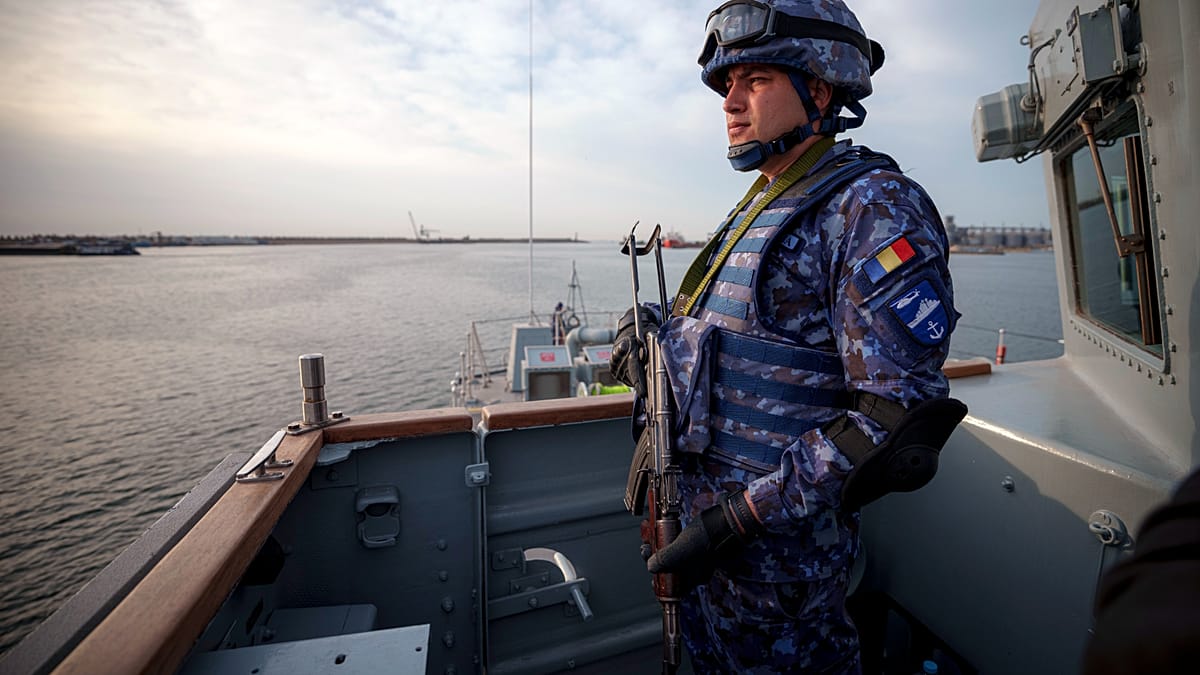
On Friday morning, a naval drone exploded in the Romanian port city of Constanța, prompting an immediate security response and raising fresh questions about the safety of critical infrastructure along the Black Sea coast. The incident occurred at approximately 10:30 a.m. local time, according to a statement from the Romanian Ministry of National Defence.
The ministry confirmed that the drone was not part of the Romanian Army’s inventory and had not been involved in any recent military exercises in the Black Sea region. It added that the device was believed to be “of the type used in the war in Ukraine,” though it did not specify whether it was of Russian or Ukrainian origin.
Security Response and Investigation
Authorities had already cordoned off the area before the explosion. Forces from the Romanian Intelligence Service, the Coast Guard, and the Ministry of National Defence were on site, assessing and securing the object when it detonated. No injuries have been reported so far.
“The priority has been and remains the protection of human life and the security of the port infrastructure,” Romanian President Nicușor Dan wrote on X in response to the news. An investigation into the incident is now underway.
Constanța is Romania’s largest port and a key hub for grain exports from Ukraine, as well as a NATO logistics node. The explosion comes amid heightened tensions in the Black Sea region, where drone and missile attacks have become routine since Russia’s full-scale invasion of Ukraine in February 2022.
This is not the first time debris or stray drones have landed on Romanian territory. In recent months, fragments of Russian drones have been found near the Danube River, close to the Ukrainian border. The incident in Constanța, however, marks a more direct and dangerous encounter with a naval drone inside a major port city.
The event underscores the broader security gaps that European nations face as drone technology proliferates on the battlefield. As Europe's drone security gaps are exposed, the need for robust detection and response mechanisms becomes ever more urgent.
Romania, a NATO member since 2004, has been a staunch supporter of Ukraine, providing military aid and hosting allied troops. The incident in Constanța is likely to test the alliance’s solidarity and its ability to protect member states from spillover effects of the war.
The European Union has also been grappling with the diplomatic implications of such incursions. EU's Ukraine diplomacy is tested by Russian drone incursions, and the bloc will be watching closely how Romania handles this latest breach.
Meanwhile, the broader context of drone warfare continues to evolve. Ukraine's drone revolution has reshaped modern warfare, with both sides employing unmanned systems for reconnaissance and attack. The use of naval drones, in particular, has become a hallmark of the conflict, targeting ships and port infrastructure in the Black Sea.
As the investigation proceeds, Romanian authorities are expected to release more details about the drone’s origin and trajectory. For now, the port of Constanța remains operational, but the incident serves as a stark reminder that the war in Ukraine continues to have direct consequences for neighboring EU member states.