As the war in Ukraine enters its fifth summer, the European Union faces a critical test of its diplomatic and military resolve. The increasing frequency of Russian drone incursions into European airspace has forced Brussels to confront a question it has long avoided: how to deter Moscow without triggering a direct confrontation.
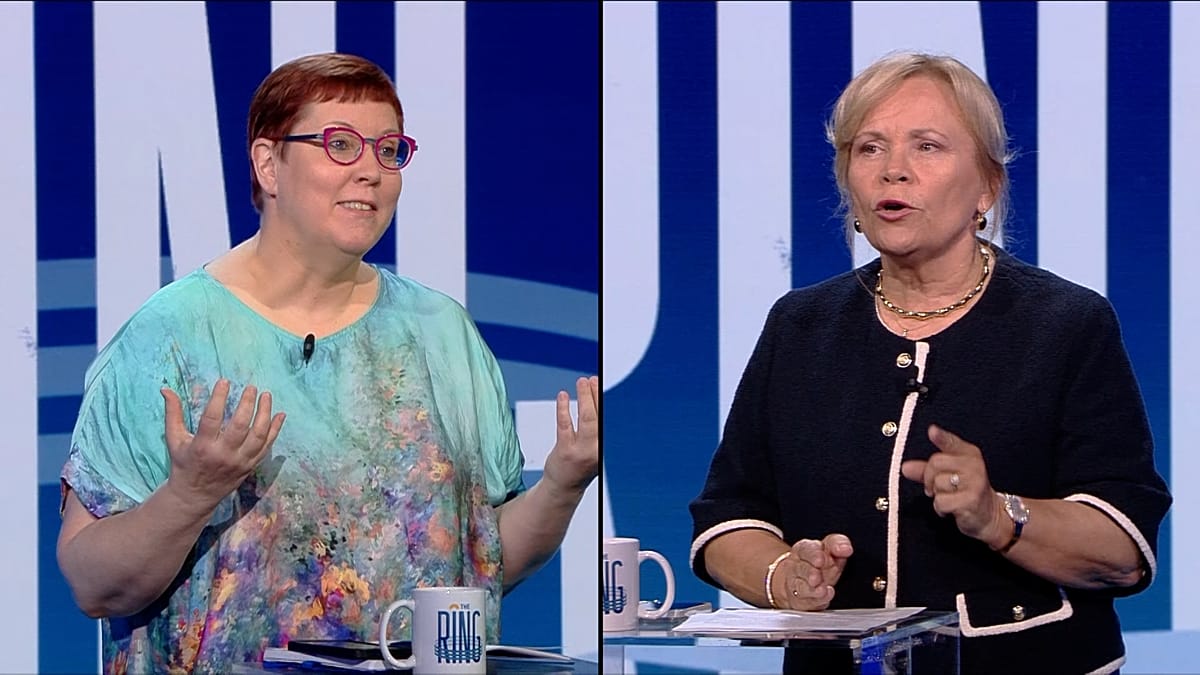
In the latest edition of The Ring, two lawmakers from Nordic countries often viewed as being in Moscow's crosshairs—Rasa Juknevičienė of the European People's Party (EPP) from Lithuania, and Merja Kyllönen of The Left Group from Finland—gathered at the European Parliament in Brussels to discuss the bloc's strategy.
Airspace Violations and the Limits of Condemnation
The most recent incident, in which a Russian drone entered Romanian airspace, drew strong condemnation from EU officials but no concrete action. This pattern has frustrated the Baltic states—Estonia, Latvia, and Lithuania—which fear they could be next in Moscow's sights. The incident also exposed a glaring weakness in civilian protection: governments along the eastern flank are now reviewing emergency warning systems, shelter infrastructure, and public-alert procedures after drones and debris repeatedly landed in border regions.
Europe's biggest challenge, however, is political rather than technical. Most incursions appear to be spillover from Russian attacks on Ukraine rather than deliberate provocations against NATO members. As a result, NATO has so far avoided treating them as grounds for collective military retaliation under Article 5. But that stance may be shifting. The debate in Brussels is increasingly about how to deter repeated violations without escalating the conflict.
Juknevičienė and Kyllönen both spoke in favor of enhancing capabilities to detect, track, and intercept drones, as well as strengthening defenses along Europe's eastern flank. Their positions reflect a growing consensus that passive condemnation is no longer sufficient.
Defense Spending and Strategic Priorities
The question of defense spending looms large. EU member states have pledged to increase military budgets, but disagreements persist over how the money should be allocated. Some advocate for joint procurement and shared capabilities, while others prioritize national sovereignty. The debate is further complicated by the need to balance defense investments with social spending and climate goals.
Meanwhile, the EU remains Ukraine's strongest political and economic backer, but its role in potential peace negotiations is uncertain. Can the bloc act as a neutral mediator when it has provided billions in aid and weapons to Kyiv? This is a conversation that will likely occupy European policymakers for some time to come.
Recent developments, such as Hungary ending its veto on Ukraine's EU accession talks, signal a shift in diplomatic dynamics. However, the path to a negotiated settlement remains fraught with obstacles. EU leaders have signaled willingness to join peace talks, but only after a ceasefire is in place.
As the war grinds on, the EU's ability to craft a coherent strategy—one that balances deterrence, diplomacy, and support for Ukraine—will define its credibility on the global stage. The MEPs' discussion in Brussels underscores the urgency of the moment, but also the deep divisions that remain.