US Secretary of State Marco Rubio has revived transatlantic tensions over Greenland, telling a congressional hearing that the autonomous Danish territory belongs to Denmark only 'for now.' The remark, made during a House Foreign Affairs Committee session on Wednesday, underscores the Trump administration's persistent interest in acquiring the Arctic island.
When congresswoman Sarah McBride asked Rubio if he was 'aware that Greenland is indeed part of Denmark,' he replied bluntly: 'For now.' The exchange, first reported by US media, has drawn sharp reactions in Copenhagen and Nuuk, where leaders have repeatedly rejected any notion of a sale.
Greenland has been a focal point since President Donald Trump returned to the White House, arguing that Washington must secure the island to bolster national defence. Speaking at the World Economic Forum in Davos in January, Trump described Greenland as 'an enormous unsecured island' that is 'actually part of North America' and therefore a 'core national security interest.' He also warned that China or Russia could seize control if the US did not act.
Military talks and a Cold War legacy
Rubio told the committee that the administration is engaged in discussions with both Greenland and Denmark about using the island for 'collective defence,' particularly for missile defence. 'We're involved in those talks right now. I think we're in a good place on it,' he said, without providing details.
The US military presence on Greenland dates back to the Cold War, when Washington operated 17 facilities and stationed more than 10,000 troops on the island. Today, only the Pituffik Space Base remains—the Pentagon's northernmost installation, used by the US Space Force for missile warning, missile defence, and space surveillance.
Trump's special envoy to Greenland, Jeff Landry, has been more explicit. In May, the Republican governor of Louisiana said it was time for the US to 'put its footprint back' on the island. Landry previously sparked outrage among Greenlanders after stating that his goal was to make the territory part of the United States.
The push comes amid broader European security concerns. NATO allies have been grappling with Russian incursions near the alliance's eastern flank, as EU states struggle to unify drone defence against aerial threats. Meanwhile, the alliance's secretary general, Mark Rutte, recently made an unannounced visit to Kyiv as Russian attacks continue, underscoring the volatile security environment.
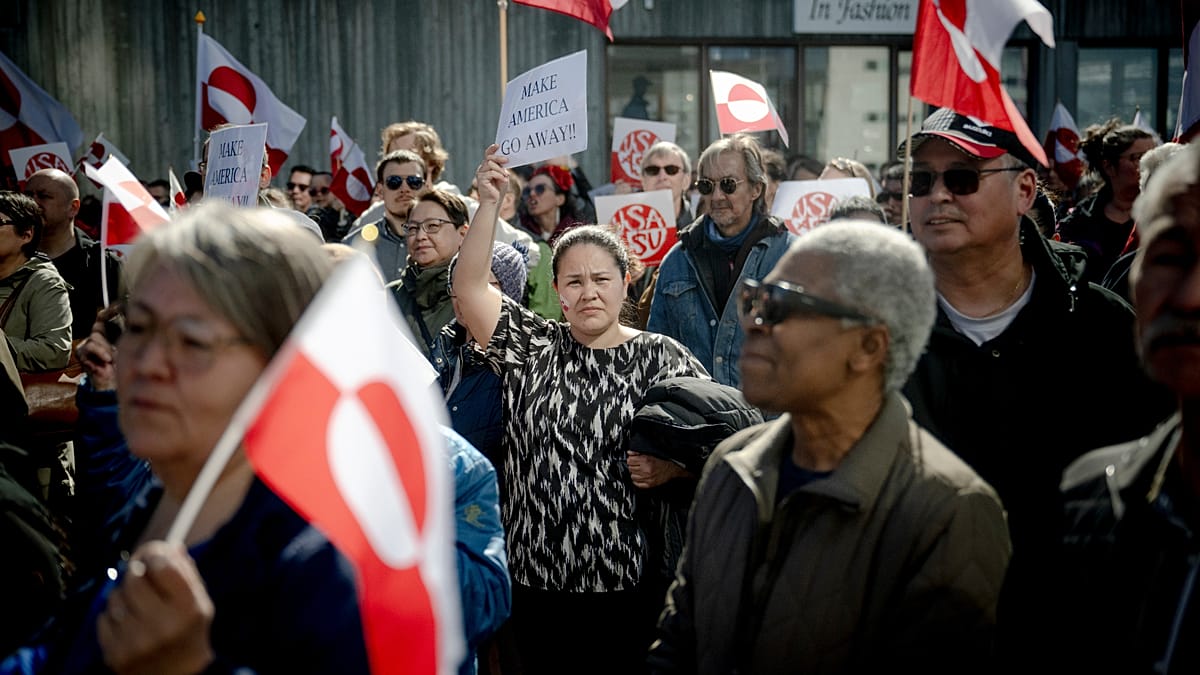
Greenland's political leadership has made its position clear. In January, the leaders of five parties in the Inatsisartut—the Greenlandic parliament—issued a joint statement rejecting any US acquisition. 'Greenland is not for sale,' they declared, urging both Washington and Copenhagen to respect the territory's autonomy.
Denmark, for its part, has maintained that Greenland's status is a matter for its people. The island, which has a population of around 57,000, gained self-rule in 2009 but remains part of the Kingdom of Denmark, with Copenhagen handling foreign affairs and defence.
The renewed US interest has also reignited debate about Arctic geopolitics. As melting ice opens new shipping routes and resource extraction opportunities, the region has become a strategic prize. European Pulse has previously covered how eleven European states push for stricter Russian tourist visa rules, reflecting broader concerns about Moscow's influence in the north.
For now, Rubio's 'for now' has left European diplomats wondering whether Washington's overtures are a negotiating tactic or a prelude to more assertive action. What is certain is that Greenland—a vast, ice-covered island with a tiny population—has become an unlikely flashpoint in transatlantic relations.