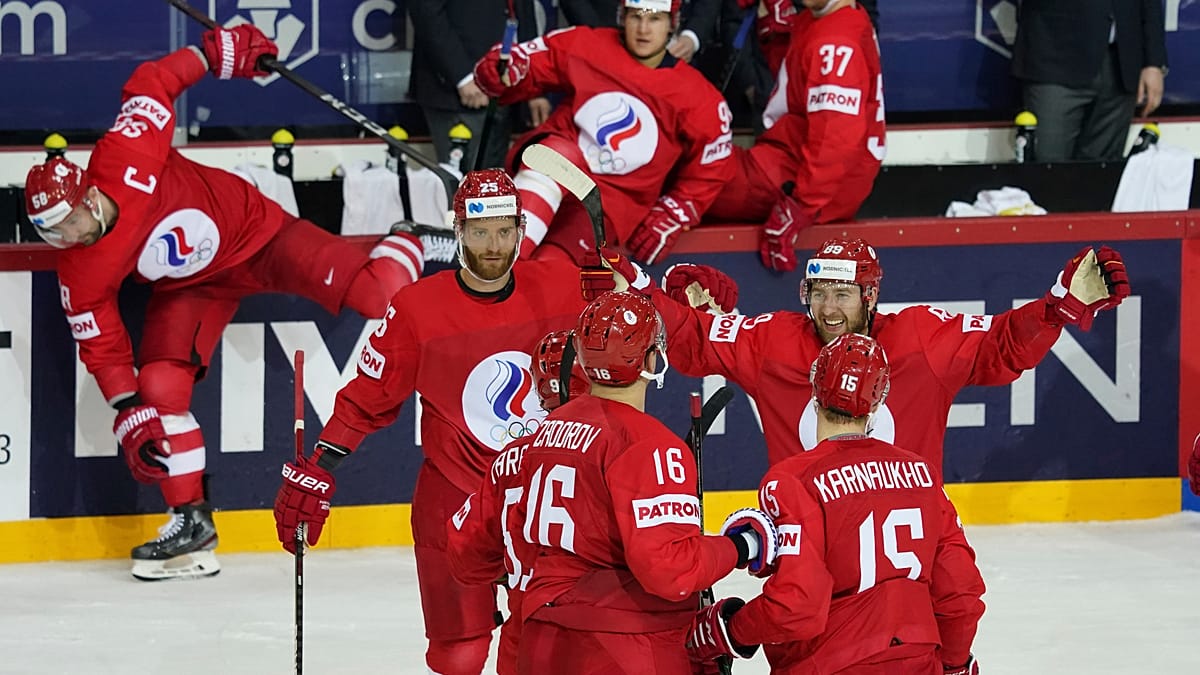
The Russian Ice Hockey Federation has escalated its confrontation with international hockey authorities, demanding that the World Junior Championship scheduled for late December in Canada be postponed or cancelled after Ottawa refused to admit the Russian team. Vladislav Tretiak, the federation's president, threatened to seek compensation from Canada and possibly from Germany, which is set to host the men's World Championship in 2027, according to the Russian state news agency TASS.
Speaking at a meeting of the Presidential Council for the Development of Physical Culture and Sport in Moscow, Tretiak said he had also lodged a complaint with the International Ice Hockey Federation's (IIHF) ethics committee, calling for sanctions against national federations that boycott matches involving Russia. "There are rules: if a team does not take to the ice, it suffers a technical defeat and sanctions are imposed," TASS quoted him as saying. "The IIHF has a way out - either they let us play, or, if we are unable to enter Canada, they move the championship, do not stage it at all, or impose sanctions on the Canadian ice hockey association."
Canada's firm stance
Canada's decision, announced a day before Tretiak's remarks, bars Russian players from the 10-nation tournament, which begins on 26 December in Alberta. The move follows a ruling by the Court of Arbitration for Sport (CAS) last month that reinstated Russia's right to compete in international ice hockey, overturning the ban imposed by the IIHF after the full-scale invasion of Ukraine in February 2022.
Prime Minister Mark Carney was unequivocal: "You cannot bomb Ukrainian cities and then send your juniors to Alberta to play hockey, as if you were civilised people. No Russian or Belarusian teams at the World Junior Championship. Not under your flags. Not under any other flags. Period."
According to the Russian sports daily Sport-Express, the Russian federation had anticipated visa refusals and planned to field a squad composed solely of players from North American NHL clubs. However, Ottawa clarified that even those players would be ineligible because their work visas do not permit representing the national team.
Germany and several other countries have refused to sign the new schedule for the World Junior Championship if Russia is included, as Frank Lutz, head of the German Ice Hockey Association, told the Bundestag's sports committee. The next major event, the women's under-18 World Championship in Ostrava, Czechia, in January 2027, is also affected, with Prague having already indicated it will not issue visas to Russian players.
Germany is now considering whether to host the men's World Championship in spring 2027 amid a wave of boycotts. Several leading hockey nations, including Canada, Sweden, Finland, Germany, Czechia, and Latvia, have announced they will not play against Russia. Some tournament sponsors have also threatened to withdraw their support if Russia participates.
The IIHF has remained silent, caught in a rapidly escalating conflict. Moving the World Junior Championship at such a late stage would be logistically daunting, and finding an alternative host willing to step in for Canada appears unlikely. On Sunday, Norway said it had been notified by the IIHF that it was being excluded from the tournament to make room for Russia, though the federation has not yet confirmed this change.
Beyond hockey, several northern European countries are tightening restrictions on Russian athletes. Finland, for instance, adopted a government decree on 12 November 2026 stating that the entry of Russian citizens poses a threat to its international relations. The new rules cover short-term work on visas, including professional sport. Foreign Minister Elina Valtonen said: "As long as Russia's aggressive war continues, Russian athletes have no business in Finland. Their entry into the country would pose a threat to Finland's international relations. The same applies to other types of short-term work on visas that do not serve Finland's vital national interests."
The dispute underscores the broader geopolitical rift that the war in Ukraine has opened in international sport. While the CAS ruling technically restored Russia's eligibility, the practical reality is that many European nations are unwilling to host or compete against Russian teams. The IIHF now faces an unenviable choice: enforce the CAS ruling and risk a mass boycott, or side with the majority and alienate Moscow. Either way, the sport's governing body is being pulled into a conflict far beyond the rink.