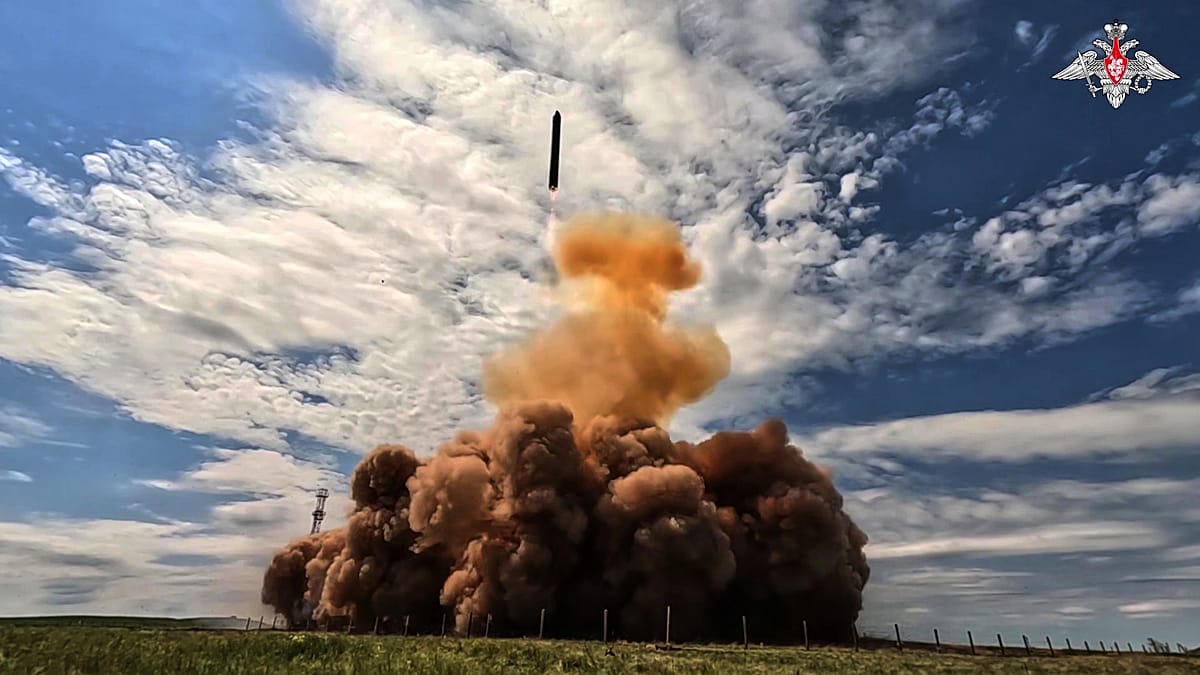
Moscow has warned of a new wave of large-scale strikes on Ukraine's energy infrastructure, framing the escalation as retaliation for Kyiv's attacks on Russian territory. The threat comes as the death toll from a Russian drone strike on an ammunition depot near the Ukrainian capital climbed to 38, with 20 people injured and four still unaccounted for.
In a statement on Telegram, Russia's defence ministry said: "The Russian Armed Forces have begun preparations for massive strikes on Ukraine's energy infrastructure in response to what Moscow describes as ongoing attacks by the Kyiv regime on Russia's civilian infrastructure and fuel and energy facilities." The warning revives memories of last winter, when systematic bombardment of Ukrainian power plants crippled the national grid, leaving millions without heating or electricity in sub-zero temperatures.
Deadly depot strike
The depot strike occurred on Saturday in the village of Myla, in the Bucha district just outside Kyiv. Ukrainian President Volodymyr Zelensky confirmed on Sunday that the death toll had risen to 38, adding that "the extent of contamination in the area is significant" as emergency crews battled remaining fires and bomb disposal teams swept the site. The blast triggered a massive detonation and secondary explosions that sent flames into nearby residential areas, damaging around 50 buildings and forcing the evacuation of more than 380 residents, according to regional officials.
Among the dead was Taras Didych, the mayor of the nearby village of Dmytrivka. The incident is one of the deadliest single attacks on Kyiv's suburbs since Russia's full-scale invasion began more than four years ago. Ukrainian prosecutors have opened a criminal negligence investigation into why explosives were stored so close to residential housing.
This latest attack capped a third consecutive day of Russian aerial bombardment, one of the most sustained since spring. Russia's military also claimed to have struck a cement and asbestos plant in Kyiv on Sunday, alleging its warehouses were used to store explosives, along with a drone and munitions manufacturing site. The Ukrainian air force reported that Russia launched two Iskander-M ballistic missiles and 130 drones between late Saturday and early Sunday.
Ukraine, for its part, has continued its own long-range strikes. A drone attack on the Kirishi oil refinery in Russia's Leningrad region sparked a fire, according to local Russian authorities. The refinery is Russia's second-largest, with an annual processing capacity of around 20 million tonnes of crude oil, producing jet fuel and diesel.
The escalation in long-range strikes has raised civilian casualties on both sides, with warehouses, refineries, ports, and ships increasingly targeted. The renewed threat to Ukraine's energy infrastructure comes as European leaders debate how to bolster Kyiv's air defences and support its grid ahead of winter. Discussions on using frozen Russian assets have resurfaced in Brussels as a potential funding source for urgent repairs and military aid.
For Ukrainians, the prospect of another winter of blackouts is a grim reminder of the war's toll. As one resident of Myla told local media, "We thought the worst was over, but they keep finding new ways to hurt us." The international community, including the EU and NATO, has condemned the attacks, but diplomatic efforts remain stalled. With no end to the conflict in sight, the coming months could prove decisive for Ukraine's resilience and for Europe's broader security architecture.