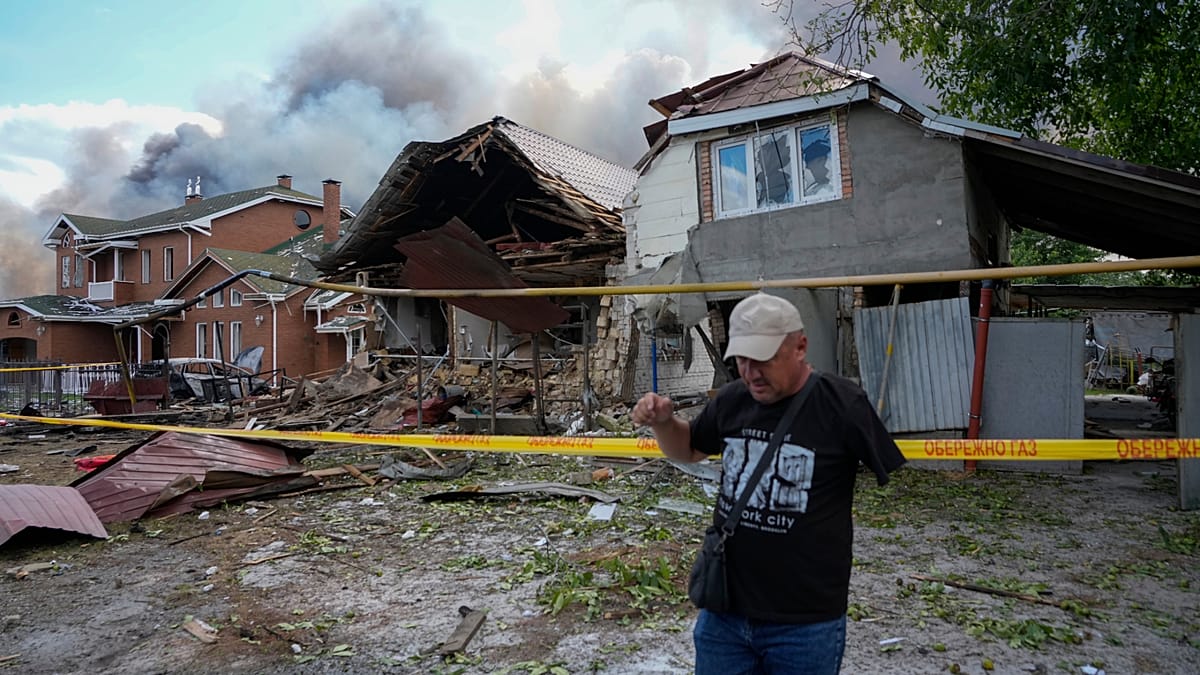
In the early hours of 27 August, Russian forces launched a coordinated drone assault on Ukraine's Sumy and Odesa regions, igniting fires across multiple urban areas. Regional authorities confirmed at least one fatality and seven injuries, with emergency services working through the night to contain the blazes.
Overnight assault targets civilian infrastructure
The strikes, which began shortly after midnight, targeted residential neighborhoods and critical infrastructure. In Sumy, a city near the northeastern border with Russia, several apartment blocks were damaged, and a fuel depot caught fire, sending thick plumes of smoke into the sky. In Odesa, on the Black Sea coast, drone debris fell on a residential district, sparking fires that damaged at least three homes.
Local officials reported that Ukraine's air defense systems intercepted a significant number of the drones, but the sheer volume of the attack overwhelmed some defenses. "The enemy continues to terrorize our cities," said Dmytro Zhyvytskyi, head of the Sumy regional military administration, in a statement. "We are doing everything to protect our people, but the need for more air defense systems is critical."
The attack comes as Ukraine's military and political leaders have repeatedly called on Western allies to provide additional air defense capabilities, particularly systems capable of countering the Shahed-type drones that Russia has deployed in large numbers. The strikes also highlight the ongoing vulnerability of Ukrainian cities to nighttime raids, a pattern that has become a grim routine for millions of civilians.
In Odesa, regional governor Oleh Kiper reported that a warehouse storing agricultural products was hit, causing a large fire that took several hours to extinguish. "The fire was intense, but our firefighters managed to prevent it from spreading to nearby residential buildings," Kiper said. He added that the injured included a 14-year-old boy who was treated for minor injuries and released from hospital.
The overnight barrage is part of a broader Russian strategy to wear down Ukrainian morale and disrupt economic activity. According to the Ukrainian Air Force, Russia launched more than 40 drones and several cruise missiles, with most of the drones targeting the northern and southern regions. The attacks have also prompted nightly shelter rituals in Kyiv and other cities, where residents have grown accustomed to the sound of air raid sirens and explosions.
The strikes come amid heightened tensions in the region, with Slovak police recently foiling an arson plot on a drone factory, underscoring the broader security challenges facing Europe. Meanwhile, Italian defense firm Leonardo has set up a Kyiv unit to tap into Ukraine's drone warfare expertise, a sign of deepening European defense cooperation.
In a related development, Russian President Vladimir Putin signed a decree allowing the state to take over companies hit by drone strikes, a move that analysts say is aimed at maintaining control over critical industries. The decree, reported by European Pulse, gives the government broad powers to seize assets if they are deemed essential to national security.
The human cost of the war continues to mount. According to the United Nations, more than 10,000 civilians have been killed since the full-scale invasion began in February 2022, with millions more displaced. The overnight strikes in Sumy and Odesa are a stark reminder that no corner of Ukraine is safe from Russian attacks.
European leaders have condemned the latest assault. In a statement, European Commission President Ursula von der Leyen said, "Russia's deliberate targeting of civilian infrastructure is a war crime. We stand with Ukraine and will continue to provide support, including air defense systems."
As the war enters its third year, the resilience of Ukrainian cities is being tested like never before. The fires in Sumy and Odesa have been extinguished, but the psychological scars remain. For many residents, the nightly drone attacks have become a constant companion, a reminder that the war is far from over.