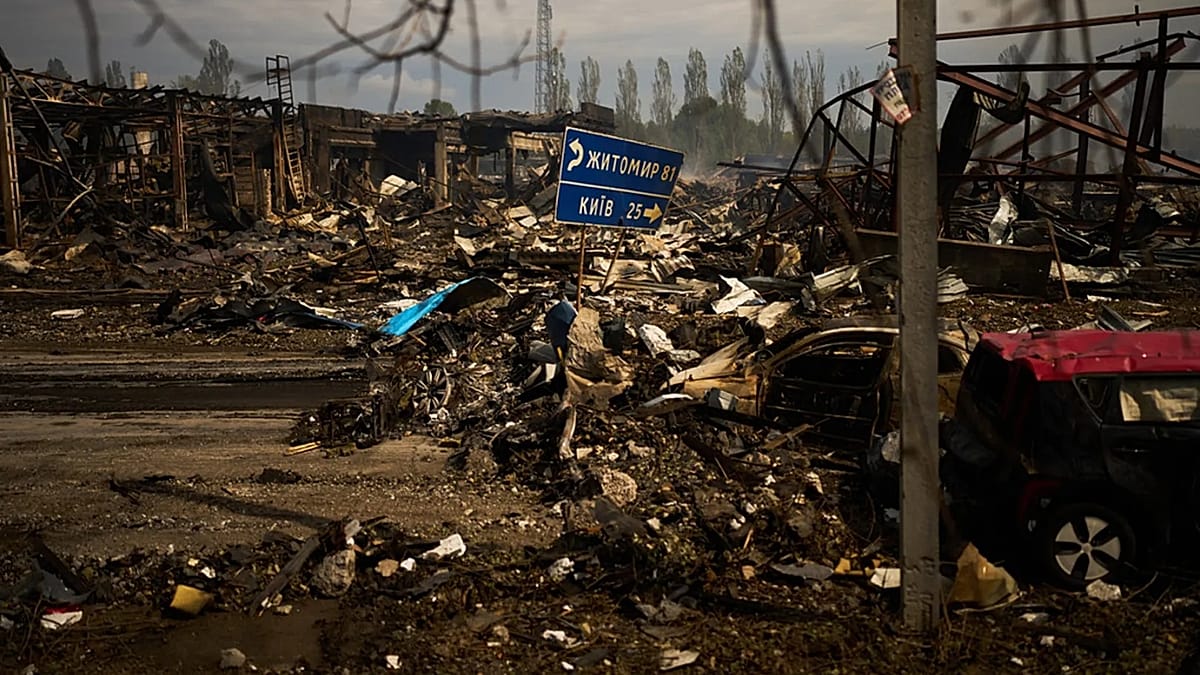
A large-scale Russian missile and drone assault on the Ukrainian capital and its surrounding region killed at least four people and wounded more than a dozen others, according to Ukrainian officials early on Tuesday. The attack unfolded as children across the country were preparing to return to school after the summer break, prompting authorities to impose stricter security measures amid fears of further strikes.
"Kyiv region came under a massive attack by Russian missiles and strike drones tonight," said Tymur Tkachenko, head of the Kyiv regional military administration, in a statement on Telegram. Residents of the capital reported hearing more than a dozen loud explosions late on Monday and into the early hours of Tuesday, with flashes visible in the night sky after the Ukrainian Air Force warned of incoming ballistic missiles.
"Sadly, 3 people were killed in the enemy attack on the capital," the city military administration said, adding that at least five others were reported wounded. In Boryspil, east of Kyiv, strikes damaged a business, killing one person and wounding another, Tkachenko said. Eight more people were injured when a residential building was hit.
The Ukrainian Air Force had earlier warned that the threat of "ballistic weapons and other means of attack against Kyiv and the region remains in effect," urging residents to remain in shelters and exercise caution until the alert was lifted.
Schools reopen under threat
Tuesday marked the start of the new school year for Ukrainian children, a moment that has become a grim ritual of resilience amid ongoing Russian aggression. The Kyiv regional military administration has prohibited large gatherings in high-risk areas, reflecting the persistent danger. The attack also comes on the heels of a weekend strike on an ammunition depot in the capital's suburbs that killed 38 people, underscoring the escalating toll on civilian life.
Recent weeks have seen sustained Russian aerial pressure on Kyiv and its surroundings, with jet-powered drones adding to the threat and triggering as many as a dozen air-raid alerts per day. The attacks have targeted infrastructure such as warehouses, businesses, and oil and port facilities, as well as ships, leading to rising civilian casualties.
Ukraine continues to face significant challenges in intercepting certain aerial threats due to shortages of interceptor missiles, a vulnerability that has been exacerbated by delays in Western military aid. The latest barrage is part of a series of daily attacks across multiple Ukrainian regions, as Kyiv struggles to defend its skies.
The human cost of these strikes is mounting. In addition to the deaths and injuries, the destruction of infrastructure has disrupted daily life and essential services. Earlier this month, Russian strikes on Kyiv warehouses destroyed 12 million textbooks ahead of the school year, adding to the challenges facing educators and families.
Meanwhile, European allies have been stepping up their support. The EU naval force recently boarded a suspected Russian shadow fleet tanker in the Mediterranean, part of broader efforts to enforce sanctions and disrupt Moscow's military logistics. Baltic states have also pushed back on fears of an imminent Russian attack, urging calm while reinforcing their own defenses.
As the conflict grinds on, the resilience of Ukrainian cities like Kyiv remains under constant test. The overnight assault, timed to coincide with the return to school, is a stark reminder of the war's enduring brutality and the urgent need for continued international solidarity.